
Italy is the country people return to most, and for good reason: the best places to visit in Italy are also some of the best places to visit anywhere. No other place packs so much into so little: Renaissance cities, alpine lakes, pink-and-peach fishing villages, volcanic islands and the best food in Europe, all within a few hours of each other by train. Yet first-time visitors still rush between Rome, Florence and Venice, and as a result they leave feeling they missed the point.
This guide ranks the 20 most incredible places to visit in Italy, grouped by region so you can string several together on one trip. For each one you will find why it earns its place, the one thing not to miss, where to stay and how to get there without a headache. In short, it is the list we wish we had on our first visit.
If you are after smaller, quieter spots, read it alongside our 15 best small towns in Italy and the best kept secrets in Italy. Then come back here for the big picture.
Quick picks: the best places to visit in Italy for your kind of trip
Short on time? Then choose by what you want from the trip. Each pick links down to its full entry.
| Best for | Place | Region |
|---|---|---|
| A first visit | Rome | Lazio |
| A honeymoon | The Amalfi Coast | Campania |
| Art and architecture | Florence | Tuscany |
| Mountains and hiking | The Dolomites | South Tyrol |
| Lakes and villas | Lake Como | Lombardy |
| Food and wine | Val d’Orcia | Tuscany |
| Beaches | Costa Smeralda | Sardinia |
| History | Pompeii and Vesuvius | Campania |
| Fewest tourists | The Aeolian Islands | Sicily |
| Something different | Matera | Basilicata |
How the regions fit together. The north (places 1 to 6) works as a ten-day loop from Milan or Venice: lakes, mountains and the Ligurian coast. Central Italy (7 to 11) is Rome, Florence and the Tuscan hills, and it is where most first trips should start. The south (12 to 16) runs from the Amalfi Coast across to Puglia, which is best as its own trip. Finally, the islands (17 to 20) reward a second or third visit, and they are where you will find the fewest tourists.
The best places to visit in Italy: the north
Northern Italy is lakes, mountains and the Riviera, with Venice at one end and Milan at the other, and it holds some of the best places to visit in Italy for scenery. The trains are fast, so you can cover a lot in a week. However, the lakes and the Dolomites both deserve at least three nights each.
1. Venice, Veneto
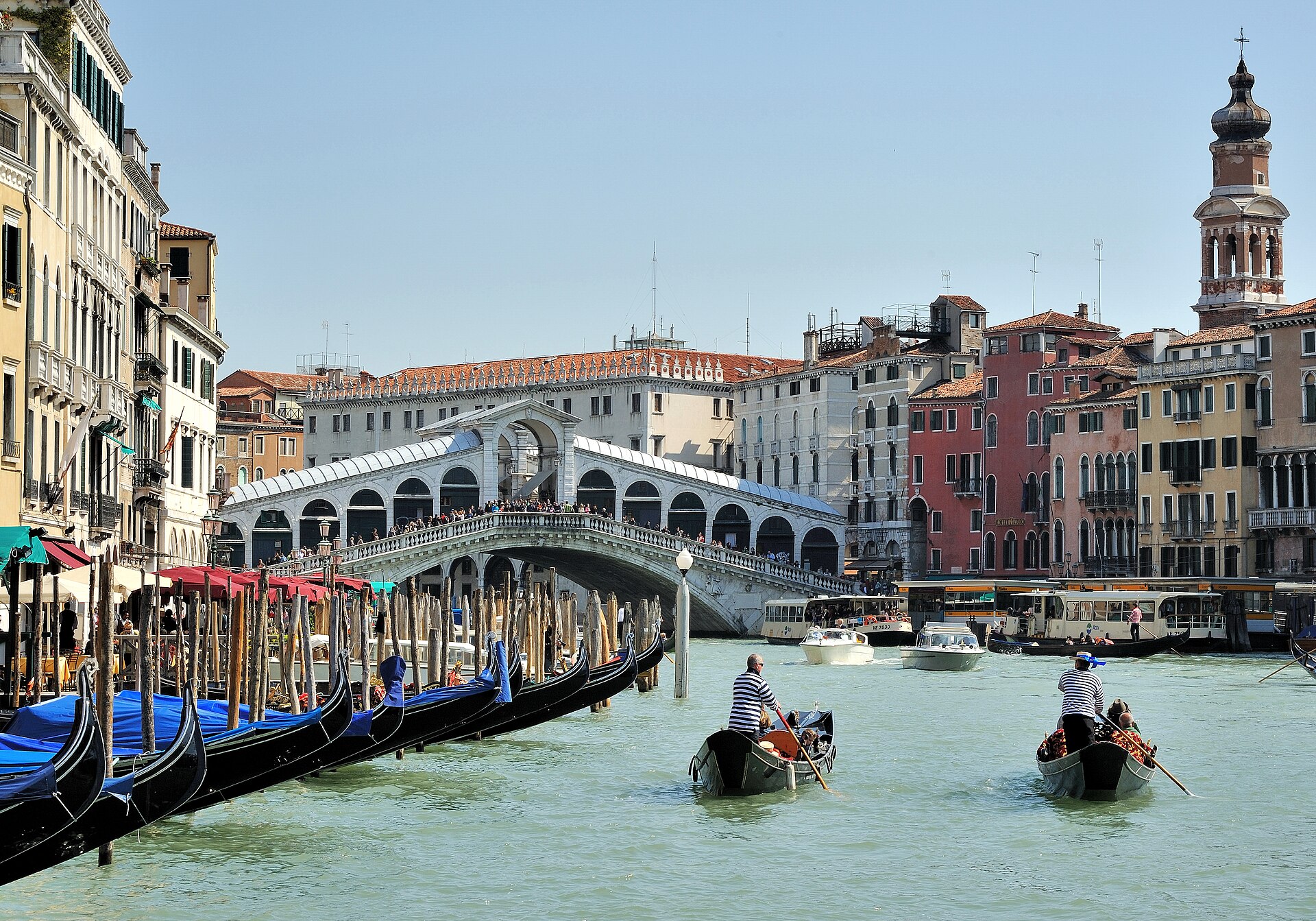
Venice is the one place in Italy that cannot be oversold. It is a city built on water, with no cars, where the main street is a canal lined with Gothic palaces. Yes, it is crowded by day. But stay the night, because after the day-trippers leave the city becomes something else entirely: quiet, dim and almost medieval.
Do not miss: the Doge’s Palace and the view from the Campanile in Piazza San Marco, then the quieter sestieri of Cannaregio and Castello, where Venetians actually live. Our complete Venice bucket list has the full itinerary, including a day on Burano.
Stay: Aman Venice, in a 16th-century palazzo on the Grand Canal, is the splurge. For something smaller, Ca’ Maria Adele near the Salute church is one of the most romantic hotels in Italy.
Getting there: Venice Marco Polo airport is 20 minutes away by water taxi, which is the only way to arrive. By train, Santa Lucia station is 2 hours 15 from Milan and 2 hours from Florence.
2. Lake Como, Lombardy
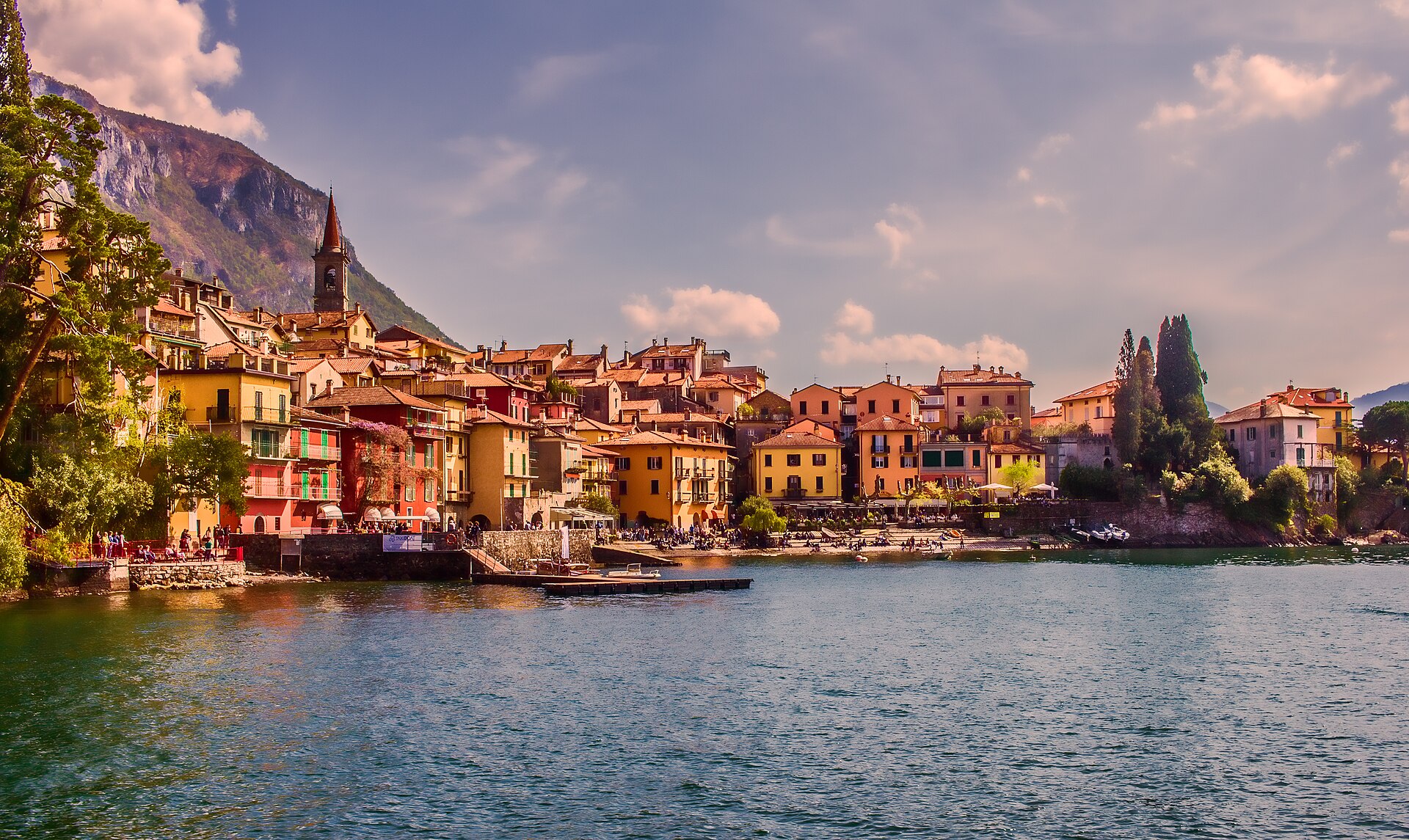
Lake Como is the most beautiful lake in Italy, and above all the villa-lined shore between Bellagio, Varenna and Tremezzo is the reason. The mountains drop straight into the water, the ferries criss-cross all day and, in spring, the gardens are at their best. It is also easy, because it sits just an hour north of Milan.
Do not miss: the gardens of Villa Carlotta and Villa del Balbianello, and an aperitivo on the terrace in Varenna as the sun drops behind the mountains. Read our guide to Lake Como for the ferry routes that make it work.
Stay: Grand Hotel Tremezzo, the pink grande dame with a floating pool in the lake. Passalacqua, nearby in Moltrasio, is the newer and even more extravagant choice.
Getting there: 1 hour by train from Milano Centrale to Varenna-Esino, then the ferry. You do not need a car, and you will not want one on the narrow lakeside roads.
3. The Dolomites, South Tyrol
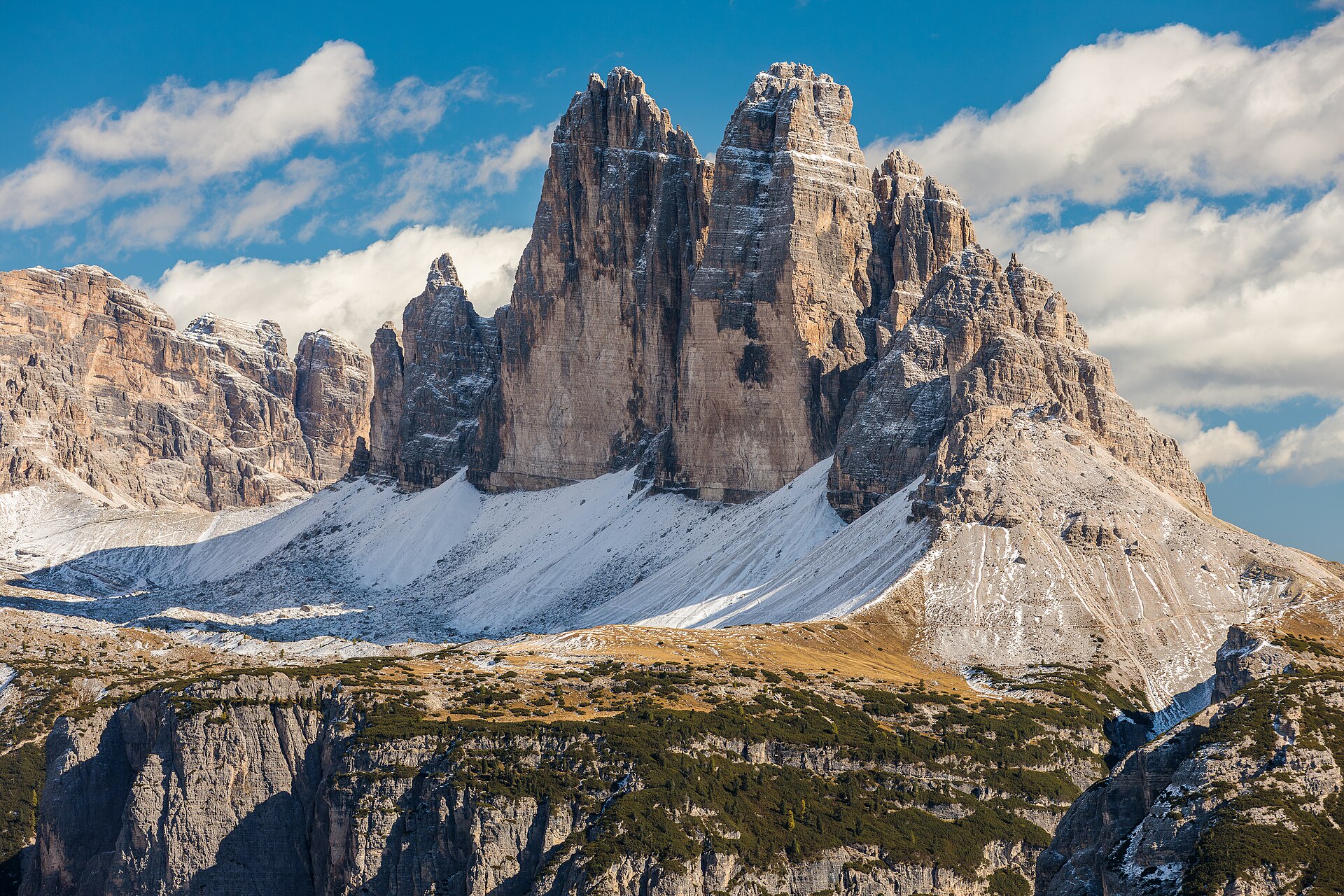
The Dolomites do not look like the rest of the Alps. Pale limestone towers rise out of green meadows, and then at sunset they glow pink. The area is more Austrian than Italian, so you get strudel with your pasta and immaculate mountain huts with your hiking. For scenery, nothing else in Italy comes close.
Do not miss: the loop walk around Tre Cime di Lavaredo, the Alpe di Siusi meadows at dawn and Lago di Braies, which is best before 8am. In winter, the Sella Ronda ski circuit links four valleys in one day.
Stay: Rosa Alpina in San Cassiano, an Aman partner hotel with the best restaurant in the mountains. Forestis, above Bressanone, is the design-led option with views over the whole range.
Getting there: fly to Venice or Innsbruck, then drive 2 to 3 hours. A car is essential here, because the valleys are far apart and the passes are the point.
4. Cinque Terre, Liguria
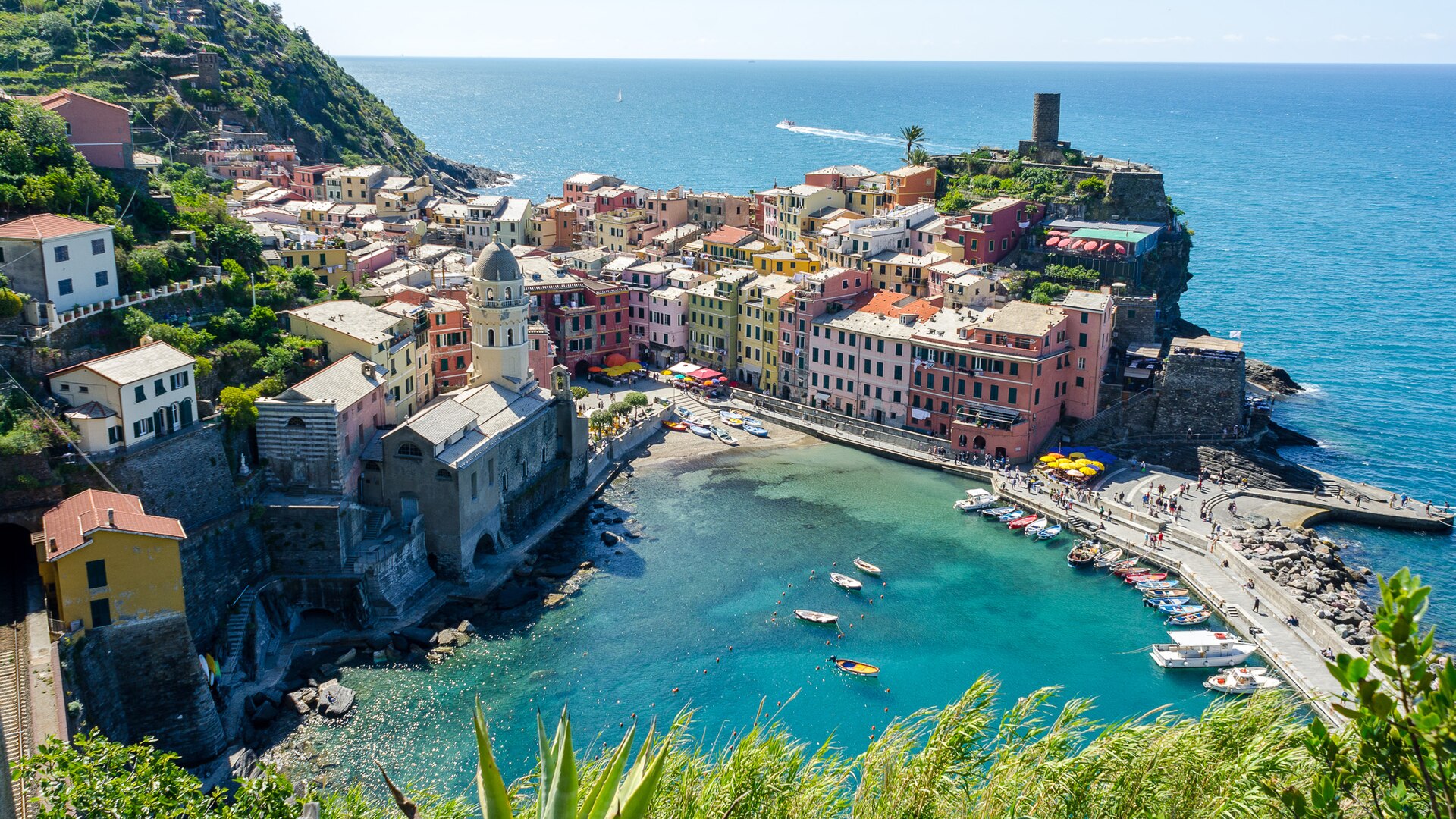
Five fishing villages stacked up the cliffs of the Ligurian coast, joined by a coastal path and a train that runs through the rock. Vernazza is the prettiest, Manarola the most photographed and Monterosso, meanwhile, the only one with a proper beach. Go in spring or October, because July and August are uncomfortably busy.
Do not miss: the walk from Monterosso to Vernazza, which takes 90 minutes and has the best views on the coast, then a glass of the local Sciacchetrà wine. Our Cinque Terre guide covers the trail passes and where to swim.
Stay: La Torretta Lodge in Manarola, with a terrace above the harbour. Alternatively, base yourself in nearby Portovenere or Levanto and come in by boat or train.
Getting there: 1 hour 30 by train from Pisa or 3 hours from Milan to La Spezia, then the local train that stops at all five villages. In other words, leave the car behind.
5. Verona, Veneto
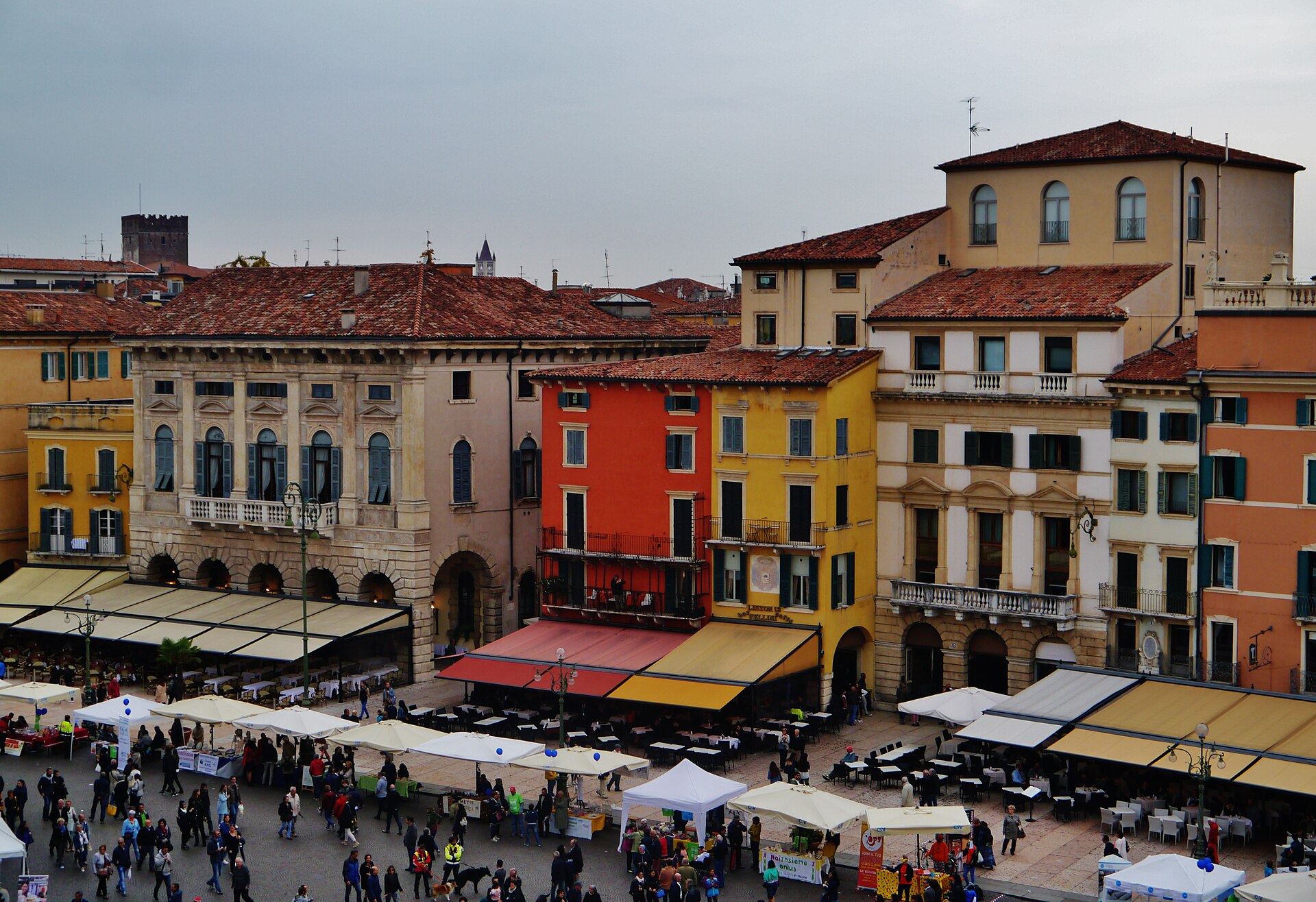
Verona is the city everyone skips on the way between Venice and Milan, and that is exactly why it belongs here. It has a Roman arena still used for opera, pink marble piazzas and a river curling around the old town, as well as far fewer crowds than its neighbours. It is also the gateway to Lake Garda and the Valpolicella wine hills.
Do not miss: an opera at the Arena in summer, with the whole amphitheatre lit by candles, and the view from Castel San Pietro at dusk. Skip Juliet’s balcony, which is a 1930s addition and permanently crowded.
Stay: Vista Palazzo, a small five-star on Via Mazzini with a rooftop terrace over the old town. Alternatively, Byblos Art Hotel, just outside the city, is a villa filled with contemporary art.
Getting there: 1 hour 10 by train from Venice and 1 hour 15 from Milan. Verona Villafranca airport also has direct flights from across Europe.
6. Portofino, Liguria
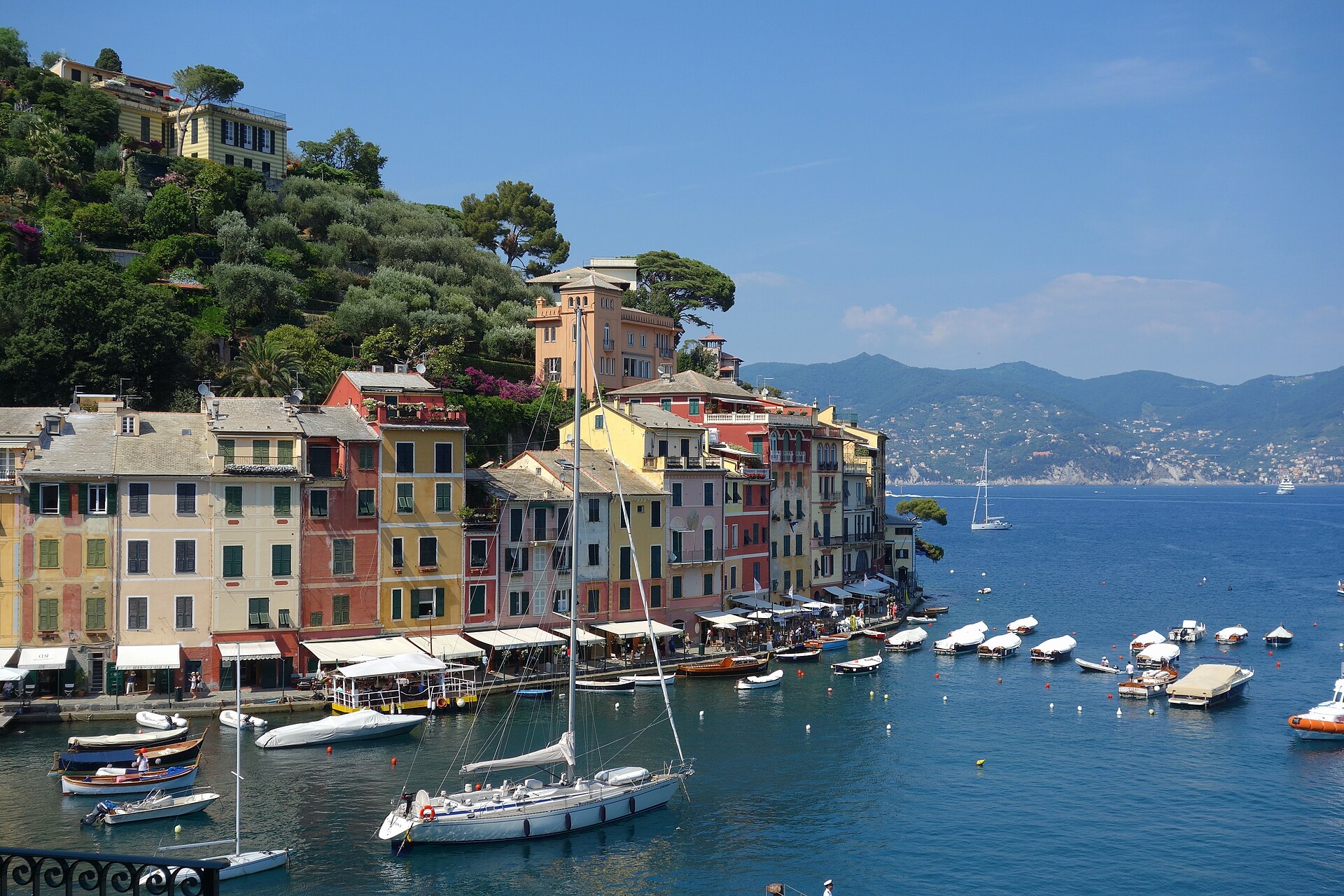
Portofino is a harbour the size of a village square, ringed by ochre and pink houses and filled with yachts. It is tiny and it is expensive, but equally there is nowhere on the Italian Riviera quite as polished. Come for a long lunch on the harbour and the walk up to the castle, then stay in nearby Santa Margherita if the hotel prices are too much.
Do not miss: the walk to the lighthouse at Punta del Capo, the boat to the abbey of San Fruttuoso, which you can only reach by sea or on foot, and focaccia from Recco, 20 minutes up the coast.
Stay: Belmond Hotel Splendido, up on the hill with the famous pool and views across the harbour. Likewise, Splendido Mare, its sister on the waterfront, is smaller and a little more relaxed.
Getting there: train from Genoa to Santa Margherita Ligure, 30 minutes, then a 15-minute bus or boat. From Milan it is about 2 hours 30 in total.
The best places to visit in Italy: Rome, Florence and Tuscany
Central Italy is where most first trips should begin. Rome and Florence are 90 minutes apart by fast train, and the Tuscan hills sit between them. Give the two cities three nights each, then slow down in the countryside for the rest.
7. Rome, Lazio
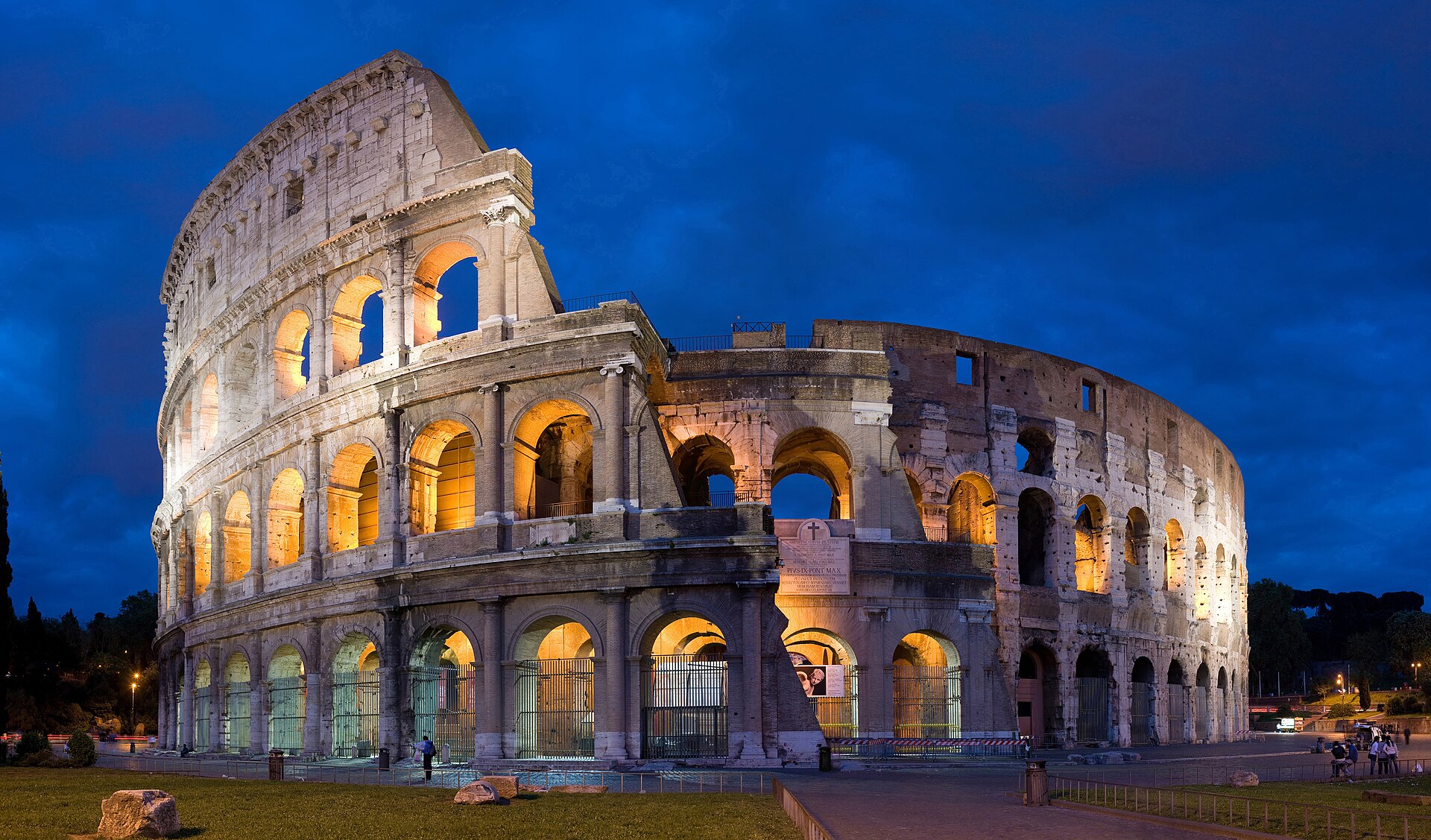
Rome is 3,000 years of history stacked on top of itself, and it still functions as a living city. You walk past the Pantheon on the way to dinner. Meanwhile, ruins sit in the middle of roundabouts. It is loud, chaotic and beautiful, and three days here will not be enough, so plan to come back.
Do not miss: the Colosseum and Forum at opening time, the Vatican Museums with a pre-booked early ticket, and an evening walk from Piazza Navona to Trastevere. Our WOW guide to Rome, 12 best kept secrets in Rome and best bakeries in Rome will fill the rest of your days.
Stay: Hotel de Russie, between the Spanish Steps and Piazza del Popolo, with a secret terraced garden. For a neighbourhood feel, Hotel de’ Ricci in the centro storico is small and wine-focused.
Getting there: Fiumicino airport is 32 minutes to Termini on the Leonardo Express, and from there the city is on foot. High-speed trains reach Florence in 1 hour 30 and Naples in 1 hour 10.
8. Florence, Tuscany
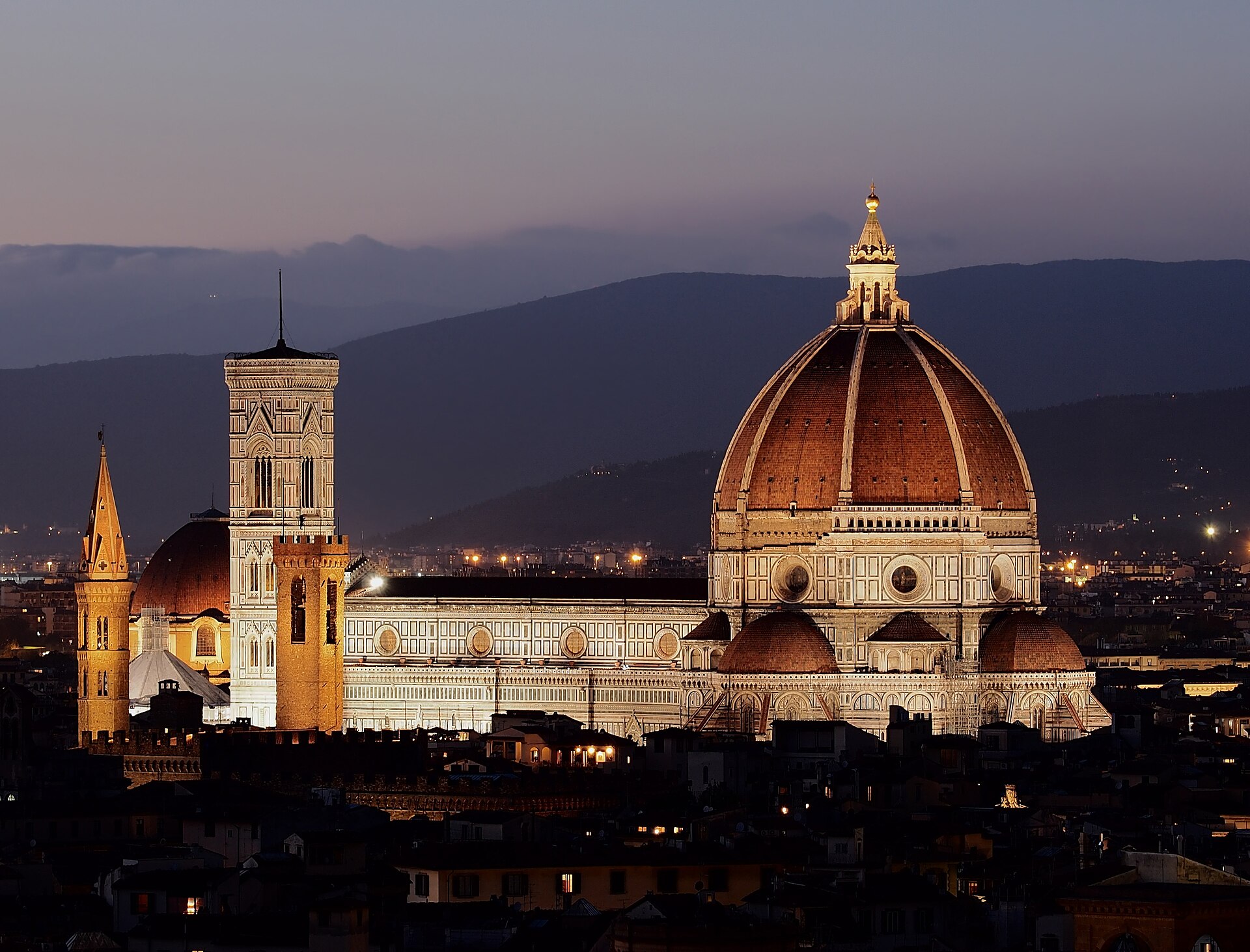
Florence is the Renaissance in one walkable city: Brunelleschi’s dome, Michelangelo’s David, the Uffizi and the Ponte Vecchio, all within fifteen minutes of each other. It is also one of the best places in Italy to eat, from bistecca alla fiorentina to the best gelato in the country. Allow three nights, and above all book the big museums weeks ahead.
Do not miss: climbing the Duomo at the first slot of the day, the Uffizi late in the afternoon and sunset from Piazzale Michelangelo. Then work through our best things to do in Florence and where to find the best gelato in Florence.
Stay: Portrait Firenze, the Ferragamo family’s hotel on the Arno beside the Ponte Vecchio. Across the river, meanwhile, Hotel Lungarno is the same group’s more classic address.
Getting there: Santa Maria Novella station is 1 hour 30 from Rome, 2 hours from Venice and 1 hour 40 from Milan by fast train. Pisa airport, meanwhile, is an hour away by bus or train.
9. Val d’Orcia, Tuscany
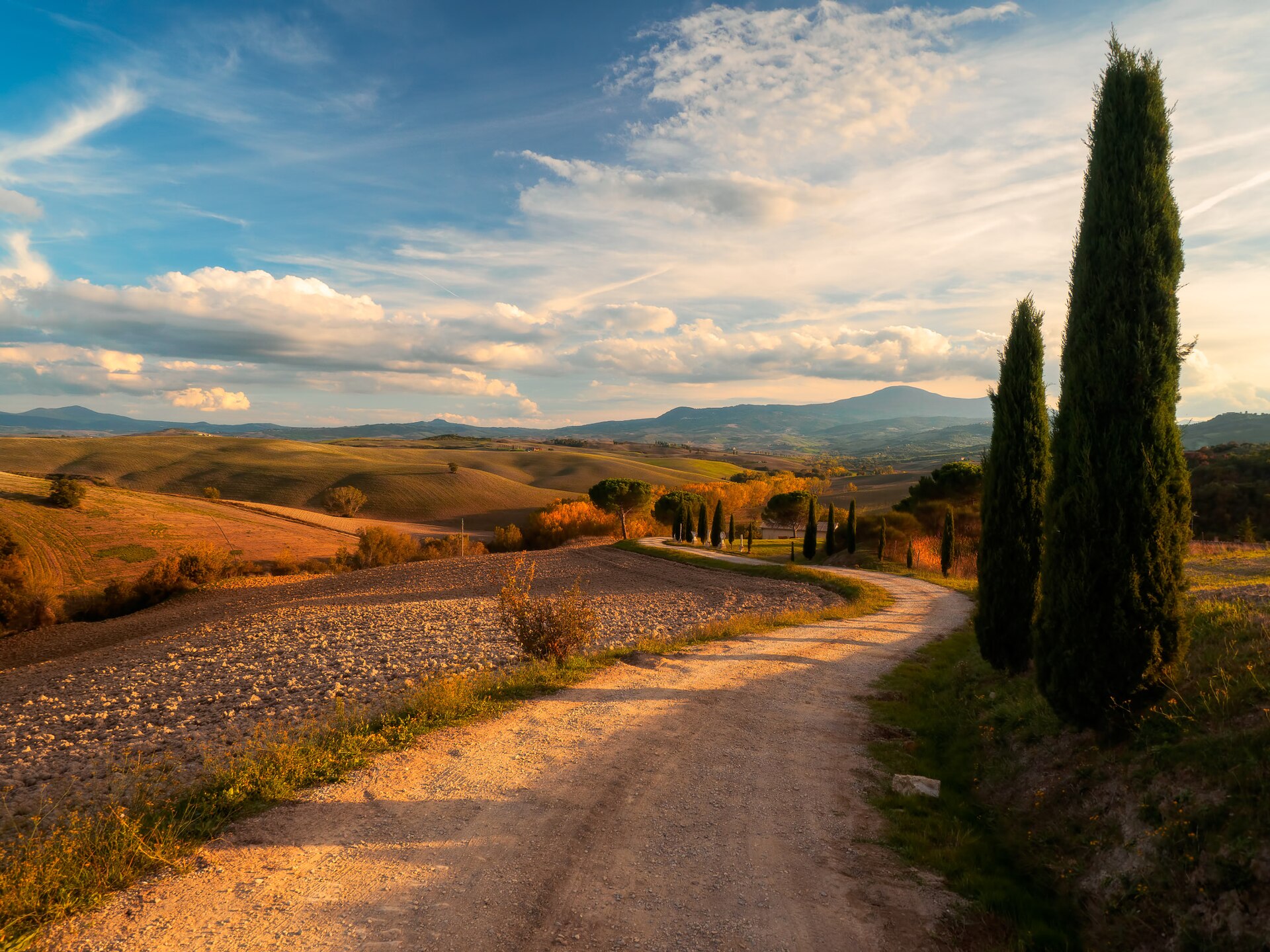
The Val d’Orcia is the Tuscany of the posters: cypress-lined drives, rolling wheat fields, hilltop towns and stone farmhouses glowing at sunset. In fact, the whole valley is a UNESCO World Heritage site. It is also wine country, because Montalcino and Montepulciano sit at either end, so you can taste Brunello and Vino Nobile between the views.
Do not miss: Pienza at golden hour, the Chapel of Vitaleta on the road to San Quirico, and a soak in the hot springs at Bagno Vignoni. Our complete guide to Tuscany maps it all out.
Stay: Rosewood Castiglion del Bosco, a 5,000-acre estate near Montalcino with its own winery. Alternatively, Monteverdi Tuscany, in the hamlet of Castiglioncello del Trinoro, is smaller and quieter.
Getting there: 1 hour 30 by car from Florence or 2 hours from Rome. Hire a car, because there is no useful public transport between the towns.
10. Siena, Tuscany
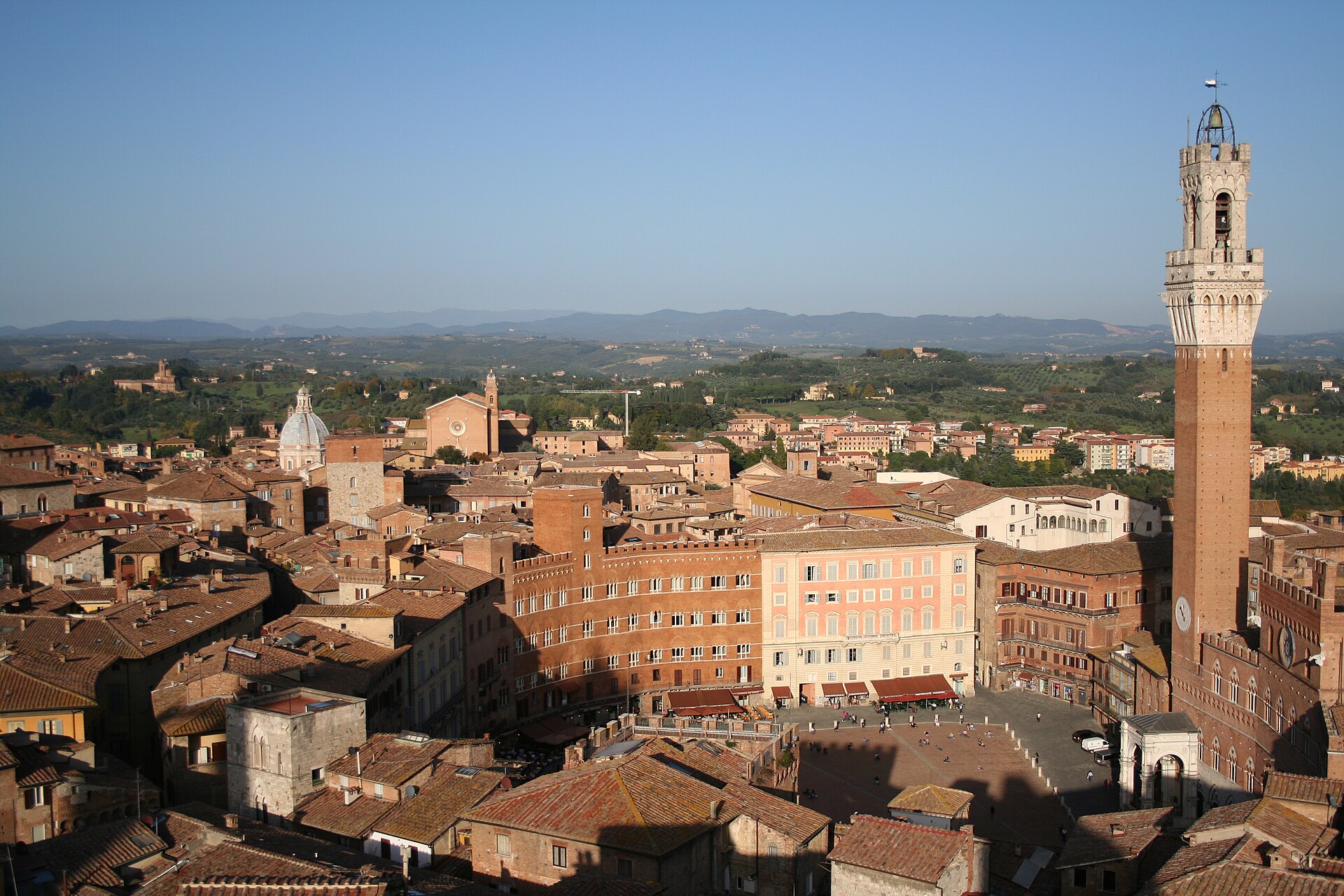
Siena is Florence’s medieval rival, and it kept its Gothic old town intact while Florence rebuilt. The shell-shaped Piazza del Campo is the finest square in Italy, while the striped marble cathedral is one of the great buildings of the Middle Ages. It is also far calmer than Florence, especially after 6pm.
Do not miss: the Duomo’s Piccolomini Library, the climb up the Torre del Mangia, and the Palio horse race if you are here on 2 July or 16 August. Read our quick guide to Siena and add San Gimignano as a half-day trip.
Stay: Grand Hotel Continental, a 17th-century palazzo on Banchi di Sopra. Just outside the walls, Borgo Santo Pietro is one of the best country hotels in Tuscany.
Getting there: 1 hour 15 by bus from Florence, which is faster than the train. By car, Siena sits an hour south of Florence and makes a good base for the Val d’Orcia.
11. Civita di Bagnoregio, Lazio
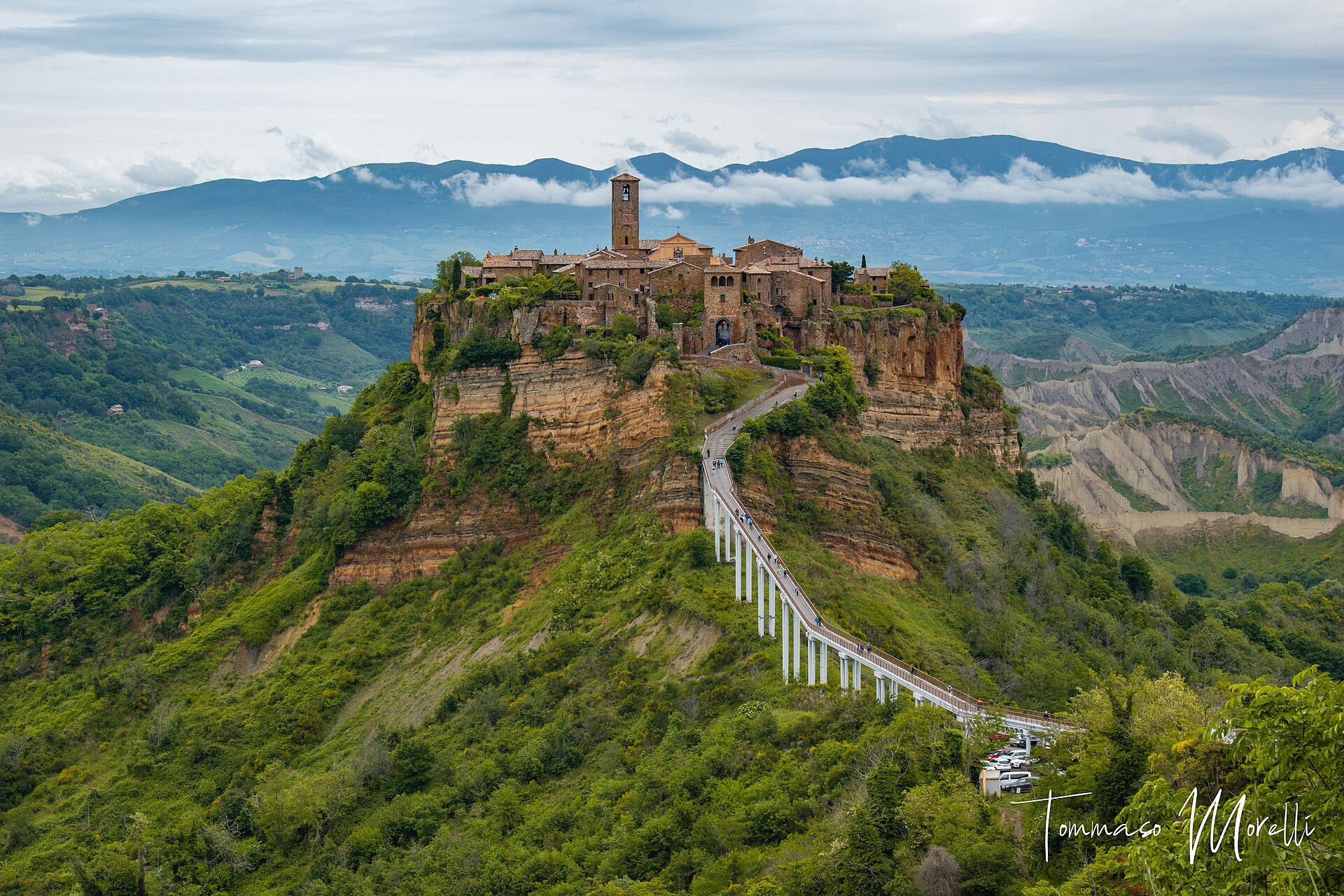
Civita di Bagnoregio is a village on a crumbling pinnacle of tufa rock, reached only by a footbridge across a ravine. Today, fewer than a dozen people live there year-round. It is called the dying town, because the cliffs erode a little more every year, and that is partly why it is so moving to visit.
Do not miss: the view of the village from the belvedere in Bagnoregio before you cross, then a plate of pasta at Alma Civita once you do. Combine it with Orvieto, 30 minutes away, and its striped cathedral.
Stay: there are a few guesthouses on the rock, but most people sleep in Orvieto. Locanda Palazzone, in the vineyards outside Orvieto, is the one to book.
Getting there: 1 hour 45 by car from Rome or 2 hours from Florence. By train, go to Orvieto and take a 40-minute bus or taxi.
The best places to visit in Italy: the south
The south is where Italy slows down, and its places to visit are the ones travellers rave about. The coast is more dramatic, the food is simpler and better, and prices drop the further you go. Naples is the hub, because the Amalfi Coast, Capri and Pompeii are all within an hour or two. Puglia and Matera, across on the other coast, are worth a separate week.
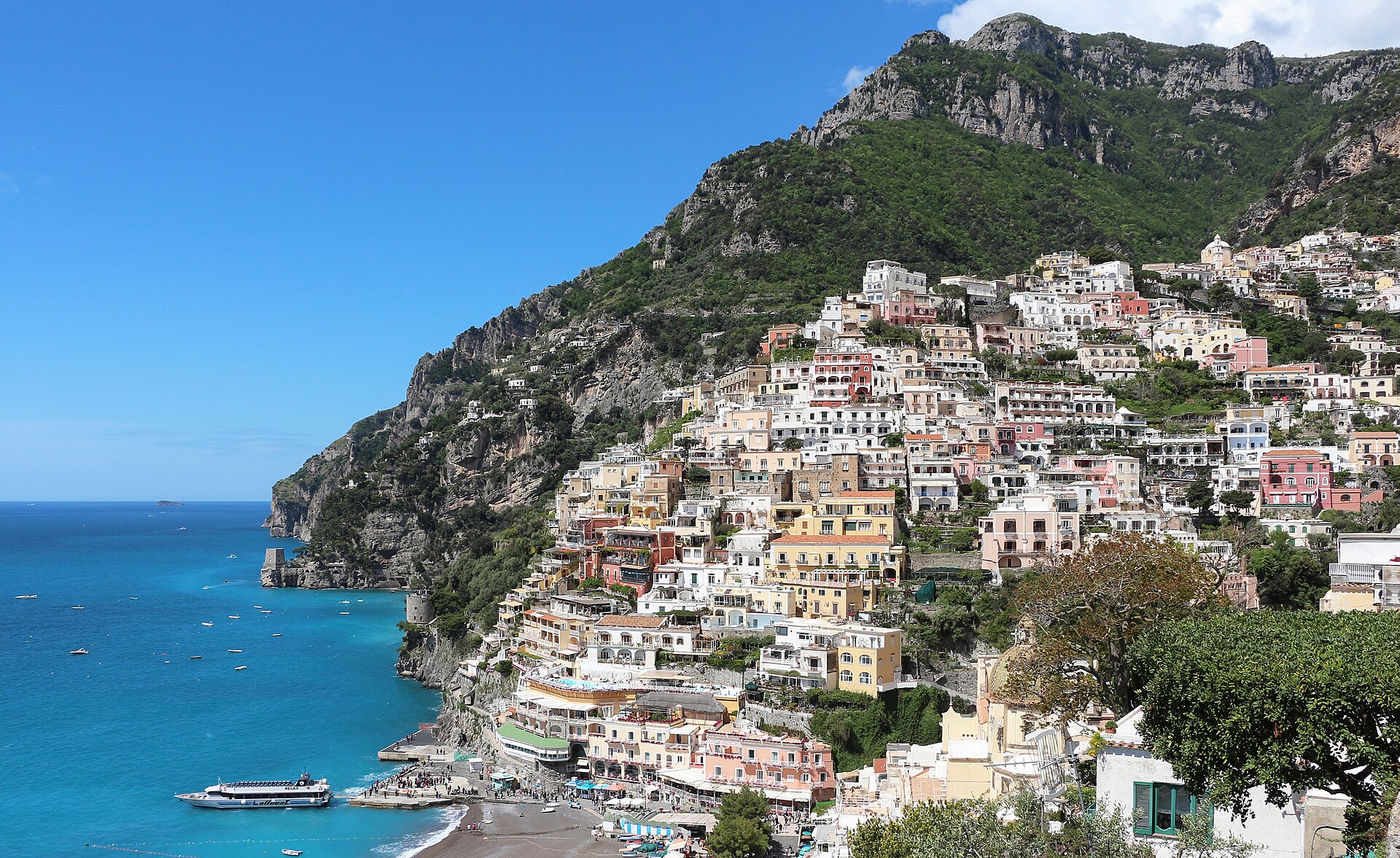
12. The Amalfi Coast, Campania
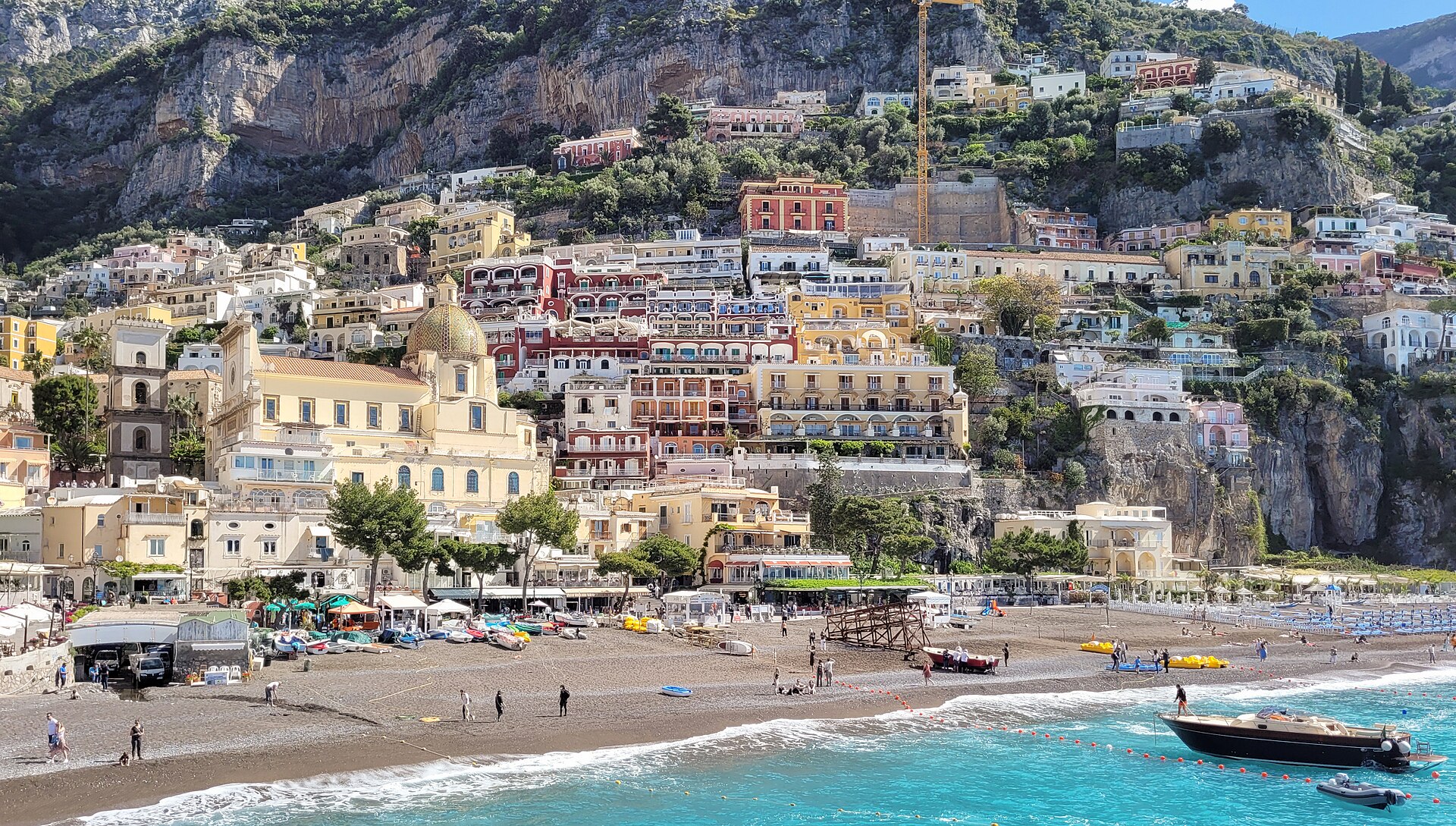
The Amalfi Coast is thirteen towns strung along 50 kilometres of cliffs south of Naples, and Positano is the one on every postcard. The road is terrifying, the beaches are pebbly and, of course, the prices are high. None of that matters, because nowhere else in Italy looks like this. It is also, for us, the best honeymoon destination in the country.
Do not miss: the Path of the Gods walk above Positano, a long lunch at Lo Scoglio in Nerano and the gardens of Villa Cimbrone in Ravello. Our 10-day Amalfi Coast itinerary and guide to Ravello have the details.
Stay: Le Sirenuse in Positano is the most famous hotel on the coast, and we compared it with its rival in Le Sirenuse vs Il San Pietro. For a quieter base, see our pick of the best hotels on the Amalfi Coast.
Getting there: 1 hour 10 by fast train from Rome to Naples, then 1 hour 30 by car or ferry to Positano. In summer, the ferry from Naples or Sorrento beats the road every time.
13. Capri, Campania
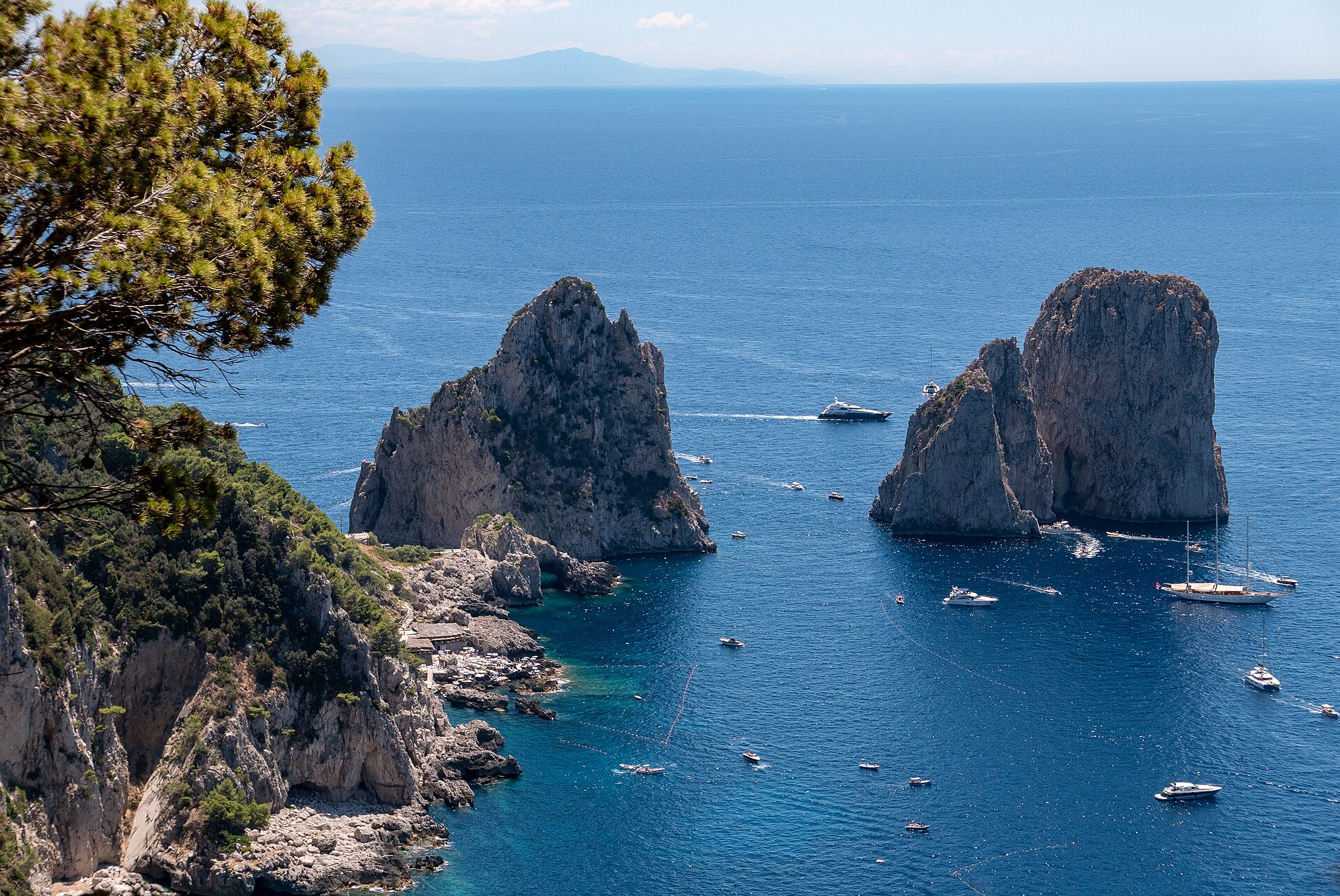
Capri is a limestone island floating off the end of the Sorrento peninsula, and it has been a resort since the Roman emperors. During the day it is busy with boat trips. But by evening, when the ferries leave, the piazzetta fills with locals and the lanes smell of lemon and jasmine. Stay at least two nights to see that side of it.
Do not miss: the chairlift up Monte Solaro from Anacapri, a boat around the island past the Faraglioni rocks and the Blue Grotto, and a swim at the Fontelina beach club. Our quick guide to Capri has the practical side.
Stay: Hotel Caesar Augustus in Anacapri, on a cliff 300 metres above the sea, has the best view of any hotel in Italy. In Capri town, by contrast, J.K. Place is the stylish choice near the port.
Getting there: 50 minutes by hydrofoil from Naples or 25 minutes from Sorrento. Cars are not allowed for visitors, so use the funicular, the buses and the open-top taxis.
14. Pompeii and Vesuvius, Campania
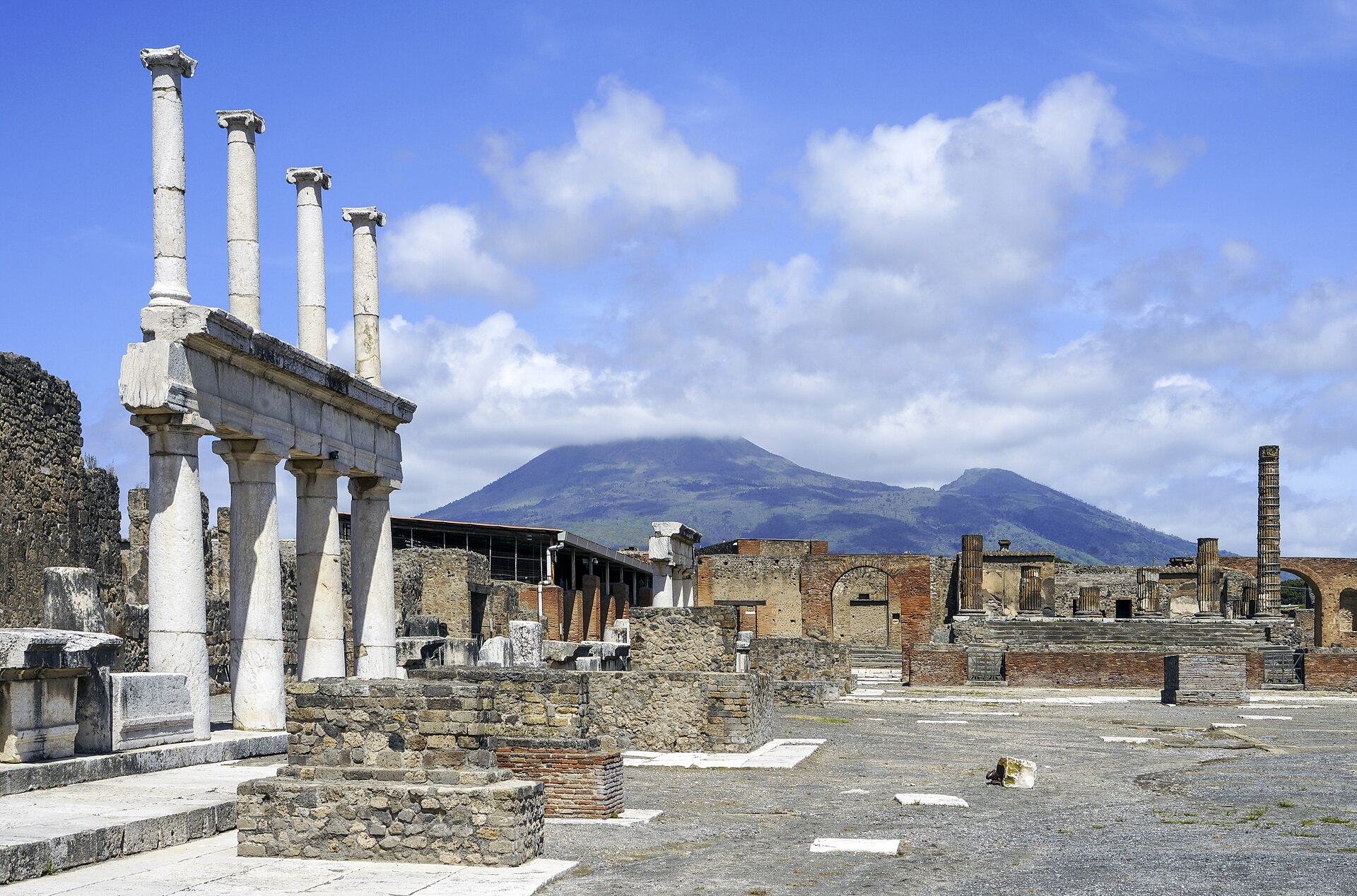
Pompeii is a complete Roman city frozen in AD 79, with streets, bakeries, bathhouses and frescoed villas still standing beneath the volcano that buried it. It is, without doubt, the most atmospheric ruin in Europe. Vesuvius still smokes above it, and in fact you can walk to the rim in half an hour from the car park.
Do not miss: the Villa of the Mysteries, the plaster casts in the Garden of the Fugitives and the smaller, better-preserved site at Herculaneum, 20 minutes away. Afterwards, go to Naples for the best pizza in Naples; you will have earned it.
Stay: most people visit as a day trip from Naples, Sorrento or the Amalfi Coast. In Naples, Romeo Hotel on the waterfront or Grand Hotel Vesuvio are the classic choices.
Getting there: 35 minutes from Naples on the Circumvesuviana train to Pompei Scavi, or 30 minutes from Sorrento in the other direction. Above all, book tickets online to skip the queue.
15. Matera, Basilicata
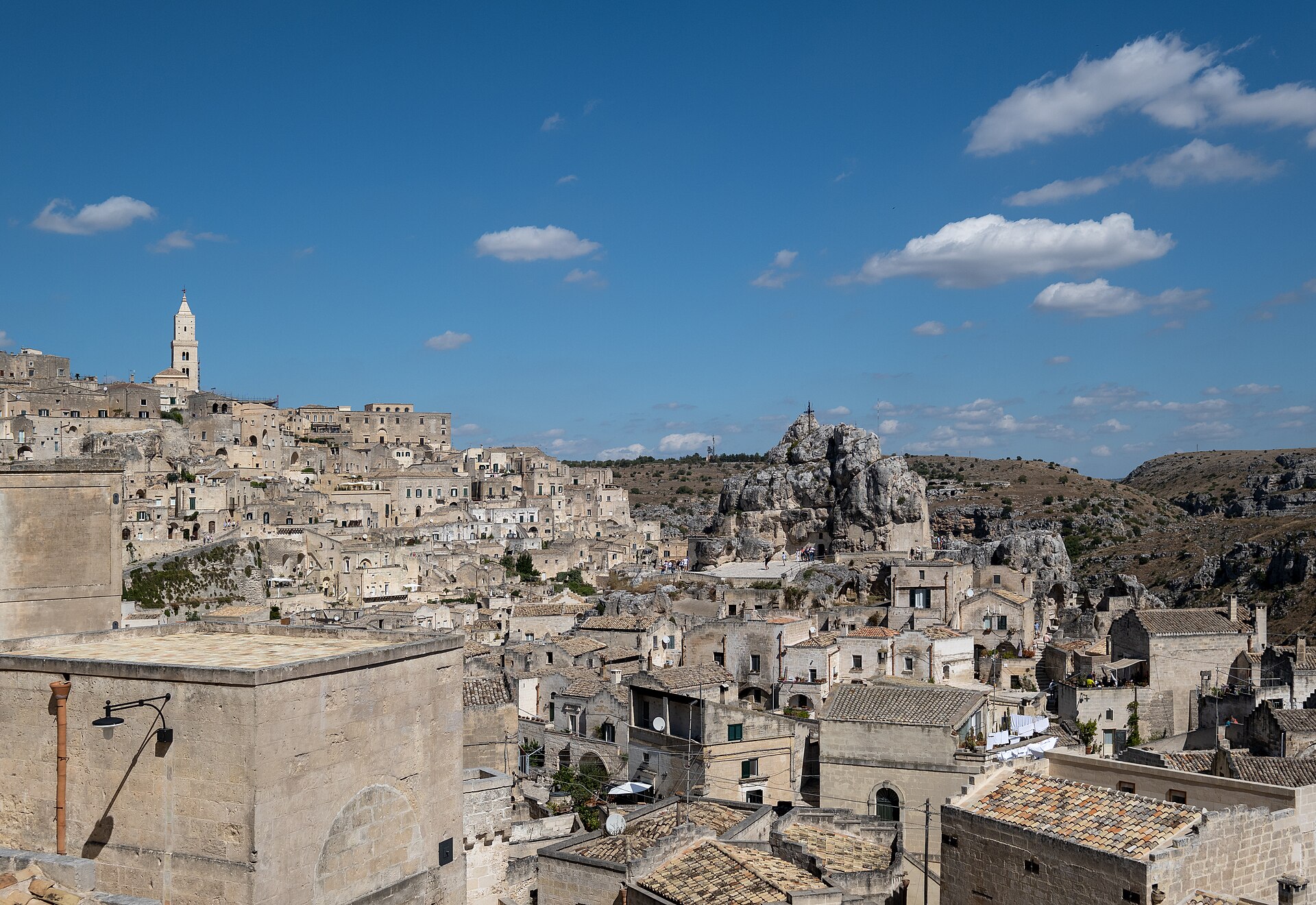
Matera is a city of cave houses carved into a ravine, inhabited for 9,000 years and, until the 1950s, one of the poorest places in Italy. Today the Sassi districts are a UNESCO site, and the caves have since become boutique hotels and restaurants. At night, lit from within, it looks like a nativity scene.
Do not miss: the rock churches of Santa Maria de Idris and San Pietro Barisano, a walk across the ravine on the Murgia plateau for the classic view back, and the bread, which is the best in Italy.
Stay: Sextantio Le Grotte della Civita, where the rooms are candlelit caves, is unlike anywhere else you will sleep. Aquatio Cave Luxury Hotel & Spa is the more polished alternative.
Getting there: 1 hour by car from Bari airport. By train, it is a slow regional line from Bari, so most people drive and combine Matera with Puglia.
16. Alberobello and the Valle d’Itria, Puglia
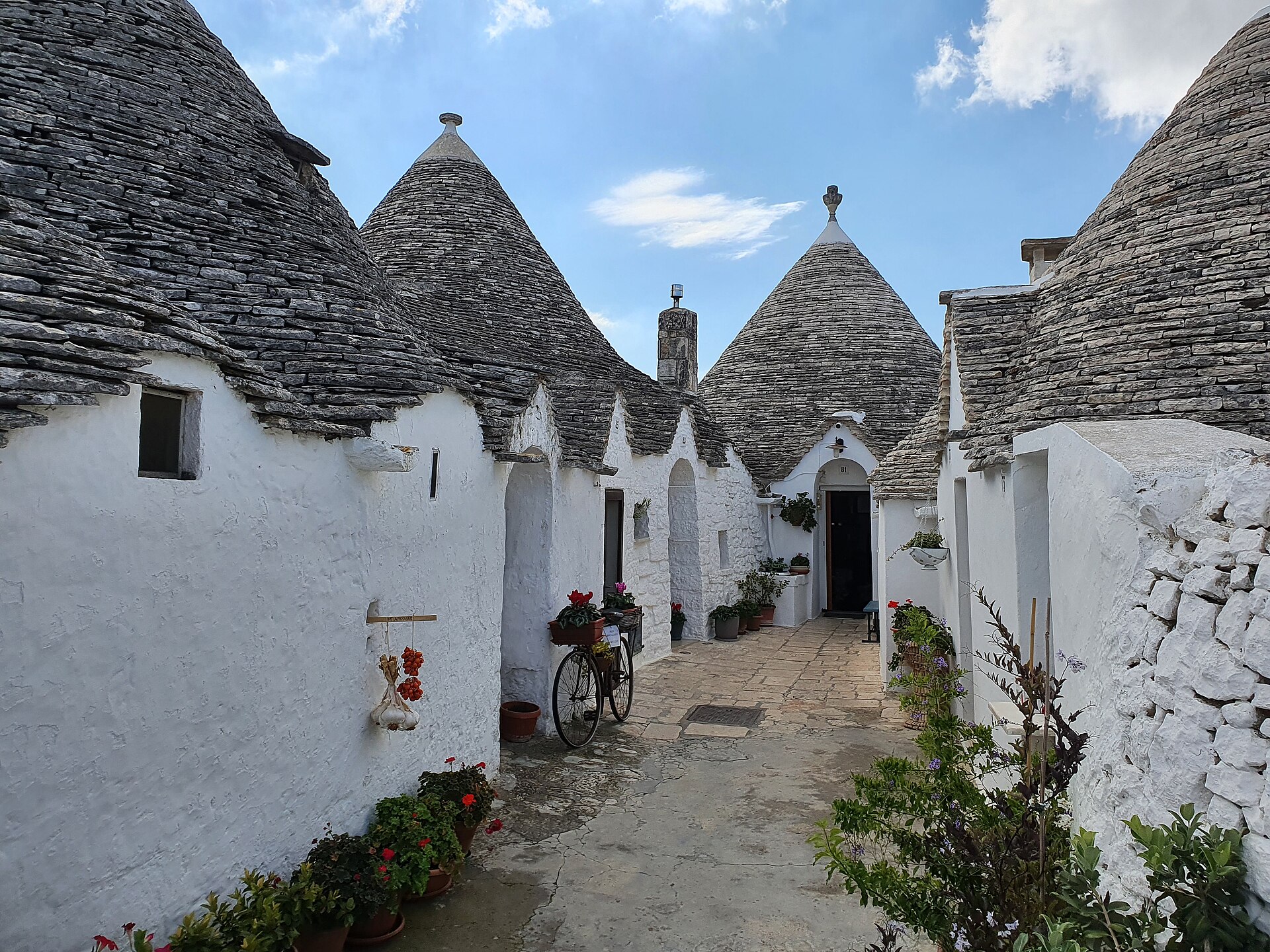
The Valle d’Itria is Puglia’s heartland: dry-stone walls, olive groves and the whitewashed trulli houses with conical roofs that exist nowhere else on earth. Alberobello alone has 1,500 of them in one place. Yet the real pleasure is the surrounding towns of Locorotondo, Cisternino and Ostuni, which are whiter, quieter and better for dinner.
Do not miss: Alberobello early in the morning before the tour buses, a sunset drink in Locorotondo, and the sea caves at Polignano a Mare, 30 minutes away. Puglia also makes the best orecchiette and burrata in Italy, which should surprise nobody.
Stay: Borgo Egnazia near Savelletri, a white-stone resort with its own beach club, is the best hotel in southern Italy. For a converted farmhouse, try Masseria Torre Maizza or Masseria Moroseta.
Getting there: fly to Bari or Brindisi, then drive 45 minutes to an hour. A car is essential, because the towns are small and spread out.
The best places to visit in Italy: Sicily and Sardinia
The islands feel like separate countries, and in many ways they are. Sicily has Greek temples, baroque towns and an active volcano, for example, whereas Sardinia has the clearest water in the Mediterranean. Both are big, so pick one coast and settle in rather than trying to see it all.
17. Taormina, Sicily
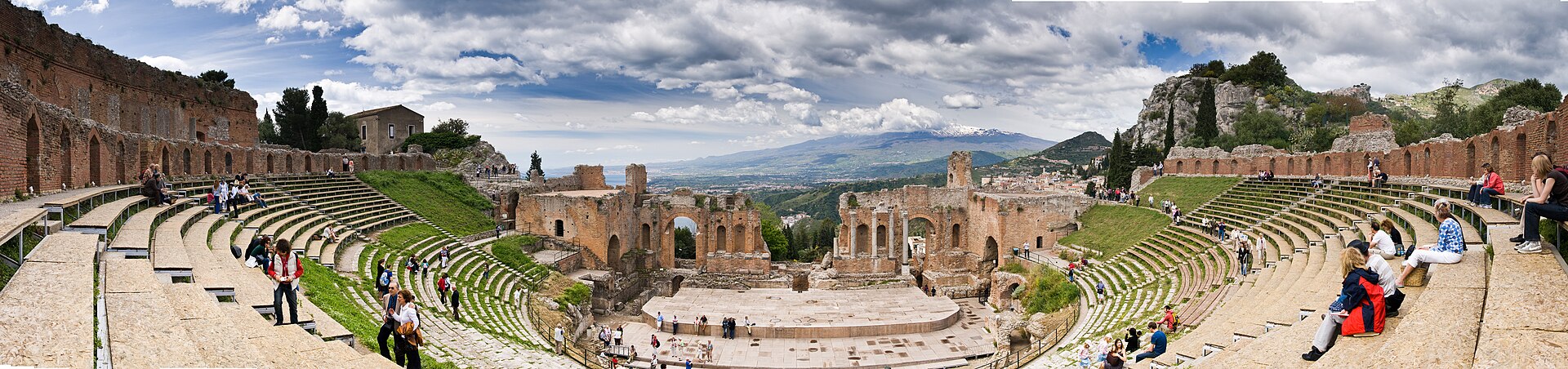
Taormina sits on a terrace 200 metres above the Ionian Sea, with a Greek theatre at one end and Mount Etna smoking in the background. It has been Sicily’s resort town since the 19th century, and it still has the grand hotels and the elegant main street to prove it. The crowds are real, so come in May, June or late September.
Do not miss: the Greek theatre at opening time, a swim at Isola Bella below the town, and a day trip up Etna with a guide. Afterwards, granita and brioche for breakfast at Bam Bar is non-negotiable.
Stay: San Domenico Palace, a Four Seasons hotel in a 14th-century convent, is the one from The White Lotus and lives up to it. Belmond Grand Hotel Timeo, next to the theatre, is the historic alternative. Our best luxury hotels in Sicily compares them.
Getting there: 1 hour by car from Catania airport. The train stops at Taormina-Giardini, down by the sea, with a bus or taxi up to the town.
18. Ortigia, Syracuse, Sicily
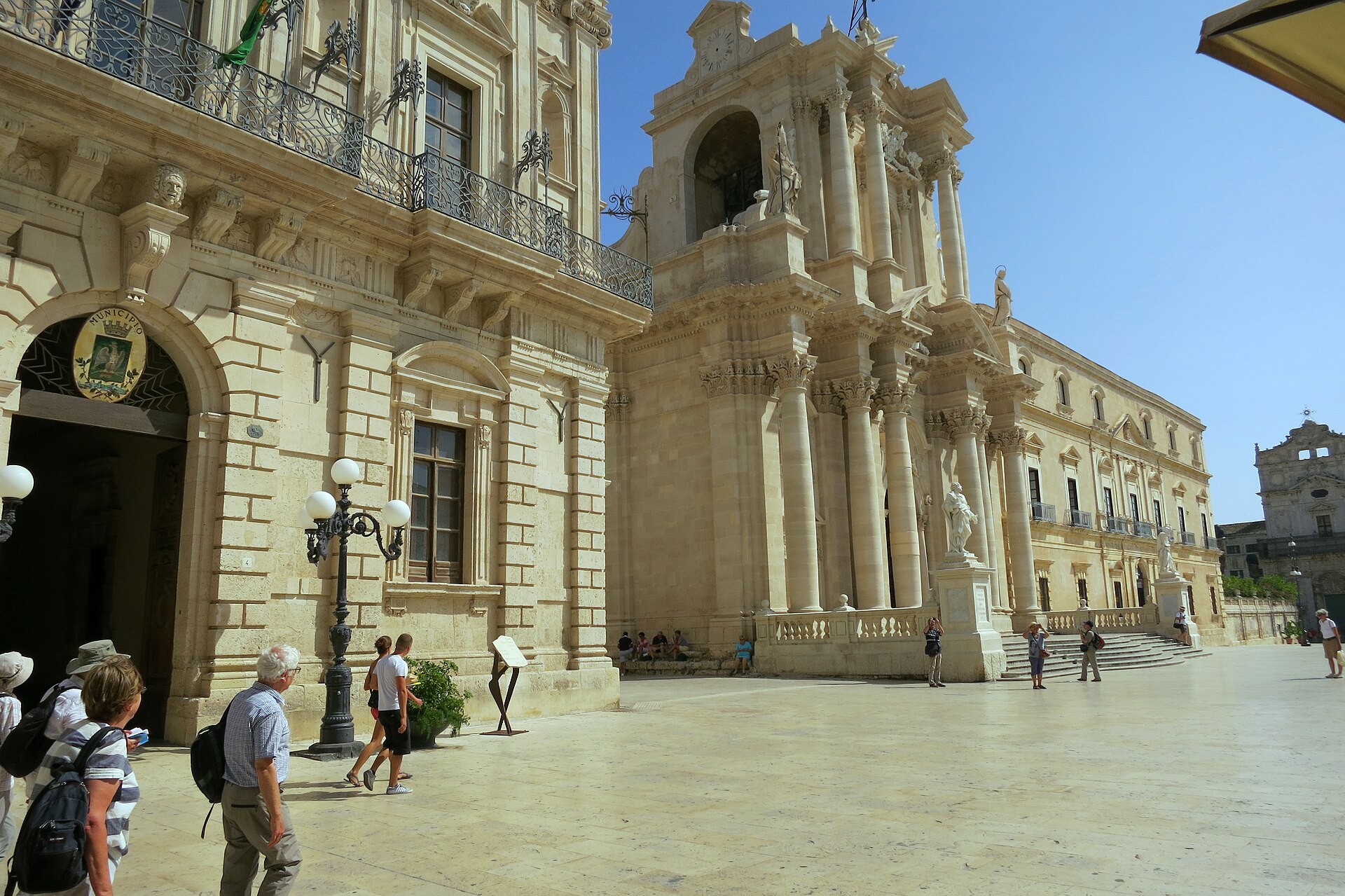
Ortigia is the tiny island old town of Syracuse, and it is the most beautiful corner of Sicily. Baroque palaces line lanes a few metres wide, a cathedral is built around the columns of a Greek temple and, most importantly, the whole place is ringed by sea. It is also small enough to walk end to end in twenty minutes.
Do not miss: Piazza Duomo at night, the morning market on Via de Benedictis, and the baroque hill towns of Noto and Modica, both under an hour away. The Greek theatre in the archaeological park on the mainland is the other essential.
Stay: Ortea Palace, an art nouveau former post office on the water, or Algilà, a smaller palazzo on the eastern seafront. For the countryside, Dimora delle Balze near Noto is exceptional.
Getting there: 1 hour by car from Catania airport, or 1 hour 15 by train from Catania to Siracusa. Cars are useless on Ortigia, so park on the mainland side.
19. Costa Smeralda and La Maddalena, Sardinia
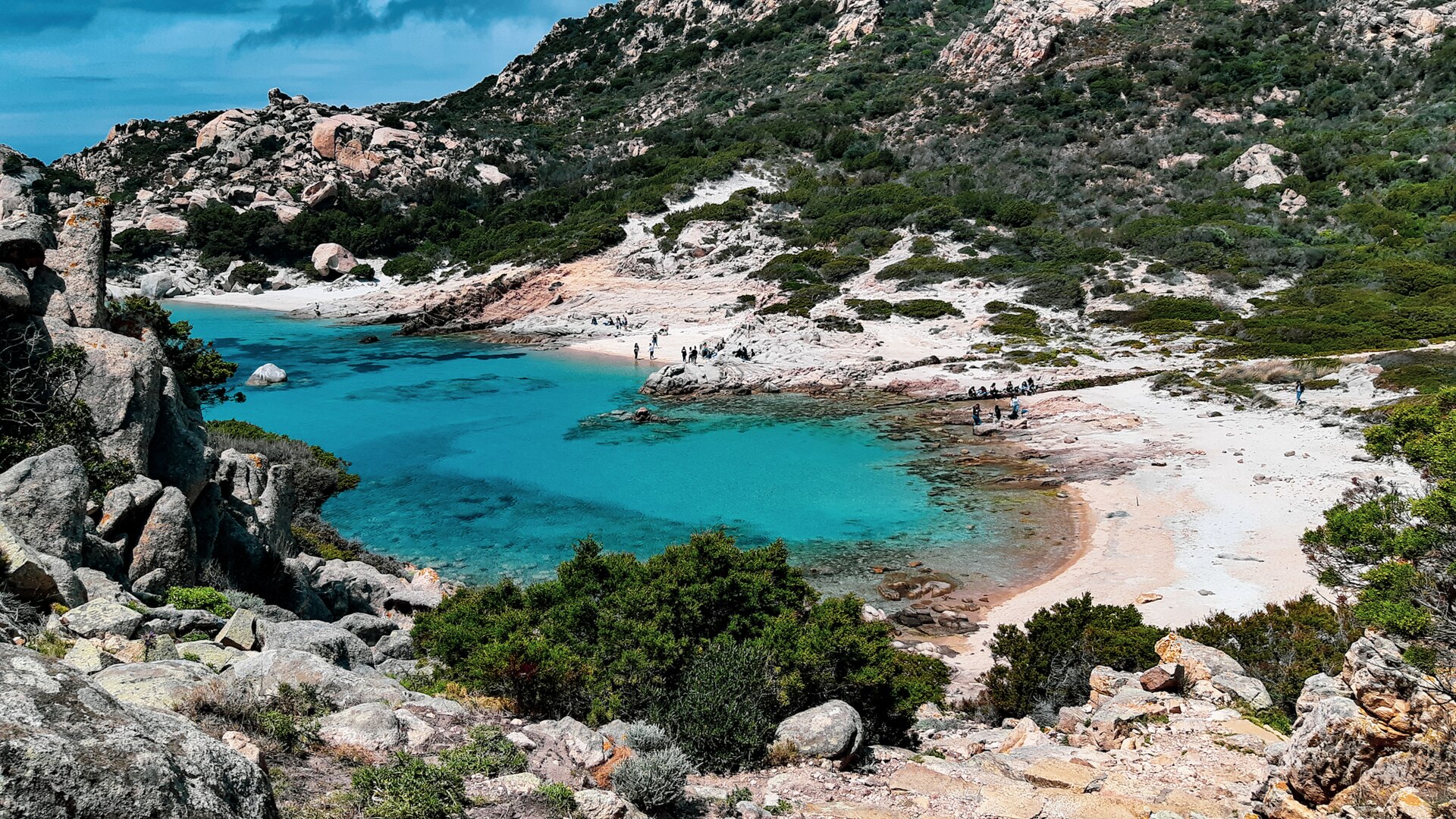
Sardinia’s north-east coast has the clearest water in Italy, in shades of turquoise that look unreal until you are standing in it. The Costa Smeralda is the glamorous strip, built in the 1960s by the Aga Khan, for example. Just offshore, the La Maddalena archipelago is wild, protected and reachable only by boat, and its beaches are the best in the Mediterranean.
Do not miss: a boat day around La Maddalena with a stop at Spiaggia Rosa on Budelli, the granite coves at Capriccioli, and an evening in the piazzetta of Porto Cervo. Sardinia also features in our 30 most beautiful islands in the world.
Stay: Hotel Cala di Volpe, the original Costa Smeralda hotel, is still the best, in our view. Otherwise, Hotel Pitrizza, on its own cove nearby, is quieter and more private.
Getting there: fly to Olbia, which has direct flights from most of Europe in summer. From there it is 30 minutes to Porto Cervo and 45 minutes to Palau for the La Maddalena ferry.
20. The Aeolian Islands, Sicily
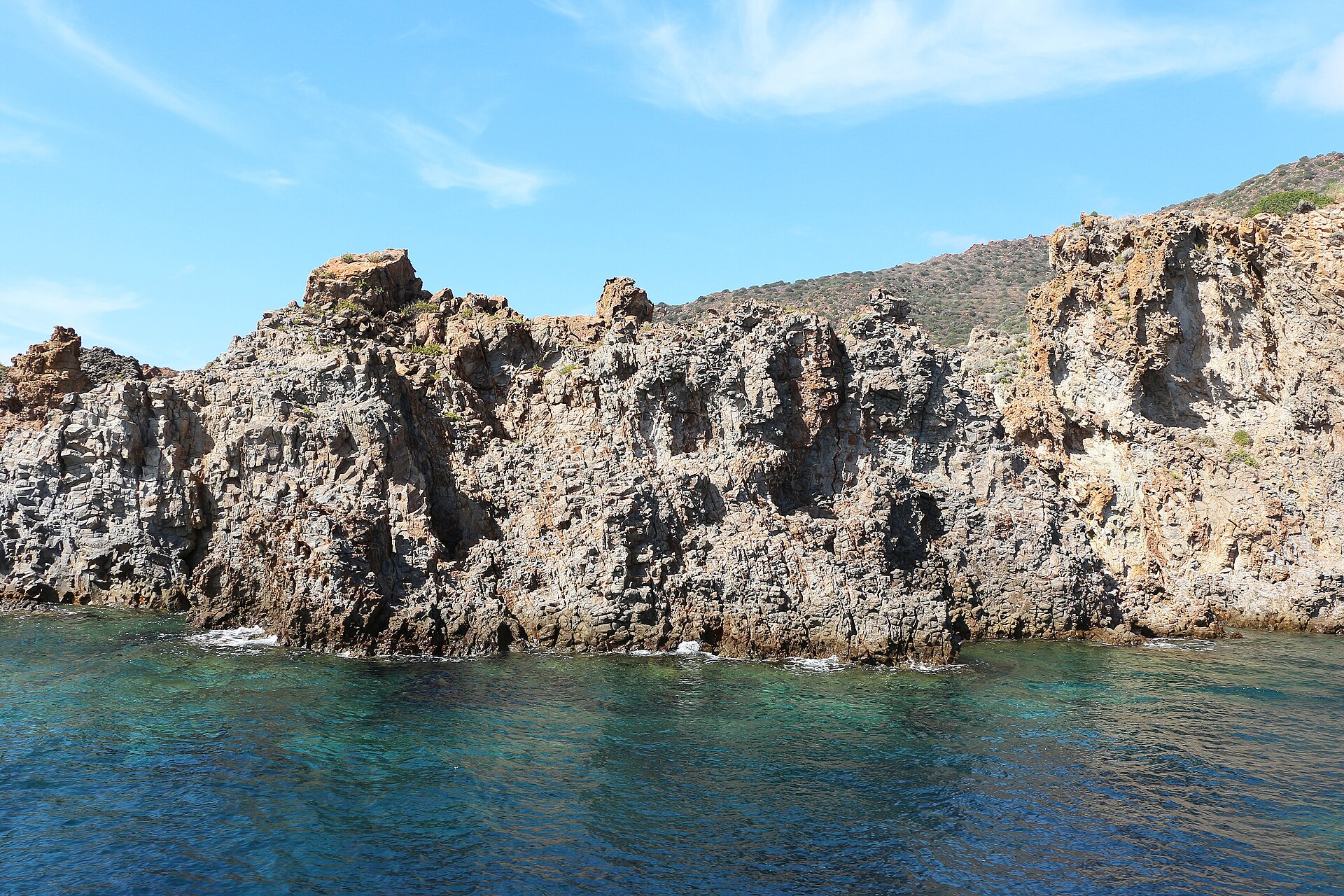
Seven volcanic islands off the north coast of Sicily, and still largely unknown outside Italy. Stromboli erupts every twenty minutes, Salina grows capers and Malvasia wine, while Panarea is the chic one where the Milanese spend August. There are no big resorts and very few cars, so this is the place to end a trip.
Do not miss: watching Stromboli erupt from a boat at dusk, the mud baths on Vulcano, and lunch at Da Alfredo in Salina for the pane cunzato. Then, do as little as possible.
Stay: Hotel Raya on Panarea, white terraces stepping down to the sea, is the island classic. On Salina, Capofaro Locanda & Malvasia sits in the vineyards beneath a lighthouse.
Getting there: hydrofoil from Milazzo, which is 45 minutes from Catania airport by car; Lipari takes an hour, Salina 90 minutes and Panarea about 2 hours. In summer there are also boats from Naples.
How to plan a trip around the best places to visit in Italy
You cannot see all 20 in one trip, and you should not try. Instead, pick one or two regions and give each place at least two nights. These four routes cover the best of the list.
| Route | Days | Places | Base | Fly into |
|---|---|---|---|---|
| The classic first trip | 10 | Rome, Florence, Val d’Orcia, Venice | Rome, Florence, then Venice | Rome, out of Venice |
| Lakes, mountains and the Riviera | 10 | Lake Como, the Dolomites, Verona, Cinque Terre, Portofino | Varenna, Cortina, Santa Margherita | Milan |
| The south | 8 | Amalfi Coast, Capri, Pompeii, Matera | Positano, then Matera | Naples, out of Bari |
| Sicily | 8 | Taormina, Ortigia, the Aeolian Islands | Taormina, Ortigia, Salina | Catania |
When to go
May, June and September are the months to aim for: warm, green and before or after the August crowds. The lakes and the Dolomites are best from June to September, because many hotels close in winter. The south and the islands stay warm into October. In fact, Rome and Florence are at their best in October and November, once the heat and the queues have gone.
Getting around
Italy’s high-speed trains are the easiest way to travel between the big cities, and they beat flying every time. Our three-week Italy by rail itinerary shows how far they can take you. However, you will need a car for the Val d’Orcia, the Dolomites, Puglia and Sardinia. For the Amalfi Coast and the islands, use the ferries.
Budget
Italy is not cheap in the places on this list, especially in June and September. For example, expect to pay €250 to €400 a night for a good four-star and €700 and up for the famous hotels on Como, Capri and the Amalfi Coast. The south and Sicily, on the other hand, are noticeably cheaper for food and wine. Our guide to travel costs in Europe has the full breakdown.
What to eat
Eat regionally, because every place on this list has a dish it does better than anywhere else: cicchetti in Venice, bistecca in Florence, pizza in Naples, orecchiette in Puglia, granita in Sicily. Start with our 15 foods you must try in Italy, then ask the waiter what is local.
Frequently asked questions about the best places to visit in Italy
What are the best places to visit in Italy for a first trip?
Rome, Florence and Venice, in that order, with two or three nights in each; these are the best places to visit in Italy for a first trip. Add the Val d’Orcia or the Amalfi Coast if you have more than ten days. That route covers the big sights, and in addition the trains between them are fast and easy.
What is the most beautiful place in Italy?
For scenery, the Dolomites. As a city, Venice. Along the coast, the Amalfi Coast. If you can only choose one, the Amalfi Coast gives you the sea, the cliffs, the food and the hotels all in one place.
How many days do you need to visit the best places in Italy?
In general, ten days covers one region well. Two weeks, however, lets you combine the north with Rome and Florence, or central Italy with the Amalfi Coast. Finally, the islands and Puglia each need their own week.
When is the best time to visit Italy?
In short, late May to June and September to early October. The weather is warm, the sea is swimmable from June and, best of all, the August crowds are gone. Avoid August entirely on the coast, because that is when Italians take their own holidays.
Can you visit the best places in Italy without a car?
Most of them, yes. Rome, Florence, Venice, Verona, Lake Como, Cinque Terre, Pompeii, Capri, Taormina and Ortigia all work by train and ferry. You will need a car for the Val d’Orcia, the Dolomites, Civita di Bagnoregio, Matera, Puglia and Sardinia.
Where are the best places to visit in Italy for a honeymoon?
First the Amalfi Coast and Capri, then Lake Como and Taormina. All four have the hotels, the views and, equally, the pace that a honeymoon needs. Our guide to where to honeymoon in Italy ranks them.
Keep exploring Italy and Europe
Once these places to visit in Italy are ticked off, the smaller places are where the country gets even better. Our 15 best small towns in Italy and best kept secrets in Italy pick up where this list leaves off, and where to honeymoon in Italy narrows it down for couples.
Beyond Italy, the same instinct for big sights and small places runs through our 20 incredible places to visit in France, the 25 most beautiful villages in France and the Europe bucket list. For practical planning, Italy’s official tourism site has the latest opening hours and events.

Brooke is a Tasmanian-born writer and professional baker who started World of Wanderlust in 2013 and has since travelled to 86 countries. These days her guides focus on what she knows best: the bakeries, hotels and places worth crossing the world for.
