
I fell in love with safari on my very first trip to Africa. I stayed at MalaMala in South Africa and saw the Big Five within the first two days. I was hooked, and I have been going back ever since. Along the way, I have learnt that choosing the best time to go on safari can make or break your trip.
The question I am asked most about safari is not where to go, but when: what is the best time to go on safari? The answer depends on what you want to see, where you want to go and how much you want to spend, because Africa’s safari calendar changes dramatically from month to month and country to country. The Great Migration moves in a giant loop through Tanzania and Kenya. The Okavango Delta floods in the middle of the dry season. Some of the best camps in Zambia close completely during the rains.
This is my month-by-month guide to the best time to go on safari in Africa, with where to go in every month of the year, the best time to visit each safari country, the camps and lodges I have stayed at, and why July in Botswana is my favourite month of all.
The Quick Answer: When Is the Best Time to Go on Safari?
- Best overall: June to October, the dry season across most of East and Southern Africa
- My pick: July in Botswana
- Best for the Great Migration river crossings: July to October in the northern Serengeti and Masai Mara
- Best for newborn animals and predator action: January to March in the southern Serengeti
- Best for gorilla trekking: June to September and December to February
- Best value: November to April, the green season
- Best for photography: the green season for colour and light; the dry season for sightings
Dry Season vs Green Season: Which Is the Best Time for Safari?
Most of Africa’s safari destinations have two main seasons, and understanding them is the key to planning your trip.
Dry season (roughly June to October)
As the land dries out, the grass thins and animals gather around rivers and waterholes, making them far easier to find. This is peak safari season, and the prices reflect it.
- Pros: the best wildlife viewing, sparse vegetation, fewer mosquitoes, lower malaria risk, cool mornings and warm, sunny days.
- Cons: the highest prices, the busiest camps, and very cold early mornings in Southern Africa.
Green season (roughly November to April)
The rains bring the bush back to life. Many animals give birth, migratory birds arrive, and the landscape turns lush and green.
- Pros: lower prices, fewer visitors, baby animals, dramatic skies and some of the most beautiful light for photography.
- Cons: afternoon storms, thicker vegetation that can make wildlife harder to spot, and some camps and roads closed.
One important exception: the Okavango Delta in Botswana floods in the dry season, not the wet, because the water takes months to travel down from the Angolan highlands. I will come back to why that matters.
African Safari Calendar at a Glance
| Month | Where to go | Highlight |
|---|---|---|
| January | Southern Serengeti (Tanzania), South Africa | Wildebeest calving season begins |
| February | Southern Serengeti (Tanzania) | Peak calving and predator action |
| March | Makgadikgadi Pans (Botswana), Serengeti | Zebra migration in Botswana’s salt pans |
| April | South Africa, Botswana’s Kalahari | Quiet, green, great value |
| May | South Africa, Botswana | The start of the dry season |
| June | Botswana, Zimbabwe, Tanzania, gorilla trekking | Floodwaters arrive in the Okavango |
| July | Botswana, Kenya, Tanzania, Zambia | My pick: peak flood and peak dry season |
| August | Masai Mara, northern Serengeti, Botswana | Mara River crossings |
| September | Zambia, Zimbabwe, Masai Mara, Botswana | Predators at shrinking waterholes |
| October | Zambia, Zimbabwe, Namibia, South Africa | Hot, dry and intense game viewing |
| November | South Africa, Kenya | First rains and baby animals |
| December | South Africa, Botswana, Southern Serengeti | Green season and the festive season in the bush |
The Best Time to Go on Safari: Month by Month
January
Where to go: Southern Serengeti and Ngorongoro (Tanzania); South Africa’s private reserves | Weather: Hot, with short afternoon showers | Best for: Predator lovers, baby animals, green landscapes
Highlight: The wildebeest herds gather on the short-grass plains of the southern Serengeti and around Ndutu as calving season begins.
Good to know: It is summer and the rainy season in South Africa, so expect lush landscapes and afternoon storms there.
January is a wonderful time to start the year in the bush. In Tanzania, the Great Migration is settled in the south, and the grasslands are full of life. In South Africa, the reserves are green and the impala and other antelope have young in tow.
Where I stayed: For a classic Serengeti experience, read my review of Serengeti House review.
February
Where to go: Southern Serengeti and Ndutu (Tanzania) | Weather: Warm, with a dry spell between the short and long rains | Best for: Big cat action, first-time Migration viewers
Highlight: Peak calving season: hundreds of thousands of wildebeest calves are born in just a few weeks, and the predators are never far behind.
Good to know: Calving season is one of the best times of the year in Tanzania, so book camps near Ndutu well ahead.
If you want to see predators in action, February is hard to beat. Lions, cheetahs and hyenas follow the herds, and the sheer number of newborn calves means there is action every day.
March
Where to go: Makgadikgadi and Nxai Pans (Botswana); Serengeti (Tanzania) | Weather: Warm and green, with rain | Best for: Repeat safari-goers, photographers, value seekers
Highlight: Thousands of zebra migrate across Botswana’s Makgadikgadi Pans, one of Africa’s great lesser-known migrations.
Good to know: The long rains begin in East Africa towards the end of March, and some camps start to close.
March is one of my favourite months for something different. The Kalahari turns green, the zebra migration arrives, and the light over the salt pans is extraordinary. It is also the time to look for meerkats.
Where I stayed: San Camp on the Makgadikgadi Pans is one of the most magical places I have ever slept, and it is the place to see the meerkats.
April
Where to go: South Africa; Botswana’s Kalahari | Weather: Cooling down, with the rains easing in Southern Africa | Best for: Value seekers, honeymooners, fewer crowds
Highlight: Green landscapes, quiet camps and some of the best rates of the year.
Good to know: April and May are the long rains in Kenya and Tanzania. Many East African camps close, so this is the time to focus on Southern Africa.
April is shoulder season in Southern Africa: the rains are ending, the bush is still green, and prices are lower than they will be in a few months. It is a smart time to go if you are travelling on a budget, or simply want camps to yourself.
May
Where to go: South Africa (including Kruger and the Sabi Sand); Botswana | Weather: Dry, sunny days and cooler nights | Best for: First-time safari-goers, families
Highlight: The dry season begins and the vegetation thins, making wildlife easier to spot.
Good to know: Shoulder season rates are often still available in May. It is a sweet spot before peak season pricing.
May is one of the most underrated months for safari. The dry season is beginning, the weather is pleasant and the crowds have not yet arrived.
Where I stayed: In the Sabi Sand, Singita Boulders review is safari at its most refined. In the Greater Kruger, Royal Malewane review is one of the finest lodges in Africa.
June
Where to go: Botswana; Zimbabwe (Hwange and Victoria Falls); Tanzania; Rwanda and Uganda for gorillas | Weather: Dry, with cold mornings and warm afternoons | Best for: Wildlife lovers, gorilla trekking, Victoria Falls
Highlight: The floodwaters reach the Okavango Delta, and Victoria Falls is still thundering after the rains.
Good to know: June is the start of peak season. Rates rise and the best camps book out early.
June marks the beginning of the classic safari season. In Tanzania, the herds move towards the Grumeti River in the western Serengeti. In Botswana, the delta begins to fill. And in Rwanda and Uganda, the dry season makes gorilla trekking a little easier underfoot.
Where I stayed: For a night under the stars as the delta fills, read about my stay in the Botswana Skybeds.
July (My Pick)
Where to go: Botswana (Okavango Delta, Chobe, Linyanti); Kenya; Tanzania; Zambia | Weather: Dry, clear and sunny, with chilly mornings | Best for: Everyone
Highlight: Peak floods in the Okavango combine with peak dry season, bringing animals to the water in huge numbers.
Good to know: Mornings in Botswana can be close to freezing, so pack layers, a warm jacket, a beanie and gloves.
July is my month. I explain exactly why below.
Where I stayed: In the Okavango Delta, andBeyond Sandibe, andBeyond Nxabega and Sable Alley are all wonderful bases for a July safari.
August
Where to go: Masai Mara (Kenya); northern Serengeti (Tanzania); Botswana | Weather: Dry and sunny | Best for: Great Migration river crossings
Highlight: The Mara River crossings, when the herds plunge into crocodile-filled water, are at their most dramatic.
Good to know: August is the busiest month in the Masai Mara. Choose a camp in a private conservancy for fewer vehicles at sightings.
If the Great Migration is on your bucket list, August is the month most people dream of. Crossings are never guaranteed, as the herds move on their own schedule, but your chances are high from late July to September.
Where I stayed: For the Mara River crossings, Angama Mara review sits on the edge of the Great Rift Valley escarpment, andBeyond Bateleur Camp is classic safari elegance, and Cottar’s 1920s Safari Camp is pure vintage romance. · andBeyond Bateleur Camp review · Cottar’s 1920s Safari Camp review
September
Where to go: South Luangwa (Zambia); Mana Pools (Zimbabwe); Masai Mara; Botswana | Weather: Hot and dry | Best for: Walking safaris, predator sightings, photographers
Highlight: Water sources shrink and wildlife concentrates around them, so predator sightings are excellent.
Good to know: September is one of the best months for walking safaris, especially in Zambia, the birthplace of the walking safari.
September is an exceptional month across Southern Africa. The bush is at its driest, the animals are concentrated and the game viewing is intense.
October
Where to go: Zambia; Zimbabwe; Etosha (Namibia); South Africa | Weather: Very hot and dry, before the rains | Best for: Serious wildlife lovers, photographers
Highlight: The end of the dry season brings huge concentrations of animals to the last remaining water.
Good to know: October can be extremely hot, especially in the Zambezi Valley. Choose a camp with a plunge pool.
October is not for everyone, but for wildlife lovers it is spectacular. In Namibia’s Etosha, the waterholes are busy all day long.
Where I stayed: Pair Etosha with the dunes of Sossusvlei and a stay at andBeyond Sossusvlei Desert Lodge.
November
Where to go: South Africa; Kenya | Weather: Hot, with the first rains | Best for: Baby animals, value seekers, birdwatchers
Highlight: The first rains turn the bush green almost overnight, and the antelope give birth.
Good to know: Many camps in Zambia and the more remote parts of Zimbabwe close for the rainy season from around November.
November is a time of change. The heat breaks, the rains arrive and the bush transforms. In South Africa, it is impala lambing season, which means plenty of babies and plenty of predators.
December
Where to go: South Africa; Botswana; southern Serengeti (Tanzania) | Weather: Hot and green, with afternoon storms | Best for: Families, festive season, photographers
Highlight: Lush landscapes, newborn animals and migratory birds, plus the herds returning to the southern Serengeti.
Good to know: The Christmas and New Year period is peak season for many camps. Book early.
There is something special about spending the festive season in the bush. South Africa’s private reserves are a wonderful choice for families over the holidays.
Where I stayed: Finish a South African safari in Cape Town at Ellerman House, Tintswalo Atlantic or Gorgeous George, or read my comparison of Ellerman House vs The Silo.

Why July Is the Best Time to Go on Safari (in My Opinion)
Of everywhere I have been on safari, Botswana is my favourite. There is nowhere as raw and real. And July is the month I would choose above all others.
Here is why. The rains that fall in the Angolan highlands between January and March take months to make their way down into the Okavango Delta. By July, the floodwaters have arrived, just as the rest of Botswana is at its driest. Animals travel from all over the region to the water, and the delta, a UNESCO World Heritage Site, becomes one of the richest wildlife areas on earth.

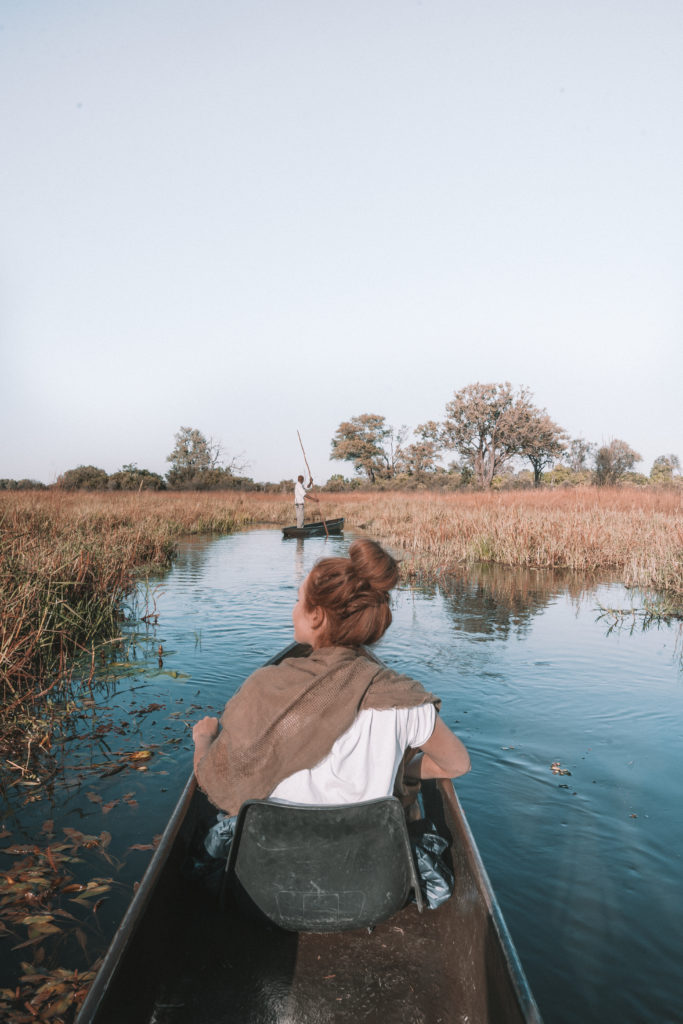
- The best of both worlds: water-based safari by mokoro and boat, plus classic game drives on dry land.
- Huge concentrations of wildlife: elephant, buffalo, lion, leopard and wild dog are all drawn to the water.
- Perfect weather: clear skies, warm sunny days and no rain.
- Fewer mosquitoes: it is the cool, dry season, with a lower malaria risk.
- Low-volume tourism: Botswana limits visitor numbers in its best areas, so you share sightings with very few other vehicles.
The only downside? July is peak season, and the best camps book out a year or more ahead. If July is your dream, start planning now.

Read more: why Botswana should be your next safari · my favourite safari lodges in Botswana · Sandibe Okavango Safari Lodge review · Botswana Skybeds review
The Best Time to Go on Safari by Country
Botswana
Best time: June to October for the delta and Chobe; December to April for the Kalahari and the zebra migration. My favourite month is July.
Read more: Sandibe Okavango Safari Lodge review · Sable Alley review · San Camp review · Nxabega Okavango Tented Camp review · how to see the meerkats in Botswana

South Africa
Best time: May to October for the best game viewing in Kruger and the Sabi Sand; November to March for green landscapes and newborn animals. South Africa is a year-round safari destination.
Read more: the best safari lodges in South Africa · Singita Boulders · Royal Malewane

Kenya
Best time: July to October for the Great Migration in the Masai Mara; January to February for dry, hot weather. Avoid the long rains of April and May.
Read more: where to go on safari in Kenya · Angama Mara · Giraffe Manor

Tanzania
Best time: January to February for calving season in the southern Serengeti; June to October for the dry season and river crossings in the north. Avoid April and May, when many camps close.
Read more: what to know before you visit Tanzania · Serengeti House

Zambia
Best time: June to October, with September and October the peak for walking safaris. Many bush camps close during the rains.
Zimbabwe
Best time: July to October for Hwange and Mana Pools. Visit Victoria Falls from around March to June for the most water.
Read more: a guide to Victoria Falls

Namibia
Best time: June to October for Etosha, when animals gather at the waterholes.
Read more: how to plan a trip to Namibia · andBeyond Sossusvlei Desert Lodge review

Rwanda and Uganda
Best time: June to September and December to February for gorilla trekking, when the trails are drier. Permits are limited, so book early.

The Best Time to Go on Safari for Your Trip Style
- A first safari: June to October in South Africa or Botswana, when wildlife is easiest to spot.
- The Great Migration: January to March for calving in Tanzania; July to October for river crossings in Kenya and northern Tanzania.
- A honeymoon: June to October for safari, finished with a beach in Zanzibar or Mauritius.
- Families: South Africa’s malaria-free reserves, in the school holidays.
- A safari on a budget: the green season, from November to April, when rates can be far lower.
- Photographers: the green season for dramatic skies and colour; the dry season for action.
Read more: andBeyond Mnemba Island review · the best hotels in Zanzibar
Tips for Planning Your Safari at the Best Time
- Book early. The best camps have a limited number of tents, and peak season books out 12 months or more in advance.
- Stay at least three nights per camp. More time means more chances for great sightings.
- Combine two or three areas. A delta camp with a dry-land camp in Botswana, or a safari with a beach, gives you variety.
- Consider private conservancies. They limit vehicles, allow off-road driving and night drives, and offer more exclusive sightings.
- Pack layers. Even in Africa, dry-season mornings can be bitterly cold in an open vehicle.
- Check malaria advice. Speak to a travel doctor before you go.
Read more: a beginner’s guide to safari · what to pack for safari · how much to budget for a safari · the 10 best countries for safari · the 20 best safari lodges in Africa
Best Time to Go on Safari: FAQs
What is the best month to go on safari?
For most destinations, the dry season from June to October offers the best game viewing. My personal favourite is July in Botswana.
When is the best time to see the Great Migration?
From July to October for the river crossings in the northern Serengeti and Masai Mara, and from January to March for calving season in the southern Serengeti.
What is the cheapest time to go on safari?
The green season, roughly November to April, offers the lowest rates in most destinations. April and May are often the best value in Southern Africa.
Is it worth going on safari in the rainy season?
Yes. The rain usually falls in short afternoon storms, the landscapes are beautiful, there are newborn animals everywhere and you will share sightings with fewer people.
When should I book a safari?
Book 9 to 12 months ahead for peak season, and even earlier for the most popular camps in July, August and September.
So, When Is the Best Time to Go on Safari?
There is no bad time to go on safari, only a different experience. If you want the classic safari with the best chance of seeing as much wildlife as possible, go in the dry season, between June and October. If you want value, privacy and newborn animals, go in the green season. And if you want my answer, it is July in Botswana. I have never been anywhere quite like it.

Brooke is a Tasmanian-born writer and professional baker who started World of Wanderlust in 2013 and has since travelled to 86 countries. These days her guides focus on what she knows best: the bakeries, hotels and places worth crossing the world for.
