
Portugal is small enough to drive end to end in a day, yet it packs in more variety than countries three times its size. The best places to visit in Portugal run from a wine valley carved into terraces to a capital built on seven hills, a surf coast with the biggest waves on earth and two volcanic archipelagos out in the Atlantic. Above all, it is still good value, friendly and easy.
This guide ranks the 20 most incredible places to visit in Portugal, grouped by region so you can string several together on one trip. For each one you will find why it earns its place, the one thing not to miss, where to stay and how to get there without a headache. Then, at the end, there are four routes that put it all together.
If you are starting with the capital, read our Lisbon bucket list and quick guide to Lisbon first. Afterwards, come back here for everything beyond it.
Quick picks: the best places to visit in Portugal for your kind of trip
Short on time? Then choose by what you want from the trip. Each pick links down to its full entry.
| Best for | Place | Region |
|---|---|---|
| A first visit | Lisbon | Lisbon |
| Food and wine | The Douro Valley | North |
| Fairytale palaces | Sintra | Lisbon coast |
| A honeymoon | Comporta | Alentejo coast |
| Beaches | Lagos | Algarve |
| Hiking and nature | São Miguel, Azores | Azores |
| Surfing | Nazaré | Centre |
| History | Évora | Alentejo |
| Fewest tourists | Flores, Azores | Azores |
| Winter sun | Madeira | Madeira |
How the regions fit together. The north (places 1 to 5) is Porto, the Douro and the green hills behind them, and it works as a five-day loop. Lisbon and the centre (6 to 11) are where most first trips start, with Sintra, Cascais and Comporta all within an hour of the capital. The Alentejo and the Algarve (12 to 16) are the hot, slow south. Finally, the islands (17 to 20) are a separate trip, and they are where you will find the fewest tourists.
The best places to visit in Portugal: Porto and the north
Northern Portugal is greener, older and more traditional than the south. Porto is the anchor, the Douro Valley is an hour inland, and beyond that the country rises into granite hills and national park. In short, this is the Portugal the Portuguese themselves love most.
1. Porto, Northern Portugal
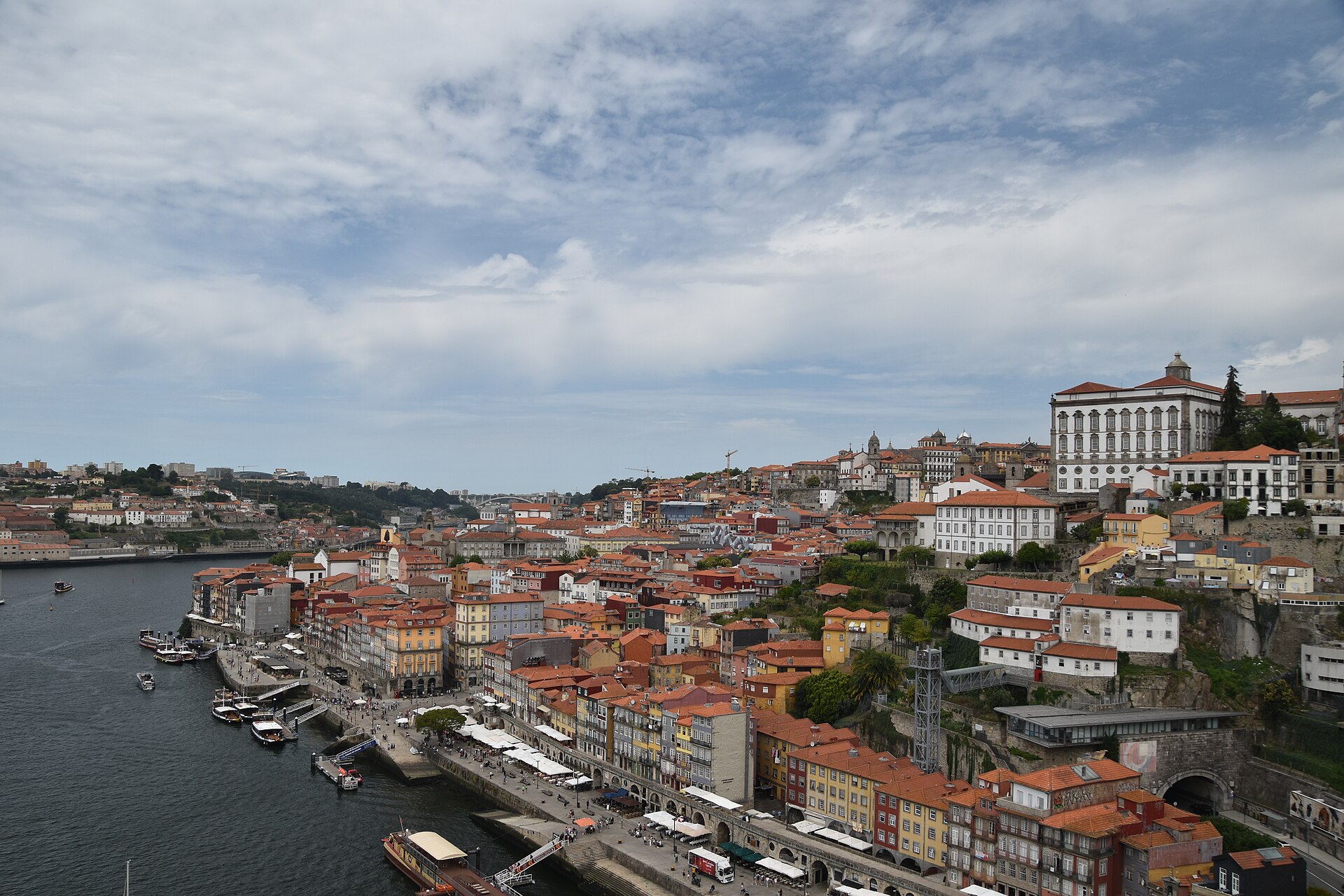
Porto is Lisbon’s smaller, grittier rival, and many people end up preferring it. The old town tumbles down a gorge to the Douro river in a jumble of tiled facades and washing lines, the port lodges line the far bank and the bridges are works of art in themselves. It is also compact, so three days covers it on foot.
Do not miss: the view from the top of the Dom Luís I bridge, a port tasting across the river in Vila Nova de Gaia, the Livraria Lello bookshop early in the morning and a francesinha sandwich, which is as heavy as it sounds.
Stay: The Yeatman, up among the port lodges in Gaia, has the best view of the city and a two-star restaurant. Torel Avantgarde, in the centre, is the design choice.
Getting there: Porto airport is 30 minutes from the centre by metro. By train, Lisbon is about 3 hours on the Alfa Pendular.
2. The Douro Valley, Northern Portugal
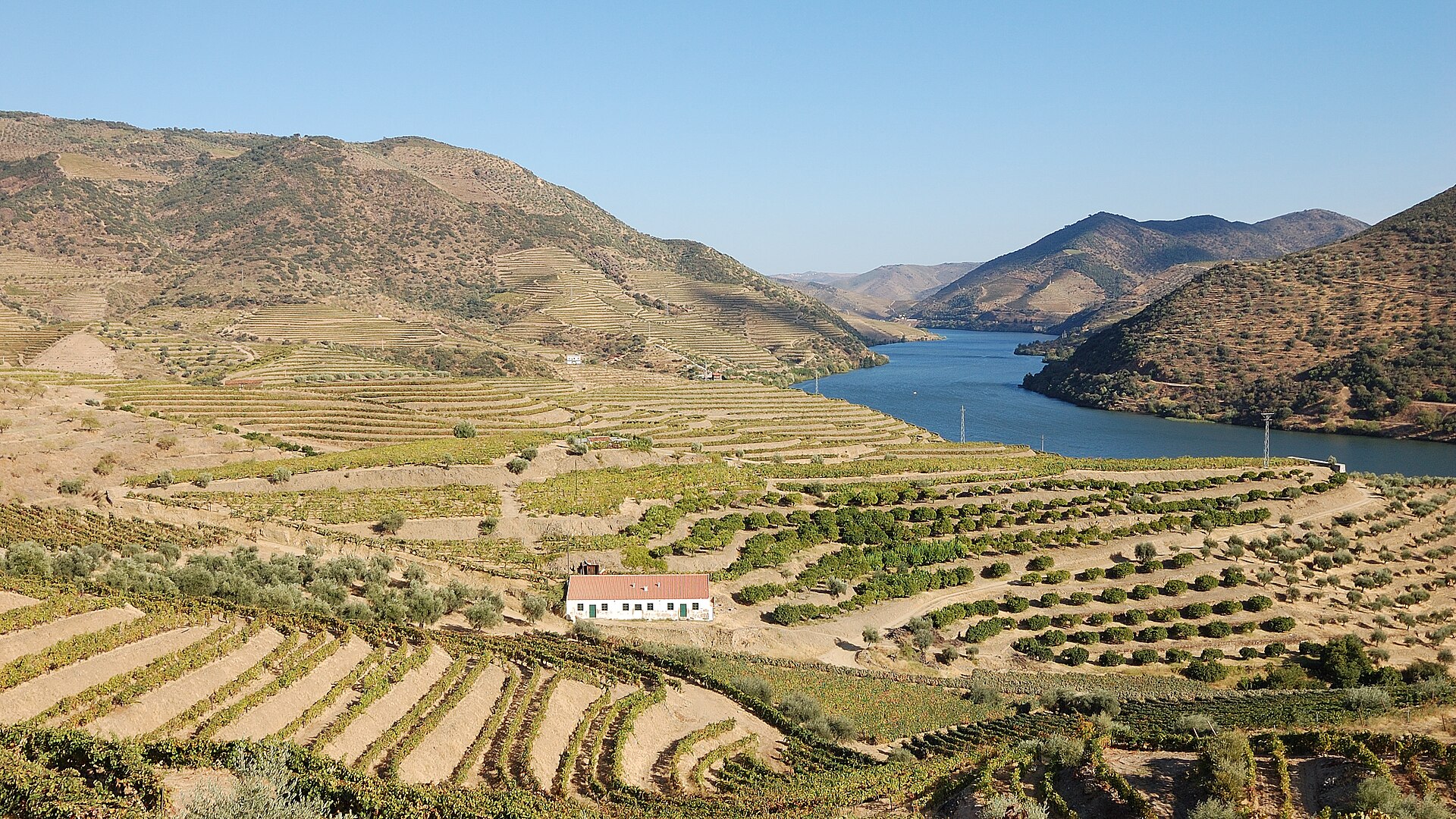
The Douro is the oldest demarcated wine region in the world, and it is also one of the most beautiful. Vineyards climb the valley walls in hand-built terraces, the river winds between them and the quintas, the wine estates, sit at the end of long cypress drives. Come in September for the harvest, or in spring, when the slopes are green.
Do not miss: the viewpoint at São Leonardo de Galafura, a tasting and lunch at Quinta do Crasto or Quinta Nova, and the train from Porto to Pinhão, which runs beside the river for the final hour.
Stay: Six Senses Douro Valley, in a 19th-century manor above the river, is the best hotel in the region. Quinta da Pacheca, near Peso da Régua, lets you sleep in a giant wine barrel.
Getting there: 1 hour 30 by car from Porto, or 2 hours 30 by train to Pinhão. Hire a car, because the quintas are spread along 100 kilometres of valley.
3. Guimarães, Northern Portugal
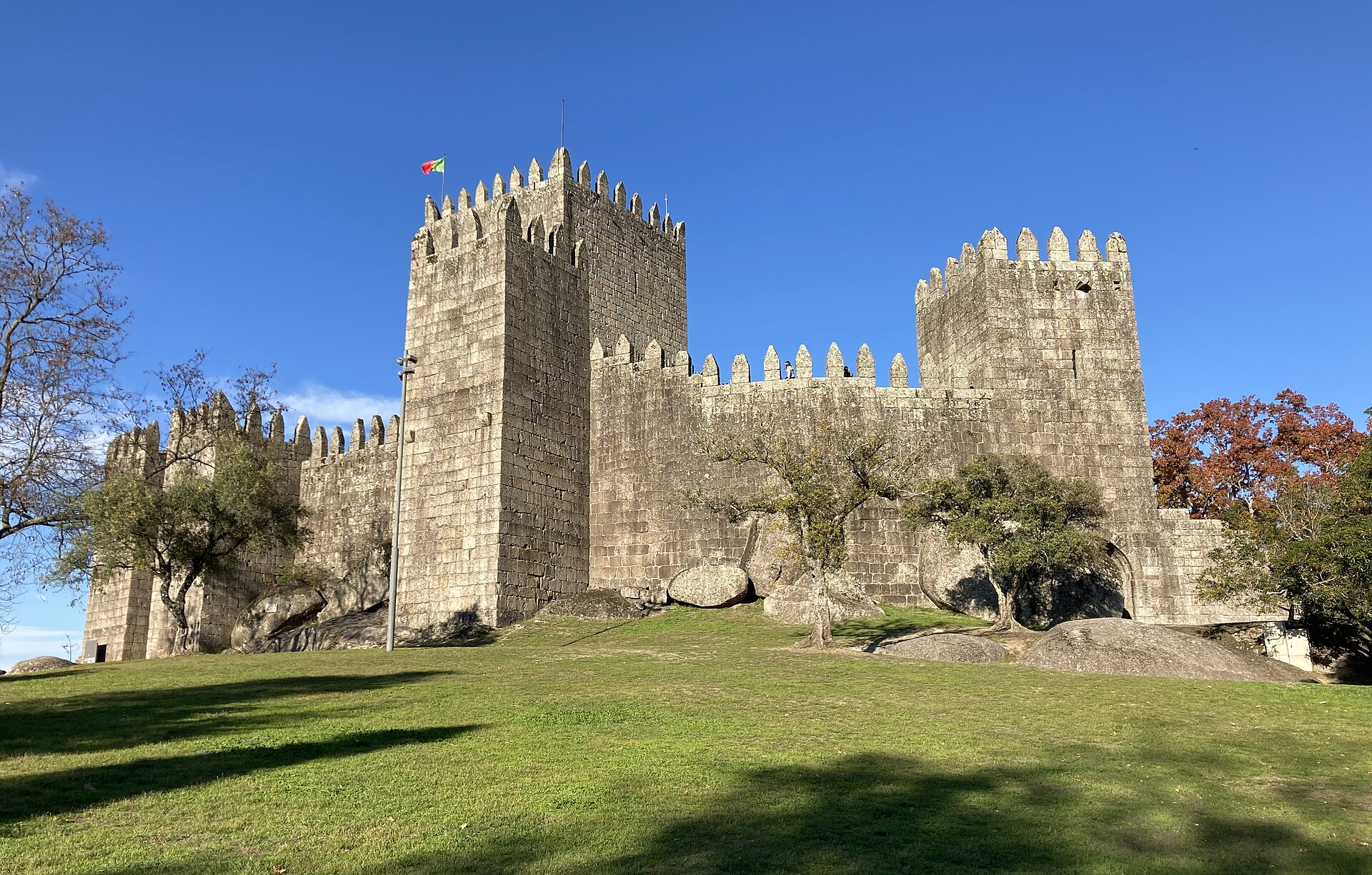
Guimarães is where Portugal began. The country’s first king was born here in 1110, and the castle he was born in still stands above a medieval old town of granite squares and painted balconies. It is a UNESCO site, yet it is small and calm enough to see in an afternoon from Porto.
Do not miss: the castle and the Dukes of Braganza palace, the Largo da Oliveira square, and the cable car up to Penha hill for the view over the whole town.
Stay: Pousada Mosteiro de Guimarães, a converted 12th-century monastery on the hill above town, is one of the best pousadas in Portugal. Alternatively, Hotel da Oliveira sits on the main square.
Getting there: 1 hour 10 by train from Porto São Bento, or 50 minutes by car. Braga, with its famous Bom Jesus staircase, is 25 minutes further.
4. Peneda-Gerês National Park, Northern Portugal
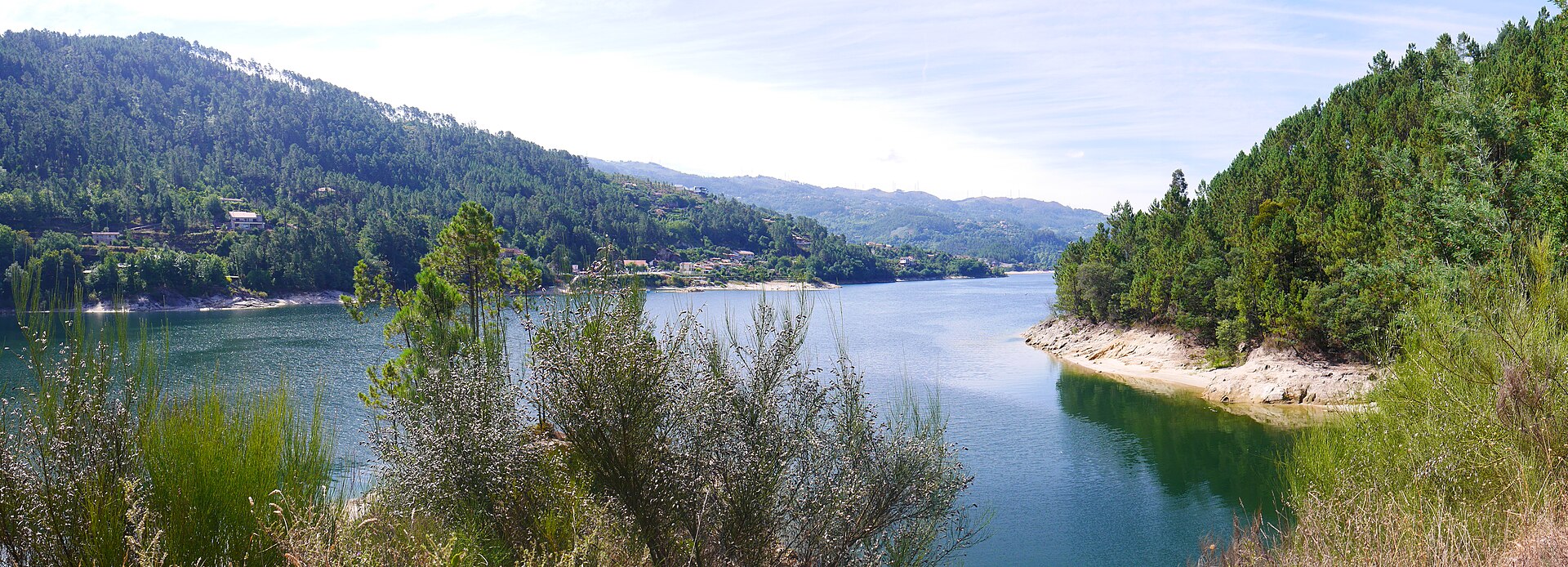
Peneda-Gerês is Portugal’s only national park, and it is a surprise: granite peaks, oak forests, wild horses and waterfalls, all pressed against the Spanish border. Stone villages with communal granaries sit in the valleys, and the lagoons are swimmable in summer. Most visitors never hear of it, which is exactly the appeal.
Do not miss: the Arado waterfall, the village of Soajo and its stone granaries, the Pedra Bela viewpoint and a swim in the Cávado reservoir.
Stay: Pousada Mosteiro de Amares, a Cistercian monastery on the edge of the park, is the atmospheric base. Inside the park, Casa do Mezio in Arcos de Valdevez is a small rural retreat.
Getting there: 1 hour 30 by car from Porto. A car is essential, because the park has no useful public transport.
5. Coimbra, Central Portugal
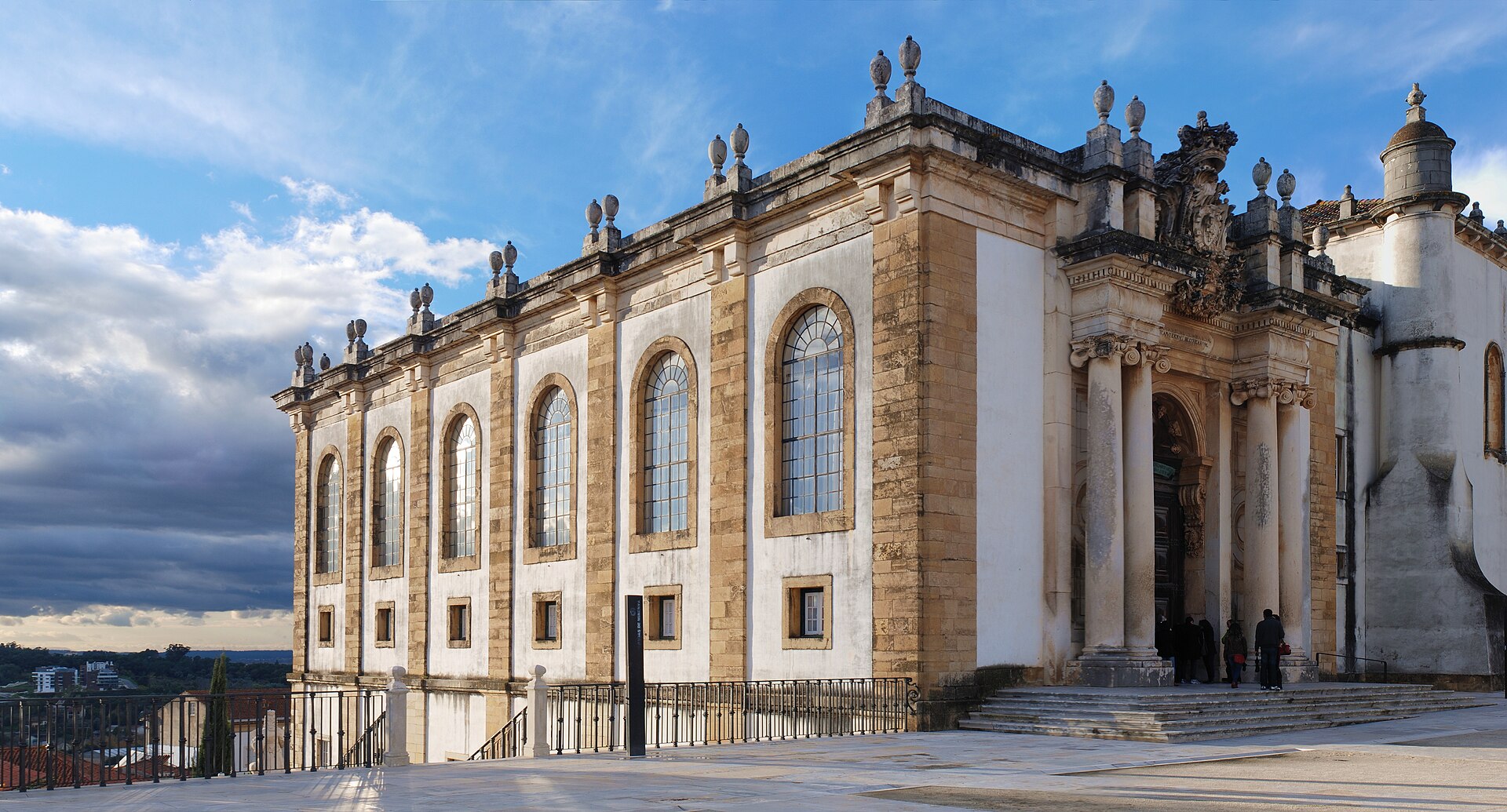
Coimbra is Portugal’s Oxford, a hill town built around one of the oldest universities in Europe. Students in black capes still walk its lanes, and the baroque library, with its painted ceilings and resident bats, is one of the most beautiful rooms in the world. It is also the halfway point between Porto and Lisbon, so it breaks the journey perfectly.
Do not miss: the Joanina Library, which must be booked by timed slot, the view from the university bell tower and a late-night fado performance, which in Coimbra is sung only by men.
Stay: Quinta das Lágrimas, a palace hotel in the gardens where Portugal’s most famous love story ended, is the romantic choice. Sapientia Boutique Hotel, beside the university, is the modern one.
Getting there: 1 hour by train from Porto or 1 hour 40 from Lisbon on the Alfa Pendular. The old town is a steep walk uphill from Coimbra-A station.
The best places to visit in Portugal: Lisbon and the centre
Lisbon is the hub of any first trip, and the coast around it holds some of the best places to visit in Portugal within an hour of the city. Give the capital three nights, then move: Sintra and Cascais are day trips, while Comporta and Nazaré each deserve a night or two.
6. Óbidos, Central Portugal
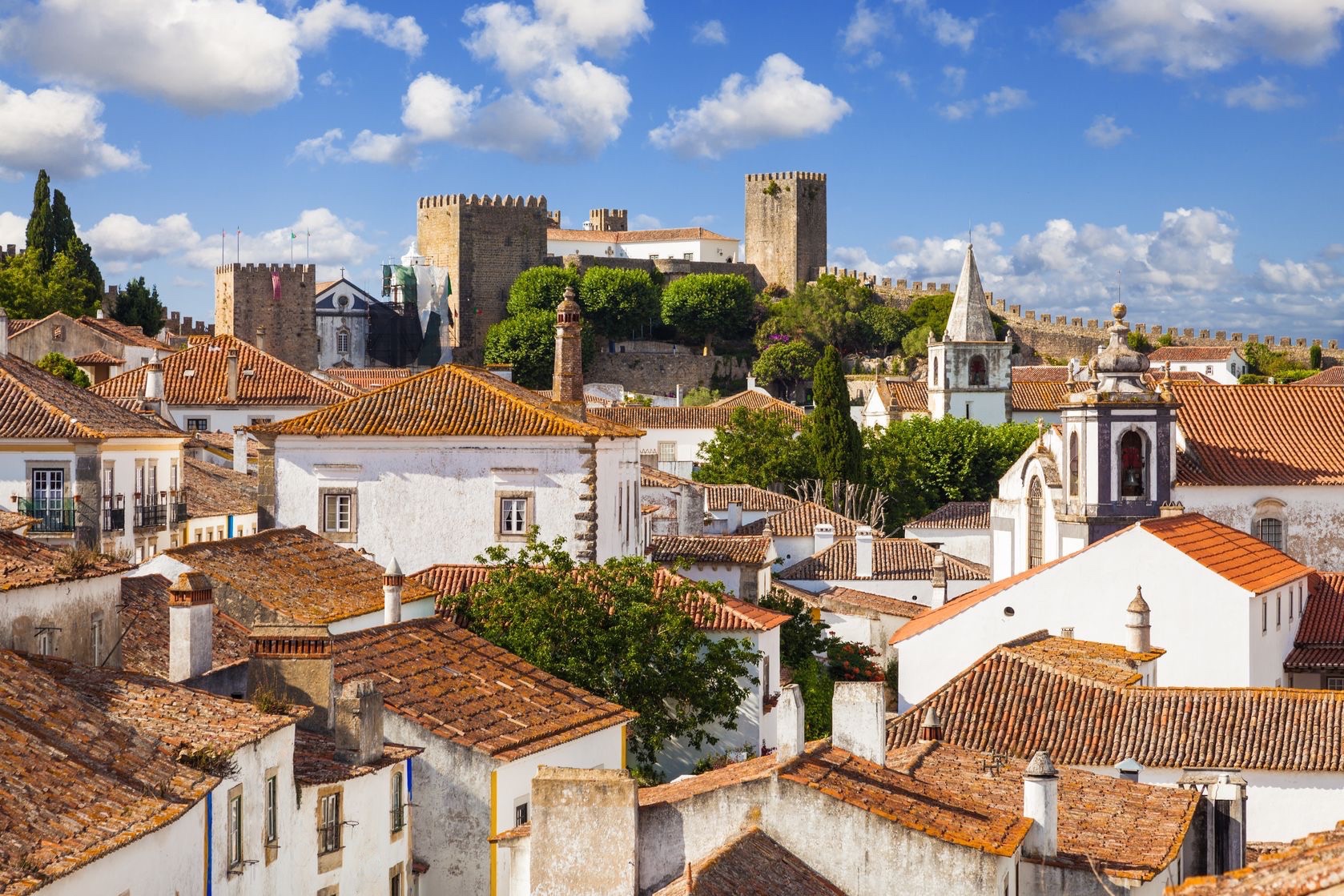
Óbidos is a walled medieval village of whitewashed houses trimmed in blue and yellow, with bougainvillea on every wall and a castle at the top. Portuguese kings gave it to their queens as a wedding present for 600 years. It is also small, so come early or stay the night, because the day-trip crowds arrive by 11am.
Do not miss: walking the full circuit of the walls, a shot of ginja, the local cherry liqueur, served in a chocolate cup, and the bookshop inside the old church of Santiago.
Stay: Pousada Castelo de Óbidos, inside the castle itself, is the one to book. The Literary Man, a hotel lined with 60,000 books, is the quirky alternative.
Getting there: 1 hour by car or express bus from Lisbon. Combine it with Nazaré, 40 minutes further north.
7. Nazaré, Central Portugal
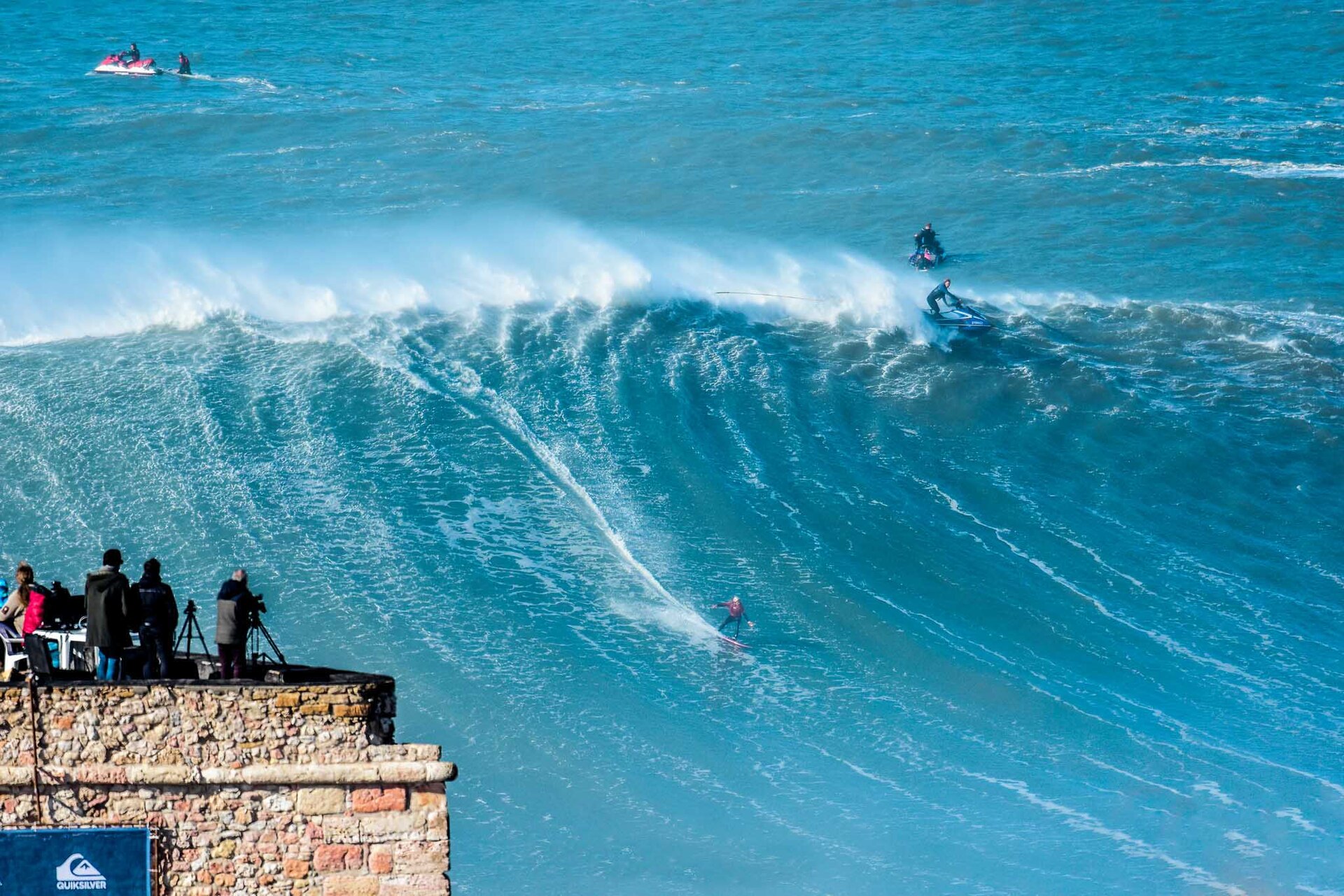
Nazaré is a fishing town with a wide sandy beach, a cliff-top old quarter reached by funicular and, in winter, the biggest surfable waves on the planet. An underwater canyon funnels Atlantic swells into walls of water over 25 metres high, and the world’s best big-wave surfers come to ride them. In summer, meanwhile, it is a cheerful beach resort.
Do not miss: the lighthouse fort at Praia do Norte between October and March, when the big waves run, the view from the Sítio clifftop and grilled sardines on the seafront.
Stay: Hotel Magic Art, on the beachfront, is the comfortable choice in town. For something special, Areias do Seixo, 40 minutes south, is one of the best beach hotels in Portugal.
Getting there: 1 hour 30 by car or express bus from Lisbon. There is no train, so drive or take the bus from Lisbon’s Sete Rios terminal.
8. Lisbon
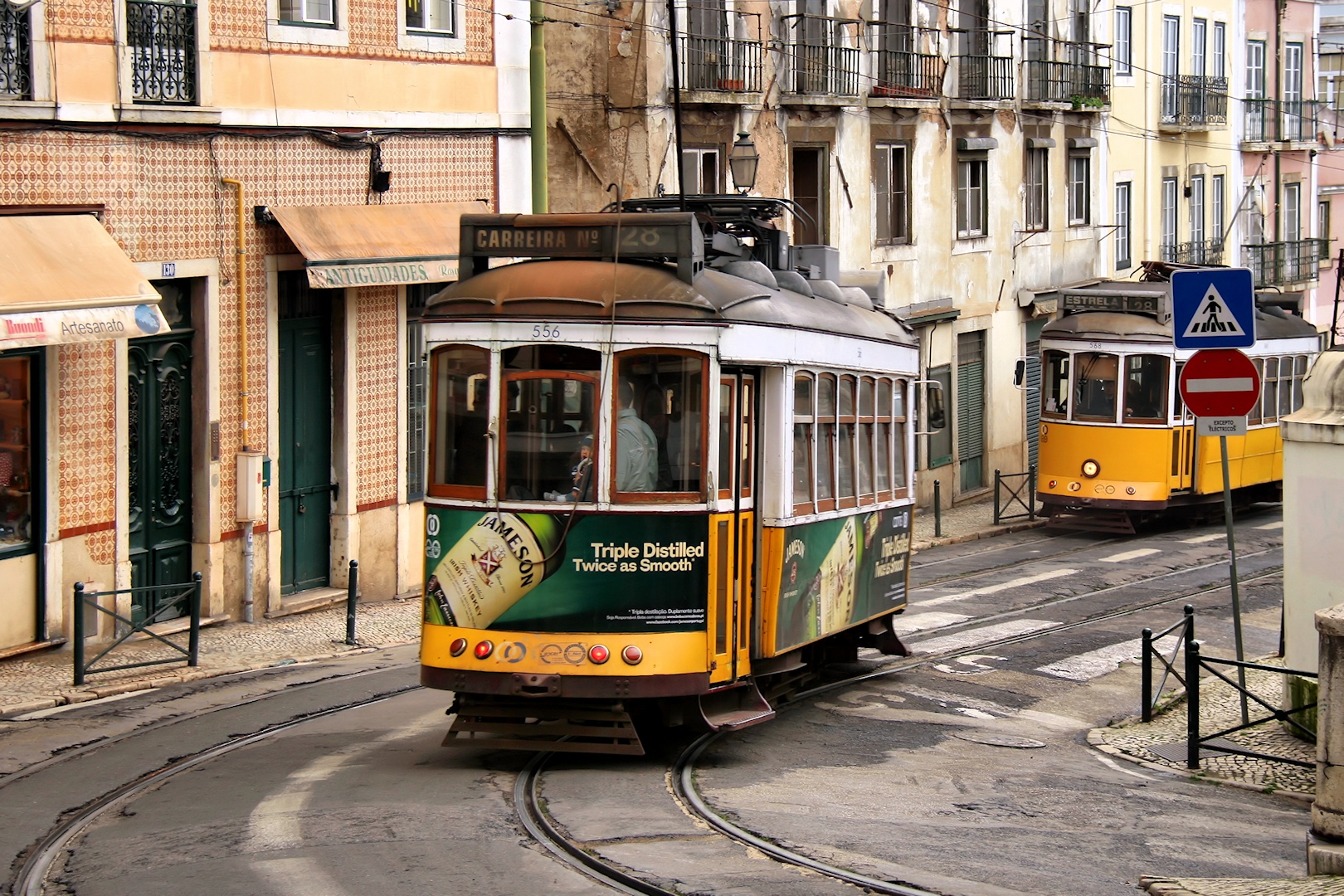
Lisbon is a capital built on seven hills above a river wide enough to look like the sea, with yellow trams, tiled facades and viewpoints at the top of every climb. It has the light of a southern city and the price tag of a smaller one. Three nights is the minimum, because the neighbourhoods each take a day.
Do not miss: the Alfama at dawn, before the tour groups, the Jerónimos Monastery and pastéis de nata in Belém, and sunset at the Miradouro da Senhora do Monte. Our guide to the Alfama and Lisbon bucket list cover the rest.
Stay: Four Seasons Hotel Ritz Lisbon, above the Eduardo VII park, is the grand address. Bairro Alto Hotel, on the square between Chiado and Bairro Alto, has the best rooftop in the city.
Getting there: Lisbon airport is 20 minutes from the centre by metro or taxi. By train, Porto is about 3 hours and Madrid is best reached by air.
9. Sintra, Lisbon coast
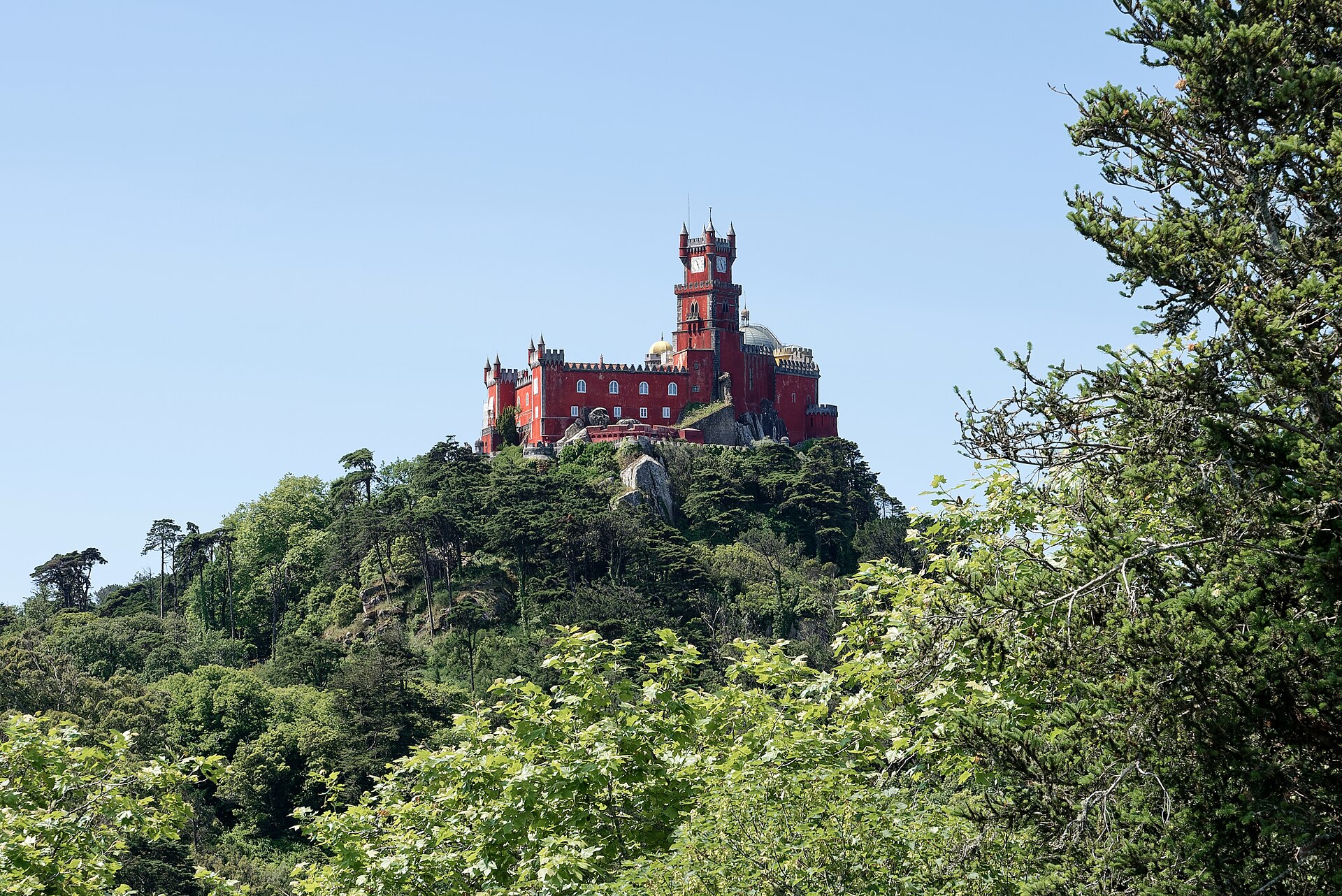
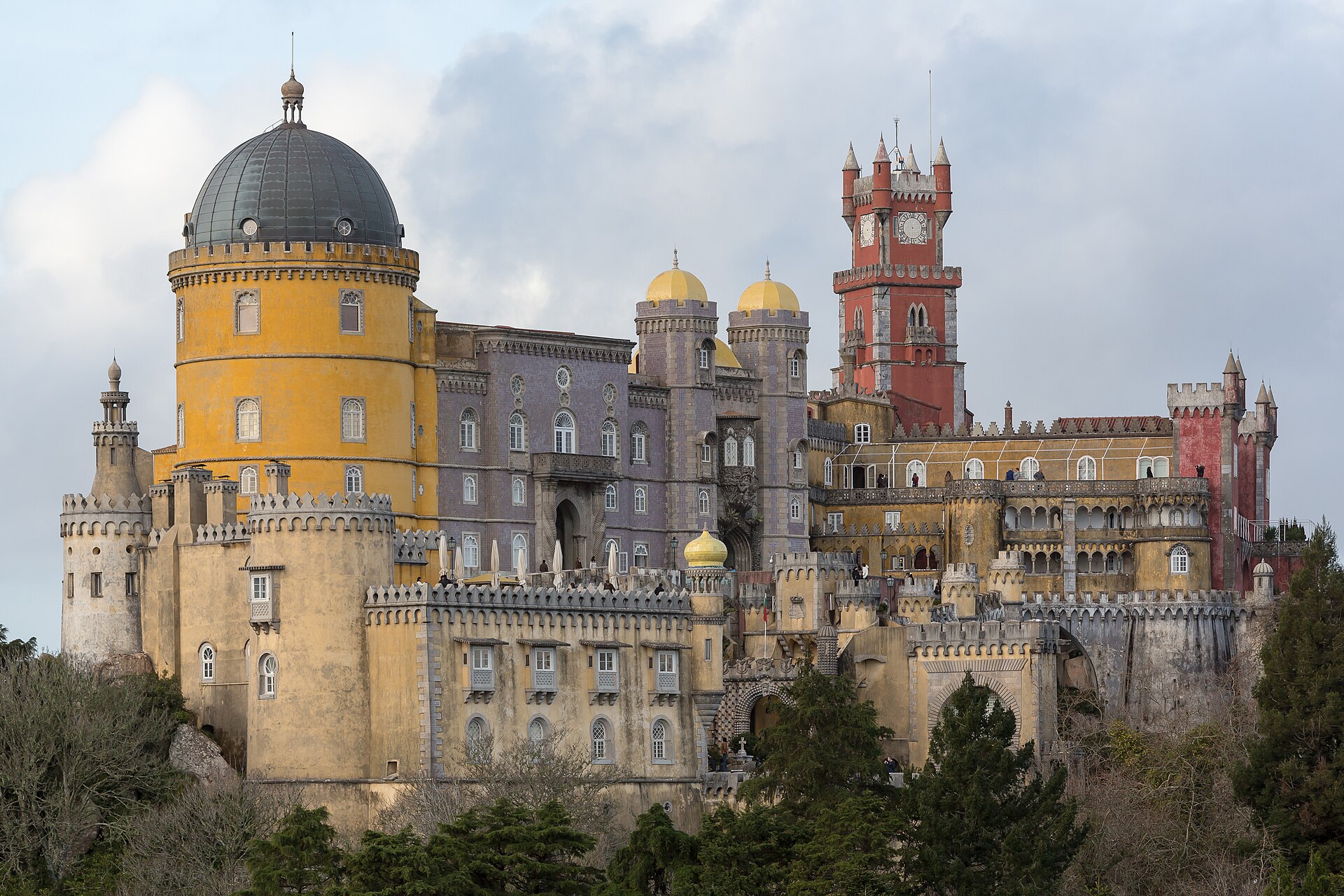
Sintra is a wooded mountain 40 minutes from Lisbon, scattered with palaces that look as if they were drawn by children. The Pena Palace is painted red and yellow and sits on the highest peak, the Quinta da Regaleira has a spiral well that descends nine storeys and the Moorish castle walls run along the ridge. It is, without doubt, the best day trip in Portugal.
Do not miss: the Pena Palace at opening time, with a ticket booked online, the Initiation Well at Regaleira and the Monserrate gardens, which almost nobody visits. Our guide to Sintra and Cascais has the full route.
Stay: Tivoli Palácio de Seteais, an 18th-century palace with views to the Pena Palace, is the romantic choice. Penha Longa Resort, between Sintra and Cascais, has the golf and the spa.
Getting there: 40 minutes by train from Lisbon Rossio station. Leave the car behind, because parking in Sintra is close to impossible.
10. Cascais, Lisbon coast
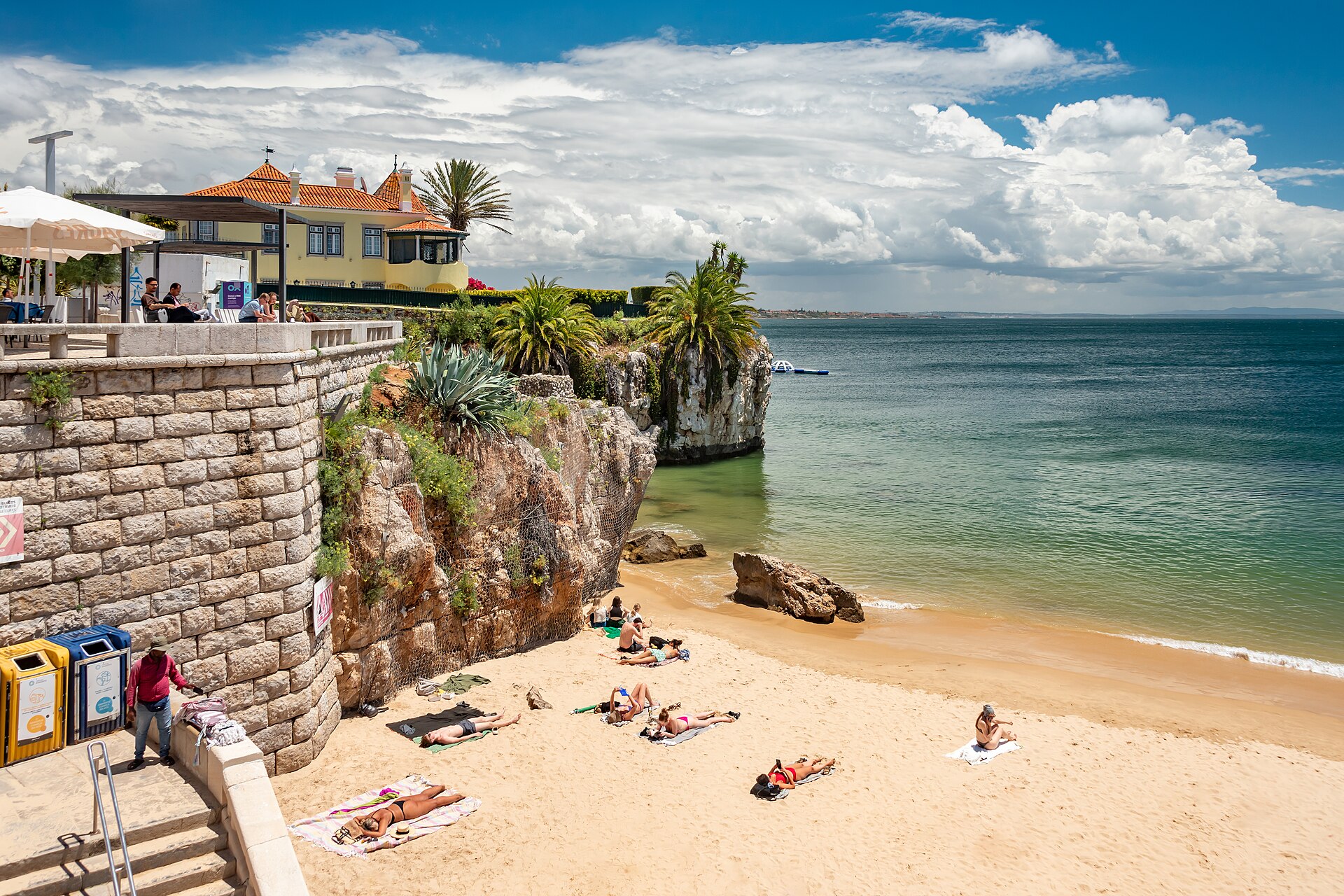
Cascais is where Lisbon goes to the beach: a former fishing village turned elegant resort, with a marina, a string of sandy coves and a seafront promenade to Estoril. Beyond the town, the coast turns wild at the Boca do Inferno cliffs and the surf beach of Guincho. It is also the easiest beach day from the capital.
Do not miss: the walk along the cliffs to the Boca do Inferno, a swim at Praia da Rainha, sunset at Guincho beach and the Paula Rego museum, one of the best small galleries in Portugal.
Stay: The Albatroz Hotel, in a 19th-century mansion on the rocks above the beach, is the classic. Farol Hotel, by the lighthouse, is the design alternative with a sea-water pool.
Getting there: 40 minutes by train from Lisbon Cais do Sodré, with the line running along the coast the whole way. From Sintra, it is 30 minutes by car.
11. Comporta, Alentejo coast
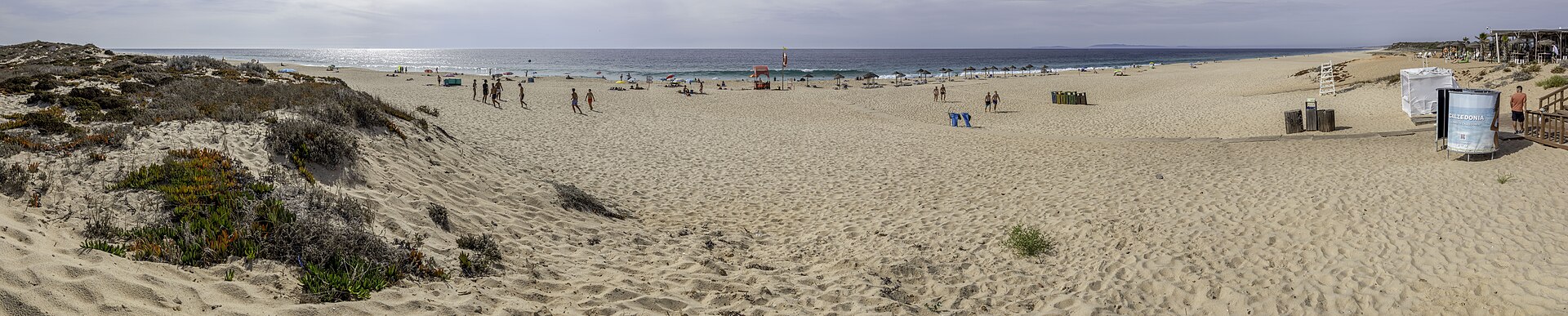
Comporta is an hour south of Lisbon, and it is the most fashionable stretch of coast in Portugal: 60 kilometres of empty white sand backed by rice paddies, pine forest and a handful of thatched-roof villages. There are no big hotels, because the land was owned by one family for a century. As a result, it feels like the Hamptons before anyone noticed.
Do not miss: the beach at Praia do Carvalhal, lunch at Sal on the sand, a drive through the rice fields at sunset and the dolphins in the Sado estuary, which you can see by boat from Setúbal.
Stay: Sublime Comporta, set among cork oaks with private pool villas, is the hotel that made the area famous. Quinta da Comporta, by the rice fields, is the wellness alternative.
Getting there: 1 hour 15 by car from Lisbon across the Vasco da Gama bridge. There is no public transport worth using, so hire a car.
The best places to visit in Portugal: the Alentejo and the Algarve
The south is hot, slow and sun-bleached. The Alentejo is cork forests, marble towns and vineyards, while the Algarve is the golden-cliff coastline that most of Europe comes for. Go in May, June or September, because August is both crowded and hot.
12. Évora, Alentejo
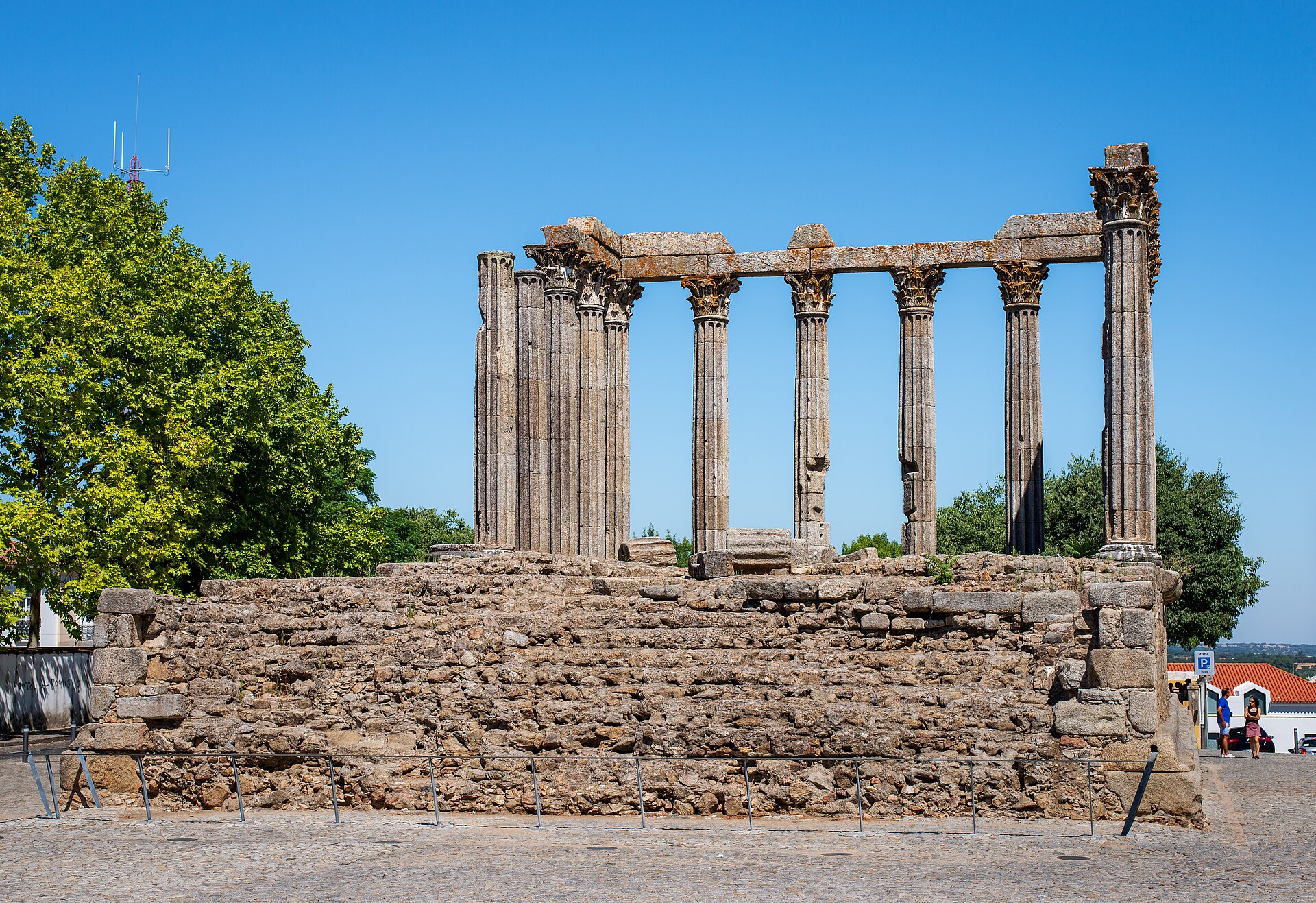
Évora is the capital of the Alentejo, a whitewashed walled city with a Roman temple at its centre and 2,000 years of history layered beneath it. It is a UNESCO site, a university town and the best place to eat the Alentejo’s slow-cooked pork and black-pig dishes. It is also only 90 minutes from Lisbon, so it works as a day trip or an overnight.
Do not miss: the Roman temple, the Chapel of Bones, which is lined with the skeletons of 5,000 monks, and a wine tasting at Cartuxa or Herdade do Esporão outside town.
Stay: Convento do Espinheiro, a 15th-century convent just outside the walls with a spa and a vaulted wine cellar. In town, Pousada Convento de Évora sits beside the temple.
Getting there: 1 hour 30 by car or train from Lisbon. The old town is a 15-minute walk from the station.
13. Marvão, Alentejo
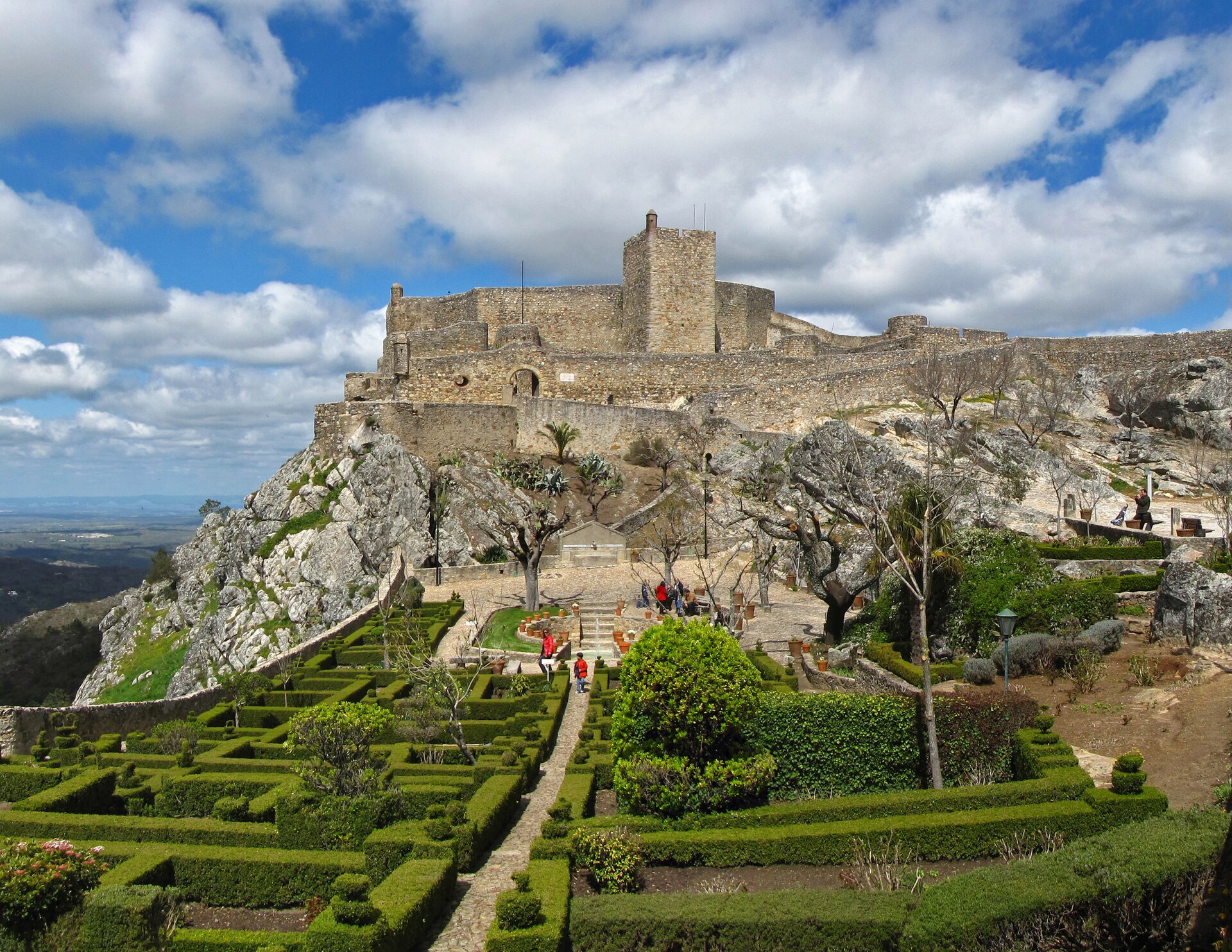
Marvão is a walled village on a granite crag 860 metres above the Spanish border, and from its castle you can see half of Portugal. Fewer than 100 people live inside the walls. It is one of the most dramatic villages in Europe, yet it is almost empty, because it is two and a half hours from anywhere.
Do not miss: the castle walls at sunrise, when the valleys below are full of mist, the Roman ruins at Ammaia and the chestnut festival in November.
Stay: Pousada de Marvão, inside the walls, is the only real choice and a good one. Otherwise, Casa do Terreiro do Poço, in nearby Borba, is a charming manor house.
Getting there: 2 hours 30 by car from Lisbon. There is no public transport, so combine it with Évora on an Alentejo road trip.
14. Lagos, Algarve
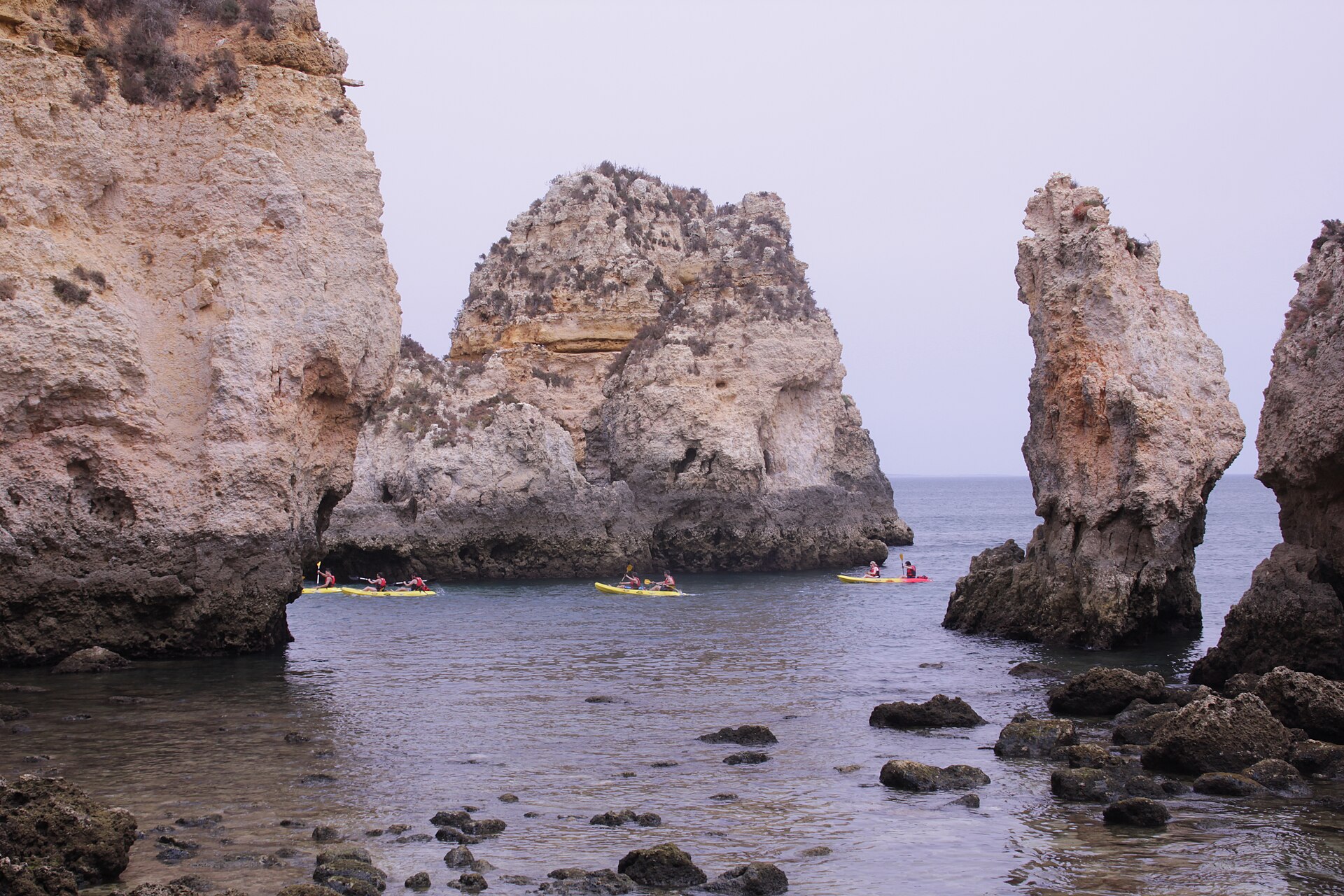
Lagos is the best base in the Algarve, because it has a walkable old town, a working harbour and, five minutes away, the Ponta da Piedade, where golden cliffs and sea arches shelter the most photographed coves in Portugal. Unlike the resorts further east, it still feels like a Portuguese town.
Do not miss: a kayak or small-boat trip through the arches at Ponta da Piedade, a swim at Praia do Camilo, and the walk along the cliffs to Praia Dona Ana. Our south coast road trip covers the beaches beyond.
Stay: Cascade Wellness Resort, on the cliffs west of town, is the resort option. In the old town, Casa Mãe is a small and stylish hotel with a garden.
Getting there: 1 hour by car from Faro airport, or 1 hour 40 by train. The old town is a 20-minute walk from the station.
15. Benagil and Carvoeiro, Algarve
I’d appreciate if you could mail via Wikimedia Commons (CC BY-SA 4.0)
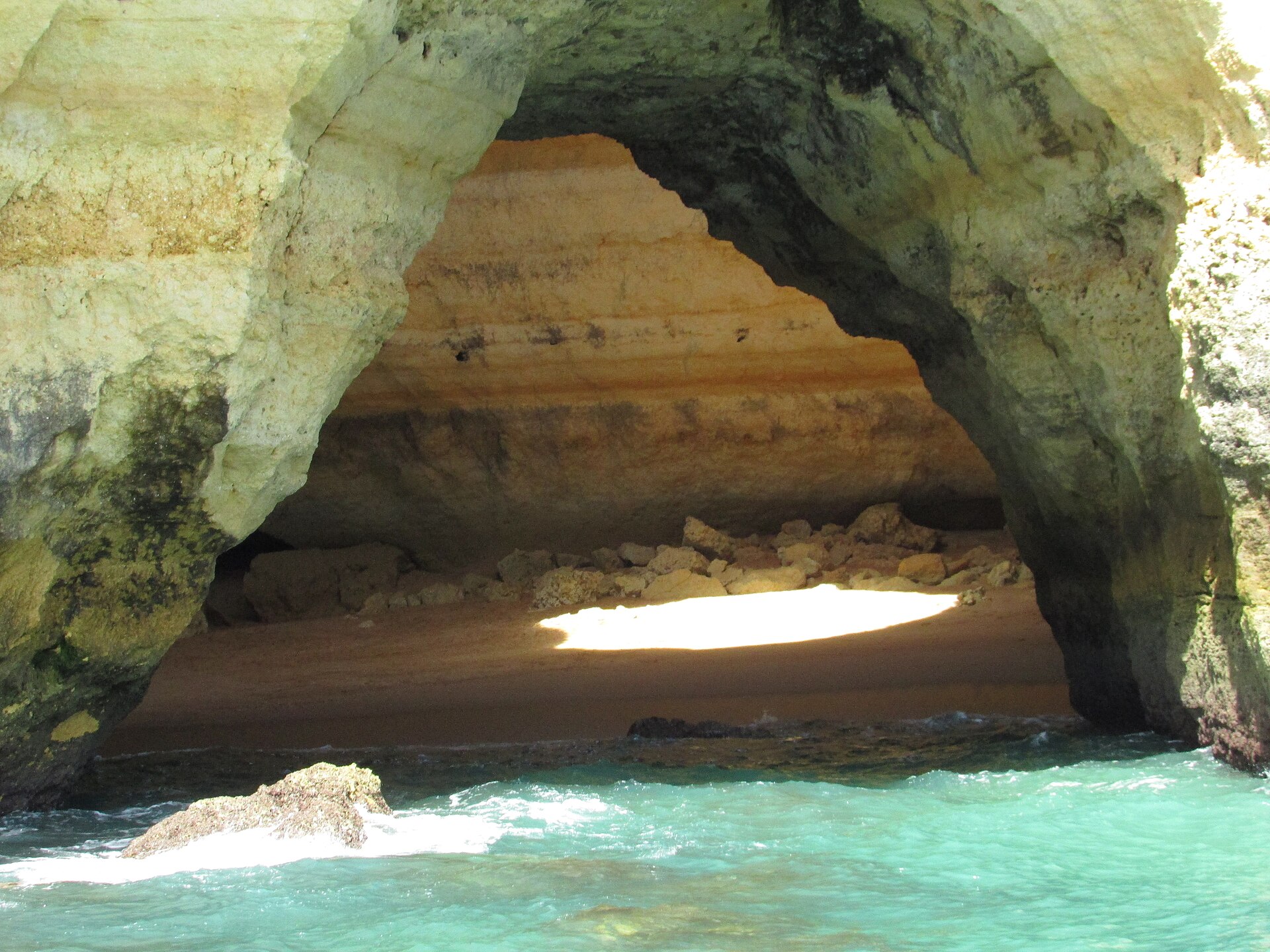
The central Algarve coast between Carvoeiro and Armação de Pêra is the most spectacular in the region: ochre cliffs, sea stacks and, at Benagil, a cave with a hole in its roof that lets sunlight pour onto the beach inside. The whole stretch is walkable along the Seven Hanging Valleys trail. In short, this is the Algarve of the postcards.
Do not miss: the Benagil cave by kayak or stand-up paddleboard at 8am, before the tour boats, the Seven Hanging Valleys walk to Praia da Marinha and the Algar Seco rock pools at Carvoeiro.
Stay: Vila Vita Parc, near Armação de Pêra, is the best resort in the Algarve, and we reviewed it in Vila Vita Parc: is it worth it?. Tivoli Carvoeiro sits on the cliffs above the village.
Getting there: 45 minutes by car from Faro airport. A car is the only sensible option on this part of the coast.
16. Tavira, Algarve
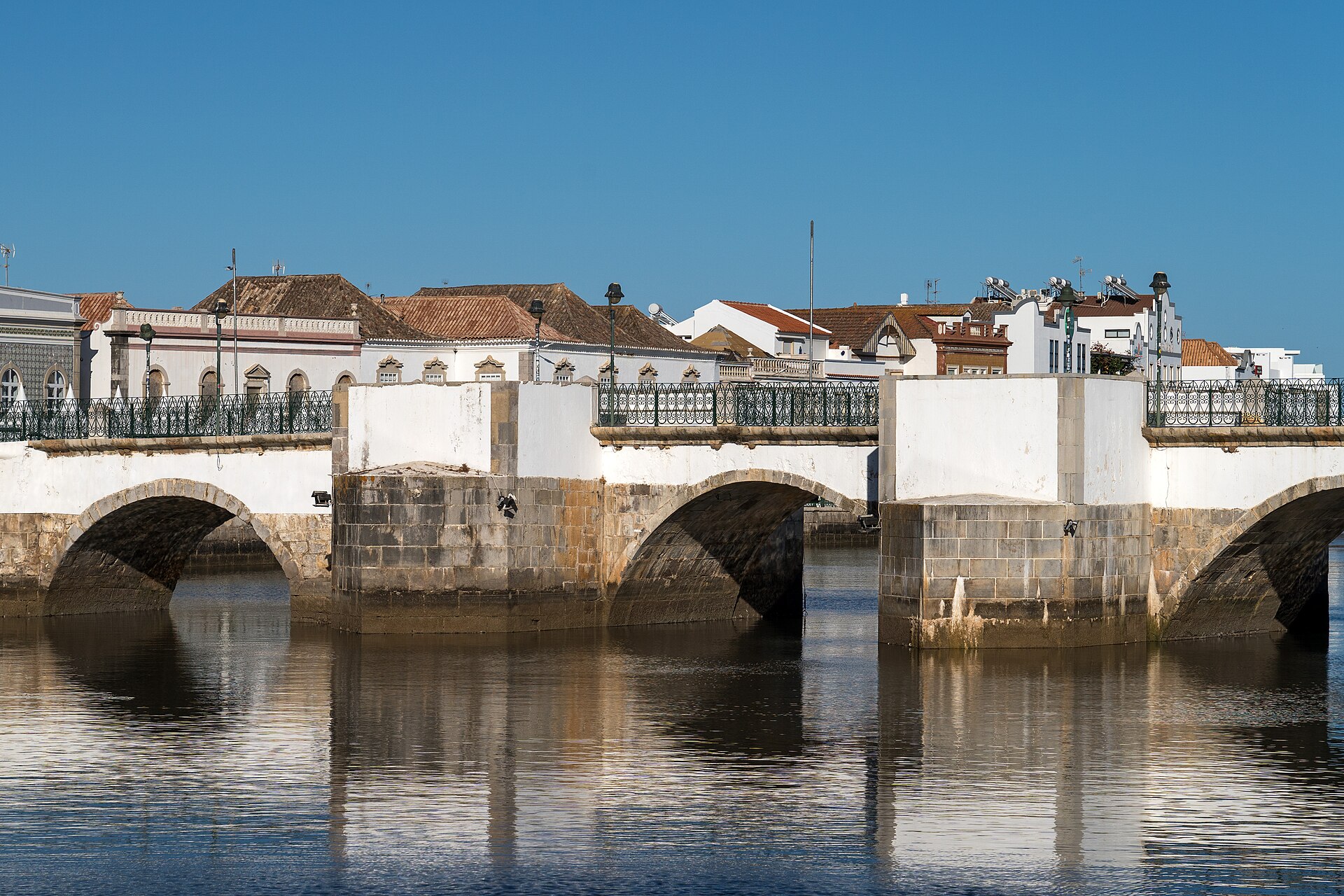
Tavira is the Algarve as it was before the resorts arrived: a riverside town of Moorish rooftops, 37 churches and a Roman bridge, with the sandbar islands of the Ria Formosa lagoon offshore. The beaches are reached by ferry, so they never get crowded. It is also the gateway to the eastern Algarve and the salt pans around it.
Do not miss: the ferry to Ilha de Tavira and its 11 kilometres of empty beach, the view from the castle garden, and dinner on the riverside in the Praça da República. See our guide to the Algarve for more.
Stay: Pousada Convento Tavira, in a 16th-century convent on the hill, is the one to book. Fazenda Nova, a country house in the hills behind the town, is the quieter alternative.
Getting there: 35 minutes by car or train from Faro. Spain is another 30 minutes east, so it also links to an Andalusia trip.
The best places to visit in Portugal: Madeira and the Azores
Portugal’s islands are two very different places. Madeira, off Morocco, is a subtropical garden with mountains and a mild winter. The Azores, 1,500 kilometres out in the Atlantic, are nine green volcanic islands with crater lakes, hot springs and whales offshore. Both are a flight from Lisbon, and both deserve a week.
17. Madeira
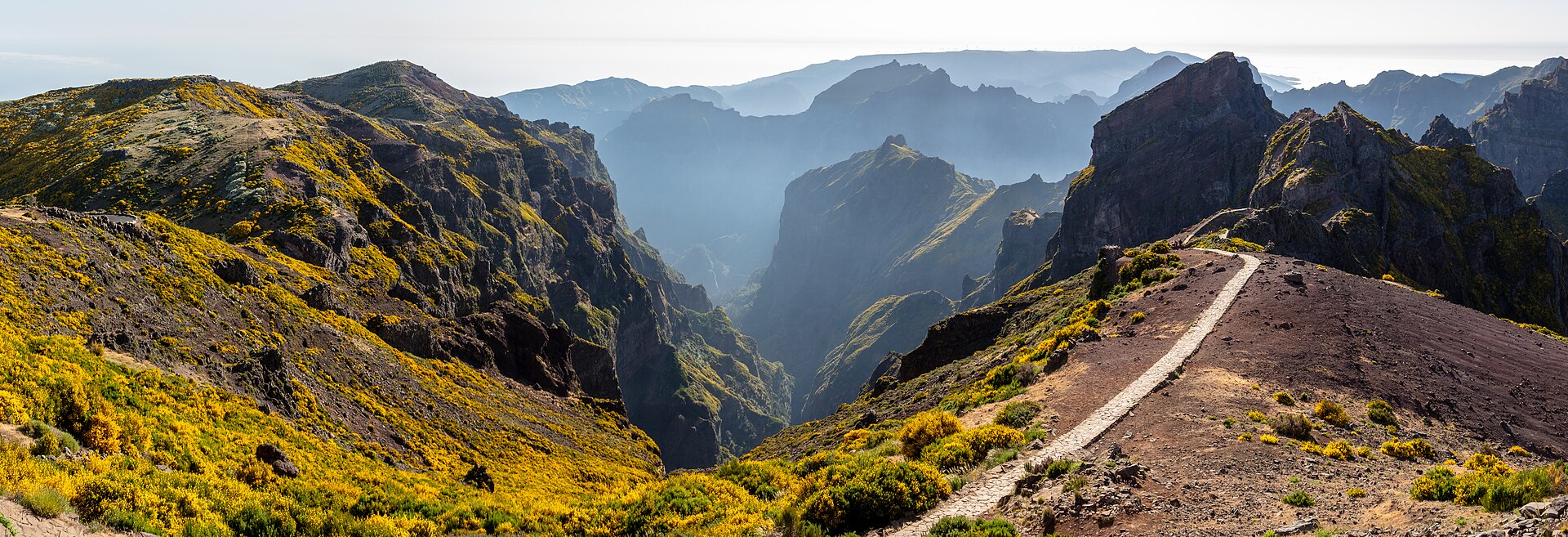
Madeira is a volcanic island that rises almost vertically out of the Atlantic, with mountains over 1,800 metres, a capital full of gardens and a climate that stays spring-like all year. It is best known for its levada walks, the irrigation channels that double as walking paths through laurel forest and along cliff edges. In fact, it is the best winter walking destination in Europe.
Do not miss: the sunrise walk from Pico do Arieiro to Pico Ruivo above the clouds, the Levada das 25 Fontes, the cable car to the Monte Palace gardens and a poncha, the local rum cocktail, in Funchal’s old town.
Stay: Reid’s Palace, a Belmond hotel, has stood on its cliff above Funchal since 1891 and is still the island’s grand address. Savoy Palace, in the city, is the modern alternative with a rooftop infinity pool.
Getting there: 1 hour 45 by air from Lisbon, with direct flights from most of Europe. The airport is 20 minutes from Funchal.
18. São Miguel, Azores
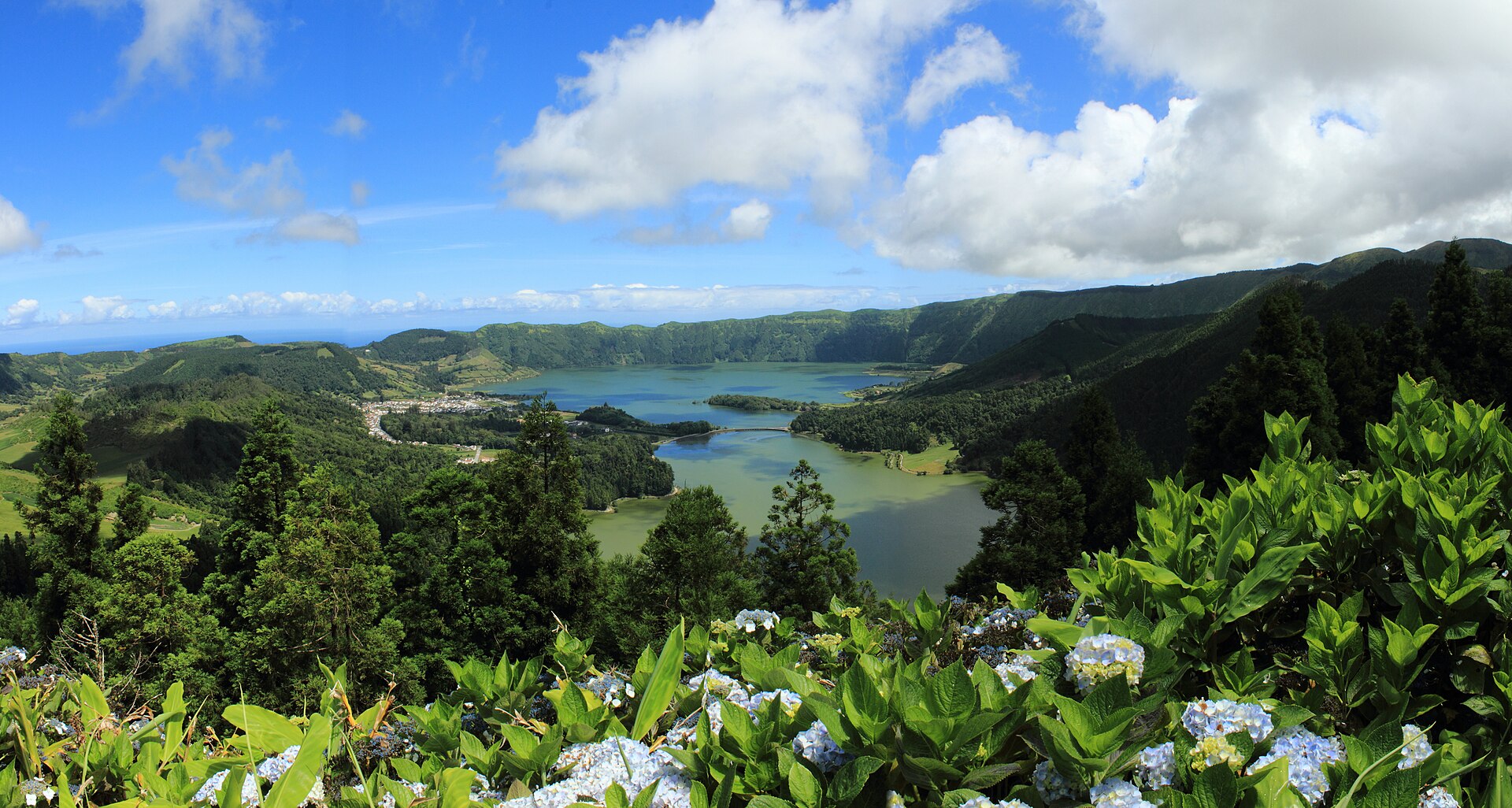
São Miguel is the largest of the Azores and the best introduction to them: twin crater lakes in blue and green, hot springs in a valley that steams, tea plantations and hydrangea hedges along every road. The island is 65 kilometres long, so a week is not too long. It also has whales offshore from April to October.
Do not miss: the Sete Cidades lakes from the Vista do Rei viewpoint, a soak in the iron-red pools of Terra Nostra garden in Furnas, a cozido stew cooked underground by volcanic heat and a whale-watching trip from Ponta Delgada.
Stay: Terra Nostra Garden Hotel in Furnas, with the thermal pool on its doorstep, is the classic. Santa Bárbara Eco-Beach Resort, on the north coast, is the design choice with surf outside.
Getting there: 2 hours 20 by air from Lisbon to Ponta Delgada, with direct flights from several European cities in summer. Hire a car, because the buses are infrequent.
19. Pico, Azores
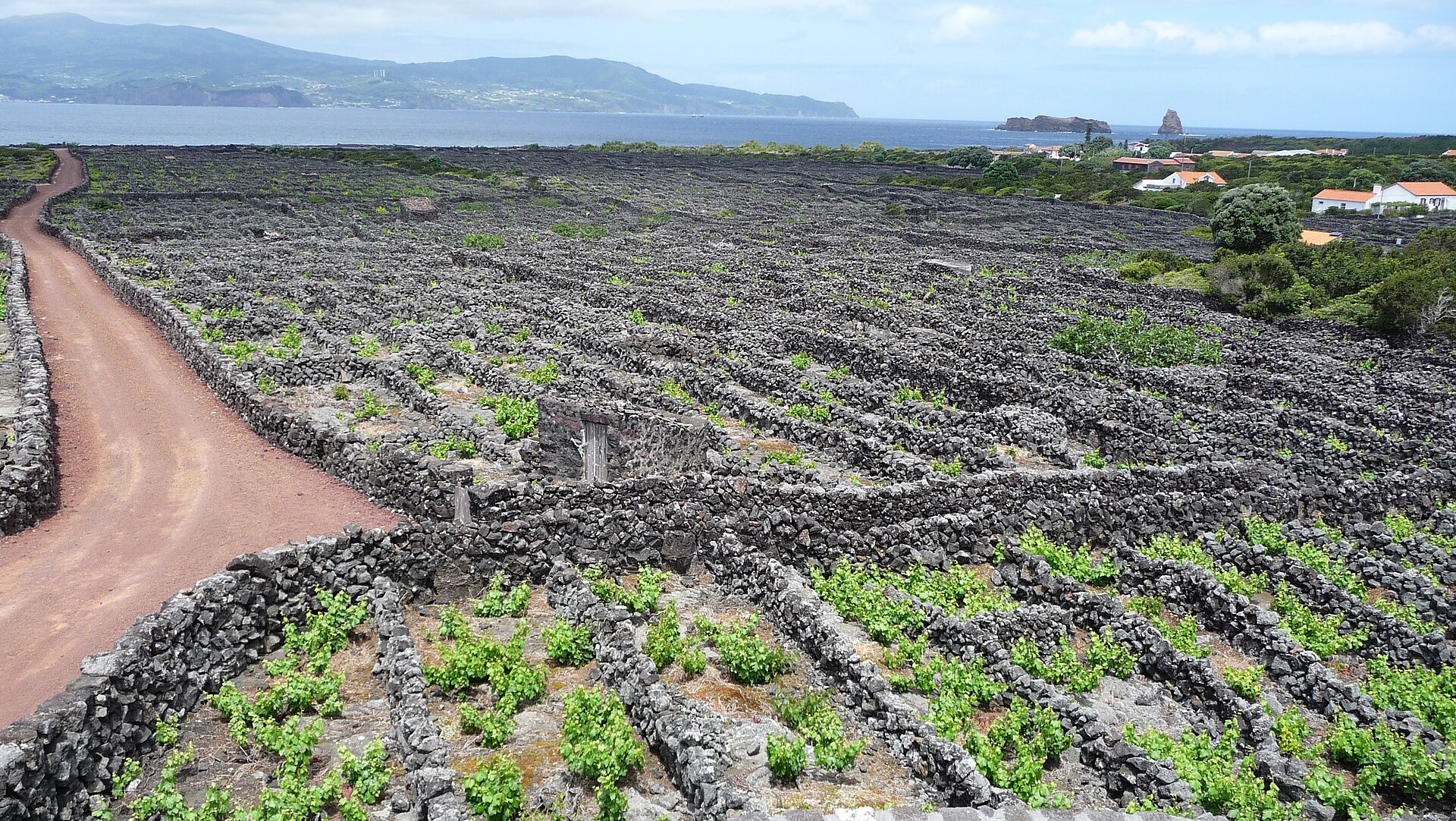
Pico is a volcano with an island attached. The mountain is the highest in Portugal at 2,351 metres, and the vineyards at its feet are planted inside a maze of black lava walls that is a UNESCO site. The wine is unlike anything else, the whale watching is the best in the Azores and the island is still delightfully quiet.
Do not miss: the climb to the summit of Pico with a guide, which takes seven hours and starts before dawn, the vineyard walls at Criação Velha and a sperm-whale trip from Lajes do Pico.
Stay: Lava Homes, a cluster of modern stone houses on the north coast with the mountain behind them, is the best place on the island. Aldeia da Fonte, among the lava on the south coast, is the rustic alternative.
Getting there: 40 minutes by air from Ponta Delgada, or 30 minutes by ferry from Horta on Faial. Faial, Pico and São Jorge are close enough to combine in one trip.
20. Flores, Azores
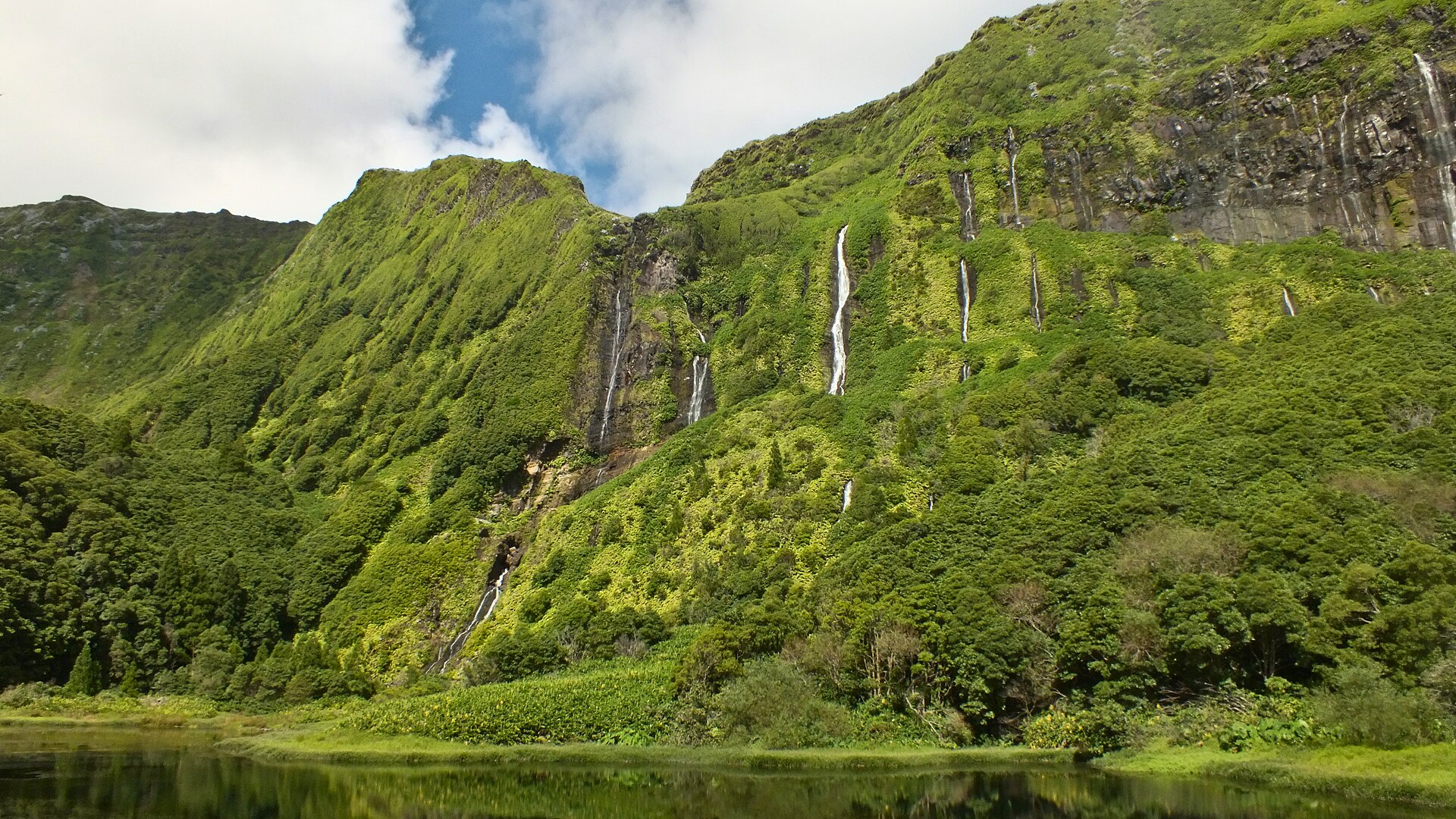
Flores is the westernmost point of Europe, a tiny island of waterfalls, crater lakes and hydrangeas, 2,000 kilometres from the mainland. There are 3,500 residents, no traffic lights and a handful of guesthouses. It is the wildest place in Portugal, and after the drive out from Lisbon it feels like the end of the world.
Do not miss: the Poço da Ribeira do Ferreiro, where a dozen waterfalls drop into one lagoon, the seven crater lakes in the centre of the island and the boat trip to Corvo, the smallest island in the Azores.
Stay: Aldeia da Cuada, a restored stone village above the sea, is the reason many people come. Otherwise, Hotel das Flores in Santa Cruz is the comfortable option.
Getting there: 1 hour 30 by air from Ponta Delgada or Terceira with SATA. Flights are weather-dependent, so leave a buffer day at the end of your trip.
How to plan a trip around the best places to visit in Portugal
You cannot see all 20 in one trip, and you should not try. Instead, pick one or two regions and give each place at least two nights. These four routes cover the best of the list.
| Route | Days | Places | Base | Fly into |
|---|---|---|---|---|
| The classic first trip | 10 | Lisbon, Sintra, Cascais, Óbidos, Porto, Douro Valley | Lisbon, then Porto | Lisbon, out of Porto |
| The north | 6 | Porto, Douro Valley, Guimarães, Peneda-Gerês | Porto, then Pinhão | Porto |
| The south | 8 | Comporta, Évora, Marvão, Lagos, Benagil, Tavira | Comporta, Évora, Lagos | Lisbon, out of Faro |
| The islands | 9 | Madeira, São Miguel, Pico | Funchal, Furnas, Lajes do Pico | Funchal, then Ponta Delgada |
When to go
May, June and September are the months to aim for: warm, dry and before or after the August crowds. The Algarve and the Alentejo are hot in July and August, so swim early and eat late. The north and the Azores, on the other hand, are greener and wetter, and best from June to September. Madeira is good all year, and it is the winter option.
Getting around
Lisbon, Porto, Coimbra and the Algarve are linked by comfortable trains, and Sintra and Cascais are suburban trains from Lisbon. However, you will need a car for the Douro, Peneda-Gerês, the Alentejo, Comporta and the islands. Distances are short, and the motorways are good, so a Portugal road trip is one of the easiest in Europe.
Budget
Portugal is the best value in western Europe, especially outside Lisbon and the Algarve in August. For example, expect to pay €120 to €200 a night for a good four-star, and €350 and up for the famous hotels like Reid’s Palace and Six Senses. Our guide to travel costs in Europe has the full breakdown.
What to eat
Eat regionally, because every place on this list has a dish it does better than anywhere else: francesinha in Porto, pastéis de nata in Lisbon, black pork in the Alentejo, grilled sardines on the coast, cozido in the Azores and espetada in Madeira. Above all, order the fish of the day and a bottle of vinho verde.
Frequently asked questions about the best places to visit in Portugal
What are the best places to visit in Portugal for a first trip?
Lisbon, Sintra and Porto, with the Douro Valley added if you have more than a week. In other words, the two cities first, then the countryside and the coast on a second visit.
What is the most beautiful place in Portugal?
For scenery, the Douro Valley. For a city, Porto. Along the coast, the cliffs between Lagos and Carvoeiro. If you can only choose one, choose the Douro, because nothing else in Europe looks quite like it.
How many days do you need to visit the best places in Portugal?
In general, ten days covers Lisbon, Porto and one region between them. Two weeks lets you add the Algarve or the Alentejo. The islands, however, each need their own week.
When is the best time to visit Portugal?
In short, May to June and September to October. Spring is best for Lisbon and the Alentejo, summer for the north and the Azores, and winter for Madeira and the big waves at Nazaré.
Can you visit the best places in Portugal without a car?
Partly, yes. Lisbon, Sintra, Cascais, Óbidos, Coimbra, Porto, Guimarães and Lagos all work by train or bus. You will need a car for the Douro, Peneda-Gerês, Comporta, the Alentejo, the central Algarve and all of the islands.
Where are the best places to visit in Portugal for a honeymoon?
Comporta, the Douro Valley and Madeira. All three have the hotels, the scenery and, equally, the pace that a honeymoon needs. For more ideas across the continent, see our most romantic regions in Europe.
Keep exploring Portugal and Europe
Once these places to visit in Portugal are ticked off, go deeper with our 8 places you must visit in Portugal, Lisbon bucket list and south coast road trip.
Beyond Portugal, the same instinct for big sights and small places runs through our 20 incredible places to visit in Spain, 20 incredible places to visit in Italy, 20 incredible places to visit in France and the Europe bucket list. For practical planning, Portugal’s official tourism site has the latest opening hours and events.

Brooke is a Tasmanian-born writer and professional baker who started World of Wanderlust in 2013 and has since travelled to 86 countries. These days her guides focus on what she knows best: the bakeries, hotels and places worth crossing the world for.
