
There is a particular kind of European evening that only happens between late November and Christmas Eve. The light goes by 4.30pm, the cathedral square fills with wooden huts, and the air smells of cinnamon, woodsmoke and hot wine. The best Christmas markets in Europe turn a cold city into the warmest place on the continent, and the good news is that most of them sit a short train ride apart.

This guide ranks the 15 best Christmas markets in Europe for 2026, from the grand classics in Vienna, Strasbourg and Nuremberg to smaller, prettier and less crowded alternatives in Colmar, Tallinn and Zagreb. Each entry has the 2026 dates, what not to miss and where to stay. Below the list, you will find a dates table, how to combine markets by train and answers to the questions everyone asks before booking.
One note before you plan: all 2026 dates below are as published by each market’s organisers or tourist board in November 2026. Christmas markets do occasionally change hours at short notice, so check the official site before you travel.
Quick picks: the best Christmas markets in Europe for your kind of trip
Short on time? Then choose by what you want from the trip. Each pick links down to its full entry.
| Best for | Market | Country |
|---|---|---|
| The grand classic | Vienna | Austria |
| Fairytale scenery | Colmar | France |
| The most traditional | Nuremberg | Germany |
| A romantic city break | Prague | Czech Republic |
| Atmosphere and music | Salzburg | Austria |
| Value and fewer crowds | Zagreb | Croatia |
| Medieval setting | Tallinn | Estonia |
| Staying open into January | Copenhagen (Tivoli) | Denmark |
The best Christmas markets in Europe: Austria, Germany and Alsace
This is the heartland of the Christmas market. The tradition began in the German-speaking world in the late Middle Ages, and these are still the markets every other city in Europe is trying to copy.
1. Vienna, Austria

Vienna does not have a Christmas market so much as a Christmas season. There are more than a dozen across the city, but the headline is the Wiener Christkindlmarkt in front of the neo-Gothic City Hall, where the trees of Rathauspark are strung with lights and the stalls run right up to the ice rink. It is big, polished and, admittedly, busy. Even so, nothing else in Europe matches the scale of it, or the backdrop.
For something calmer, go to the market in front of Schönbrunn Palace, which feels genuinely imperial after dark, or the craft stalls in the cobbled lanes of Spittelberg. Then warm up properly in one of the city’s coffee houses.
Do not miss: a mug of Punsch at Rathausplatz (you pay a deposit on the mug and can keep it as a souvenir), the Schönbrunn market at dusk and a slice of cake at Demel. Our Christmas in Vienna guide and best coffee houses in Vienna have the rest.
Dates 2026: Rathausplatz, 13 November to 26 December. Schönbrunn, 6 November to 6 January 2027.
Stay: the Palais Hansen Kempinski, a short walk from Rathausplatz, is the Christmas stay. Alternatively, Hotel Sacher, opposite the Opera, is the classic.
2. Strasbourg, France

Strasbourg calls itself the Capital of Christmas, and it has the history to back it up. Its Christkindelsmärik dates back to 1570, which makes it one of the oldest Christmas markets in France. Today, the stalls spread across the whole of the Grande Île, from the square beneath the cathedral to Place Broglie, while a giant Christmas tree takes over Place Kléber.
It is also the most decorated city on this list. Shopfronts in the old town compete with each other every year, with teddy bears, angels and garlands climbing up the half-timbered façades. Go once at dusk and once early in the morning, when the lanes of La Petite France are almost empty.
Do not miss: the great tree on Place Kléber, the stalls around the cathedral, bredele (Alsatian Christmas biscuits) and a cup of vin chaud blanc, the local white mulled wine. Our quick guide to Strasbourg covers the city year round.
Dates 2026: from late November (opening 26 or 27 November, depending on the source) to 24 December.
Good to know: there are security checks on the bridges into the old town, and weekends are extremely busy. Come midweek if you can.
3. Colmar, France

If Strasbourg is the capital, then Colmar is the postcard. Around 30 minutes south by train, this small Alsatian town looks like it was designed for December: pastel half-timbered houses, canals in Little Venice and six separate markets, each in its own square. Because the town is so compact, you can walk between all of them in an evening.
Colmar is also the best base for exploring the wine villages of the Route des Vins, several of which, including Kaysersberg, Riquewihr and Eguisheim, hold small markets of their own. It is, in other words, the most romantic Christmas market trip in Europe.
Do not miss: Little Venice after dark, the market in the old Koïfhus customs house and a day trip to Kaysersberg. Read our guide to Colmar before you go.
Dates 2026: 23 November to 29 December. The Gourmet Market runs on until 3 January 2027.
Stay: L’Esquisse Hotel & Spa is the most stylish base in town. Book early, however, because Colmar has few luxury rooms and they go months ahead.
4. Nuremberg, Germany
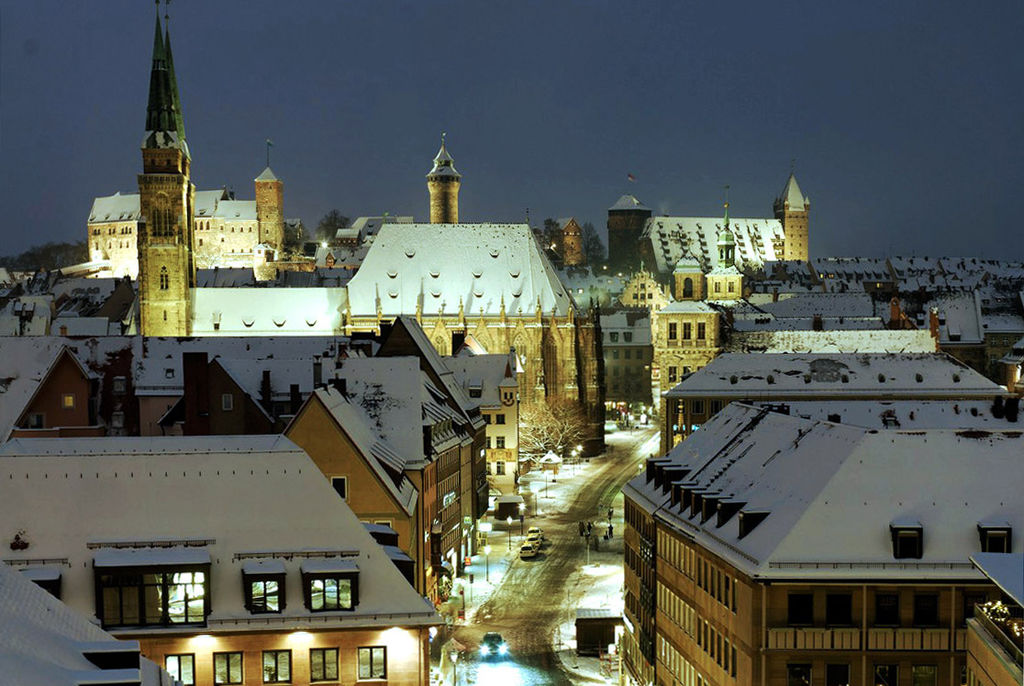
Nuremberg’s Christkindlesmarkt is the one other German markets measure themselves against. Around 180 red-and-white striped stalls fill the Hauptmarkt below the Frauenkirche, and the rules here are strict: no plastic garlands, no recorded music and only traditional goods. As a result, it feels less like a fair and more like a living tradition.
The market opens with a ceremony in which the Christkind, a local young woman chosen every two years, reads a prologue from the church balcony. After that, it is a month of gingerbread, tiny grilled sausages and handmade decorations.
Do not miss: Nürnberger Lebkuchen (the local gingerbread), “Drei im Weggla”, three small sausages in a bread roll, the Zwetschgenmännle figures made from dried prunes and the sister-cities market next door. See our 10 German cities you need to visit for the wider trip.
Dates 2026: 27 November to 24 December.
Stay: Le Méridien Grand Hotel Nürnberg, a grand 19th-century building opposite the station, is a 10-minute walk from the market.
5. Salzburg, Austria
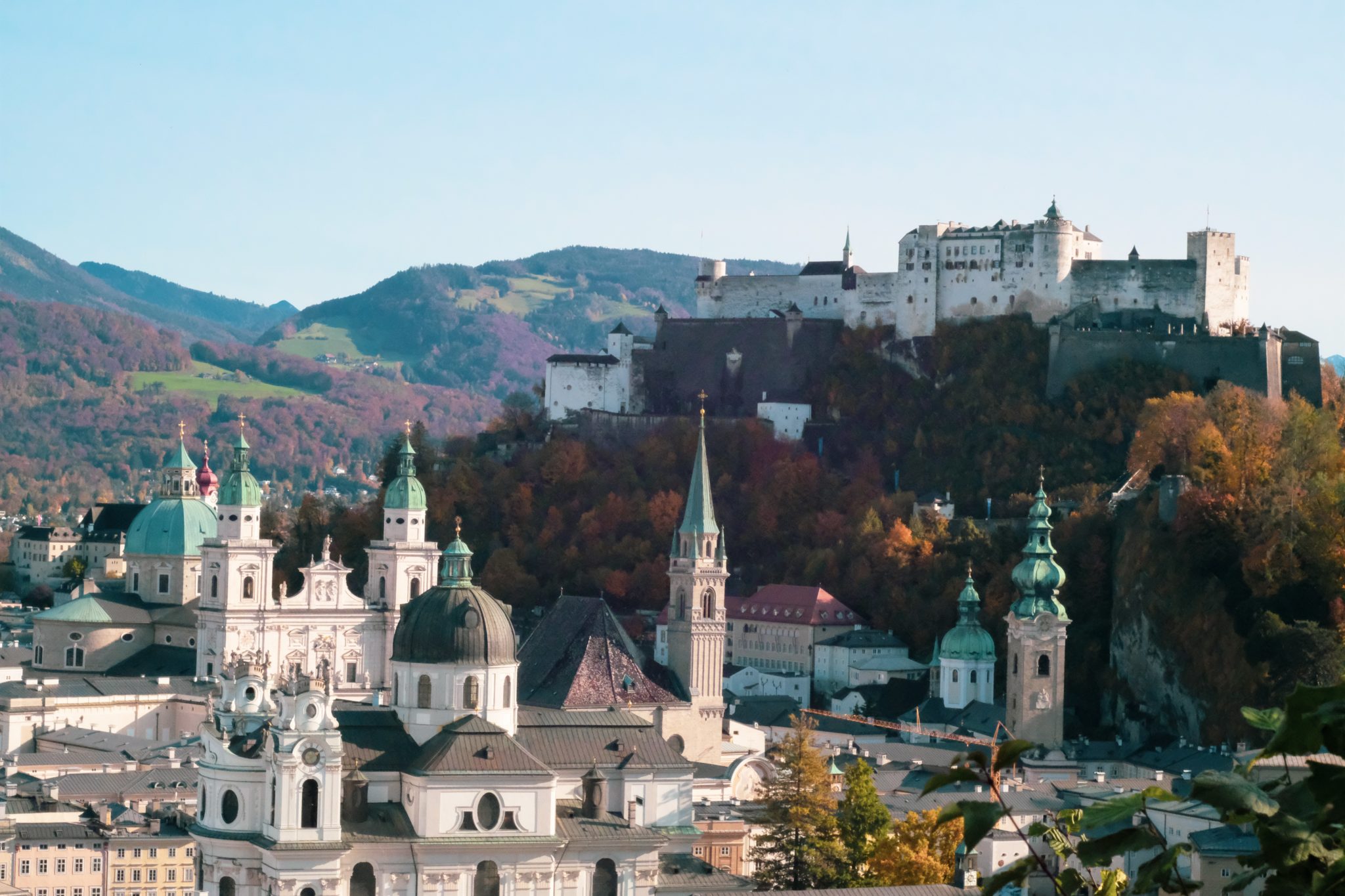
Salzburg might have the most beautiful setting of any Christmas market in Europe. The main Christkindlmarkt fills Domplatz and Residenzplatz, beneath the cathedral with the Hohensalzburg fortress floodlit above. And because this is Mozart’s city, the music is a cut above, with choirs and brass bands playing from the cathedral steps on most evenings.
“Silent Night” was also first performed just outside Salzburg, in Oberndorf, in 1818. The small Silent Night Chapel there makes a moving half-day trip, and the Advent market at Hellbrunn Palace is one of the prettiest in Austria.
Do not miss: the cathedral square at dusk, the Hellbrunn Advent market and the Silent Night Chapel in Oberndorf. Our Salzburg guide has more.
Dates 2026: 19 November to 1 January 2027.
Stay: Hotel Sacher Salzburg, on the river with views to the old town. Alternatively, Hotel Goldener Hirsch, on Getreidegasse, is old Salzburg through and through.
6. Berlin, Germany

Berlin has more than 70 Christmas markets, which is either thrilling or overwhelming, depending on how you approach it. Our advice is to start at Gendarmenmarkt, the most elegant of them all, set between the Konzerthaus and the French and German cathedrals. There is a small entry fee, which keeps the crowds manageable, and the quality of the food and craft stalls is noticeably higher.
After that, head west to the market in front of Charlottenburg Palace. It is spacious and beautifully lit, and it makes a good contrast with the grittier, more local markets in Prenzlauer Berg and Kreuzberg.
Do not miss: Gendarmenmarkt after dark, Charlottenburg Palace and a Feuerzangenbowle, the mulled wine with a rum-soaked sugar cone set alight over it. Our Berlin bucket list has the rest.
Dates 2026: Gendarmenmarkt runs from late November to 31 December.
Stay: Hotel de Rome, on Bebelplatz, is a few minutes’ walk from Gendarmenmarkt. Alternatively, the Hotel Adlon Kempinski, beside the Brandenburg Gate, is Berlin’s grand old dame.
7. Munich, Germany

Munich’s main Christkindlmarkt stretches from Marienplatz, under the neo-Gothic New Town Hall, through the pedestrian streets of the old town. It is one of the oldest markets in Germany and, unsurprisingly, it is very good at the essentials: Glühwein, roasted almonds and hand-carved nativity figures.
Munich is also a city of alternative markets. There is a medieval market on Wittelsbacherplatz, while the Tollwood winter festival on the Theresienwiese (the Oktoberfest grounds) mixes food, art and live music.
Do not miss: the Christmas carols from the Town Hall balcony, the medieval market and the Kripperlmarkt for nativity figures. Salzburg is just 90 minutes away by train, so the two pair perfectly.
Dates 2026: 20 November to 24 December.
Stay: Hotel Bayerischer Hof, around the corner from Marienplatz, has been the city’s grand hotel since 1841.
The best Christmas markets in Europe: Central and Eastern Europe
For many travellers, these are the markets that feel most magical. The settings are spectacular, the prices are lower than in Germany or Austria, and several stay open into January.
8. Prague, Czech Republic

Prague’s Old Town Square is the most cinematic setting of any Christmas market in Europe. The towers of the Týn Church rise behind a giant tree, the Astronomical Clock is around the corner, and the whole square glows after dark. It is, in short, the Christmas market from the movies.
There is a second market on Wenceslas Square and a smaller one in the courtyards of Prague Castle. Meanwhile, the walk across Charles Bridge on a frosty morning, before the crowds, is worth the trip on its own.
Do not miss: the tree lighting on Old Town Square, svařák (Czech mulled wine), Charles Bridge at sunrise and the view over the square from the Old Town Hall tower. Our Christmas in Prague guide and best views of Prague have more.
Dates 2026: 28 November to 6 January 2027.
Stay: the Four Seasons Prague, on the river with views of the castle. Alternatively, The Augustine, inside a 13th-century monastery in Malá Strana, is the quiet choice.
9. Budapest, Hungary
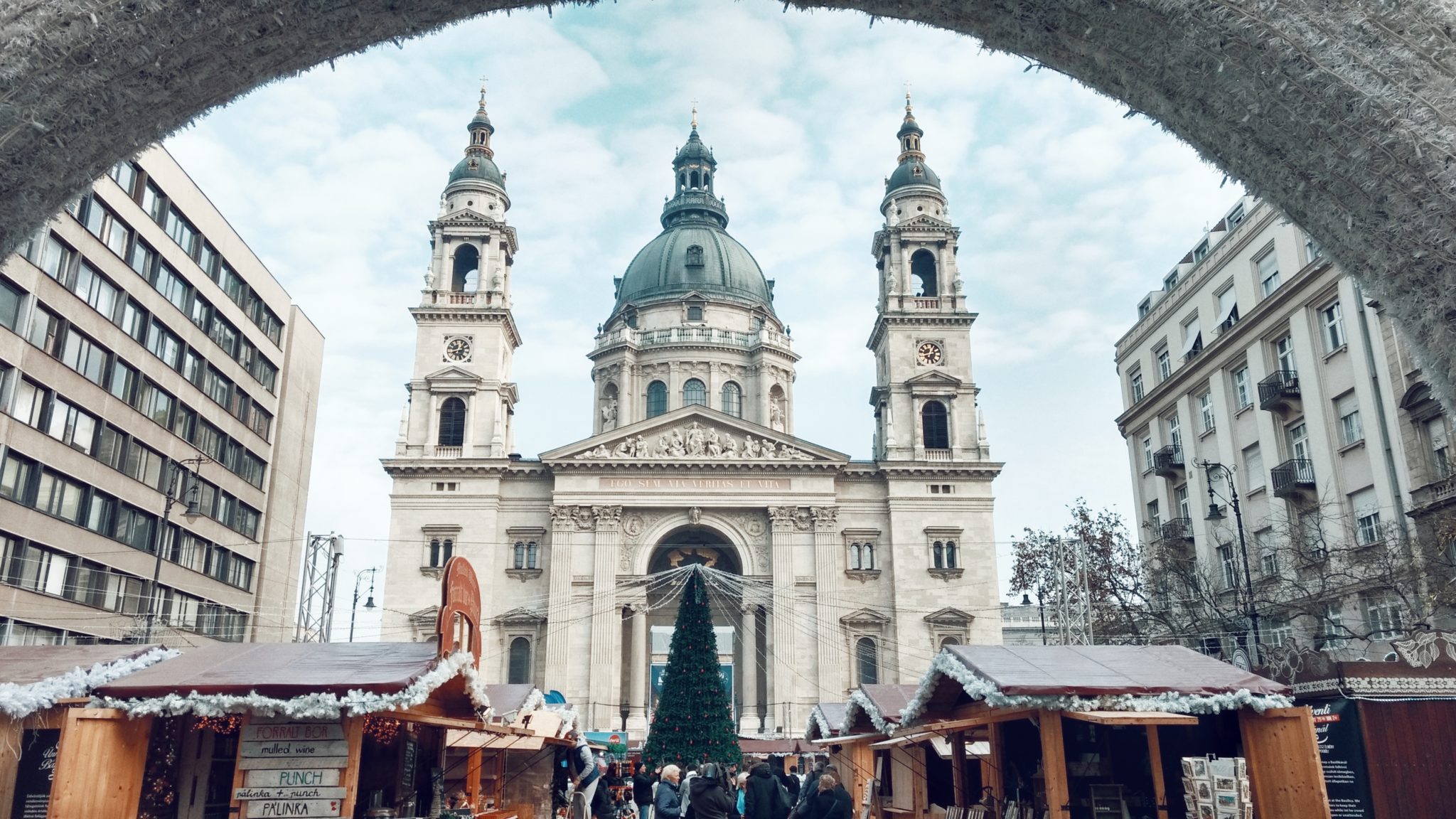
Budapest’s two big markets are on Vörösmarty Square and in front of St Stephen’s Basilica, where the Advent Basilica market has a light show projected on to the church every evening and an ice rink wrapped around a fountain. It is one of the most atmospheric squares in Europe in December.
Budapest also has something no other market city has: steaming outdoor thermal baths. Spend the afternoon at the Széchenyi baths, then walk to the basilica as the lights come on.
Do not miss: the light show at the basilica, kürtőskalács (chimney cake), lángos and an afternoon at the thermal baths. Our 20 places you must see in Budapest has the rest.
Dates 2026: Advent Basilica, 13 November to 1 January 2027. Vörösmarty Square had not confirmed its dates at the time of writing.
Stay: the Four Seasons Gresham Palace, an Art Nouveau landmark at the foot of the Chain Bridge.
10. Zagreb, Croatia
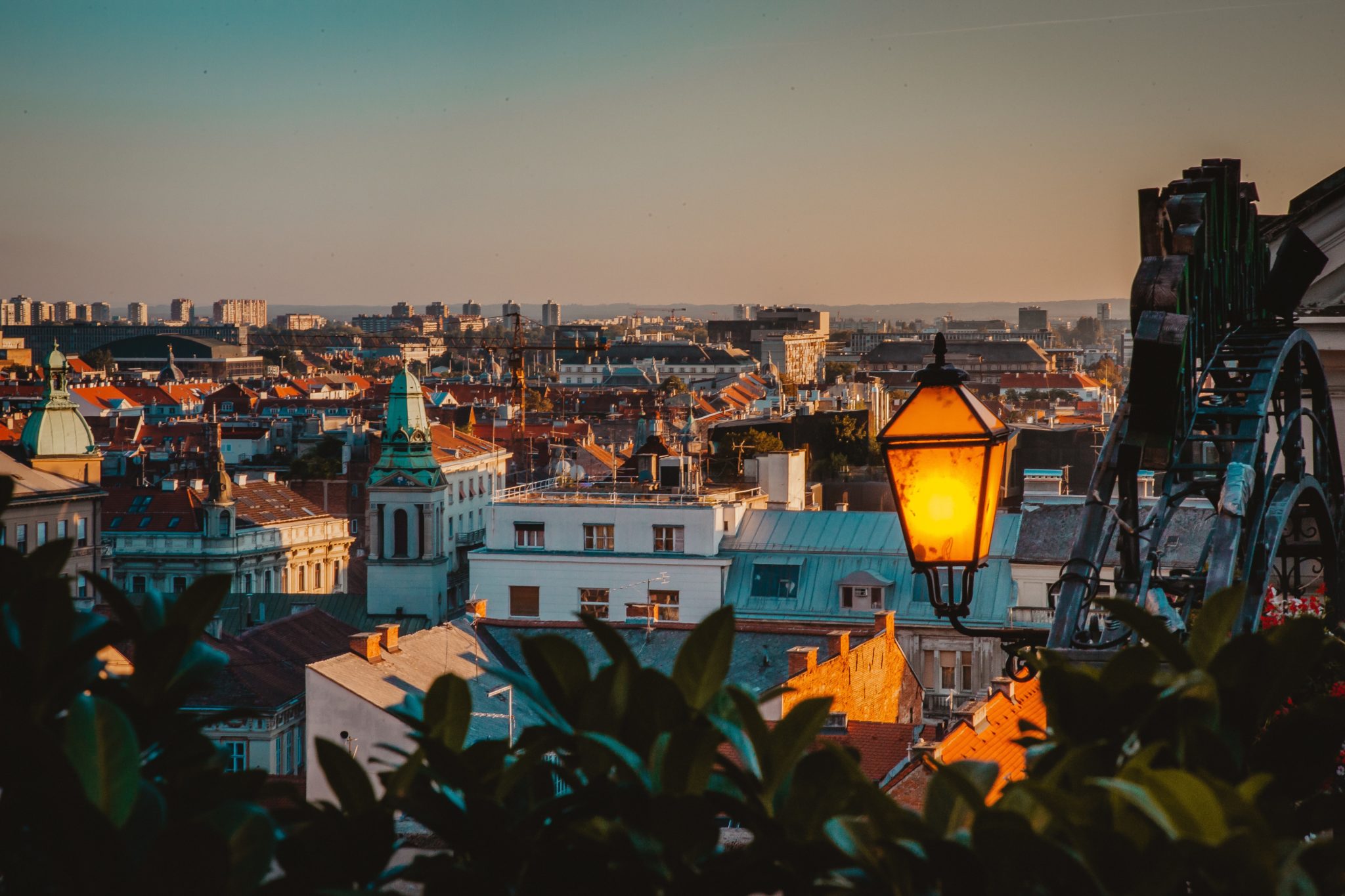
Zagreb is the underrated one. Advent in Zagreb has been voted Europe’s best Christmas market several times by European Best Destinations, and it deserves the attention. Rather than one market, the whole city centre takes part, from the lights in Zrinjevac park to the ice park on King Tomislav Square and the small stalls in the Upper Town.
Above all, it is better value than anywhere in Western Europe, and far less crowded. As a result, it is the best choice on this list for a long weekend that does not feel like a queue.
Do not miss: Zrinjevac park after dark, fritule (small Croatian doughnuts), kuhano vino and the ice rink on King Tomislav Square. Read our guide to why you should visit Zagreb.
Dates 2026: from 28 November into early January 2027.
Stay: the Esplanade Zagreb Hotel, a 1925 landmark built for passengers on the Orient Express.
11. Tallinn, Estonia

Tallinn’s market fills Town Hall Square in the middle of one of the best-preserved medieval old towns in Europe. The city also makes a famous claim: that it raised one of the first public Christmas trees on this square, in 1441. Whether or not that is strictly true, it is hard to imagine a better-looking setting.
The market is small, so it is best combined with a trip somewhere else. Helsinki is around two hours away by ferry, for example, which turns it into an easy two-country winter break.
Do not miss: the tree on Town Hall Square, the view from the Kohtuotsa platform and a cup of hõõgvein. Our top things to do in Tallinn and Tallinn and Helsinki day trip have more.
Dates 2026: 20 November to 6 January 2027.
Stay: Hotel Telegraaf, in a 19th-century telegraph building a few steps from Town Hall Square.
The best Christmas markets in Europe: Northern Europe and the UK
These markets are smaller than the German and Austrian classics. However, they make up for it with the rest of the city, from Tivoli’s lights to Edinburgh’s castle.
12. Copenhagen, Denmark
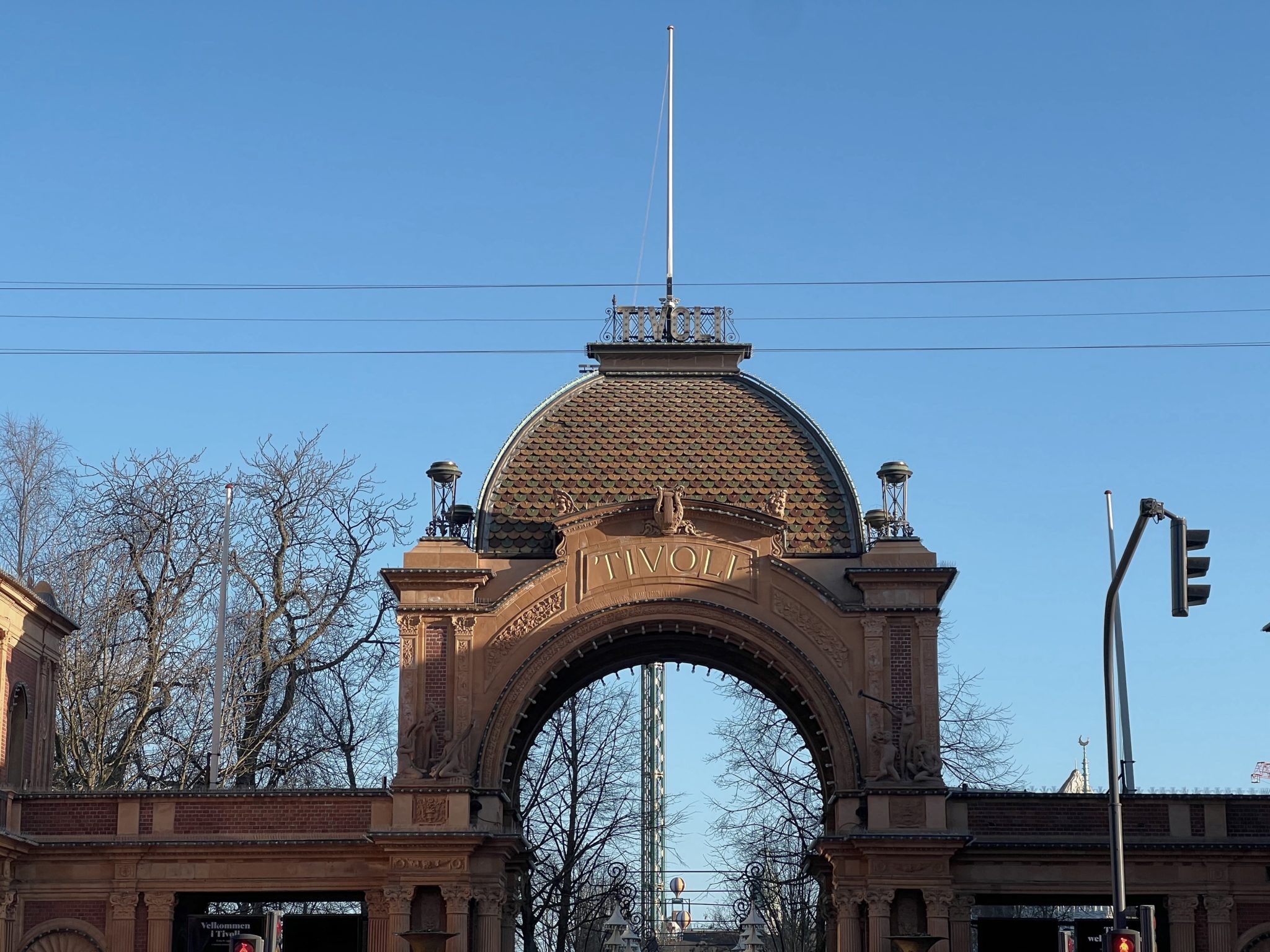
Copenhagen’s best Christmas market is inside Tivoli Gardens, the 19th-century amusement park in the middle of the city. At Christmas it is strung with thousands of lights, there are stalls selling gløgg and æbleskiver (small round pancakes), and the rides keep running into the evening. It is pure Danish hygge, and it is excellent with children.
Outside Tivoli, there are smaller markets along Nyhavn and in Kongens Nytorv, while the shop windows on Strøget are worth the walk.
Do not miss: Tivoli after dark, gløgg on Nyhavn and the Christmas windows at Illum and Magasin. Our best things to do in Copenhagen and best bakeries in Copenhagen have more.
Dates 2026: Christmas at Tivoli, 13 November to 3 January 2027. Admission to Tivoli is charged.
Stay: Hotel d’Angleterre, on Kongens Nytorv, is the grand hotel of Copenhagen and a few minutes’ walk from Nyhavn.
13. Brussels, Belgium
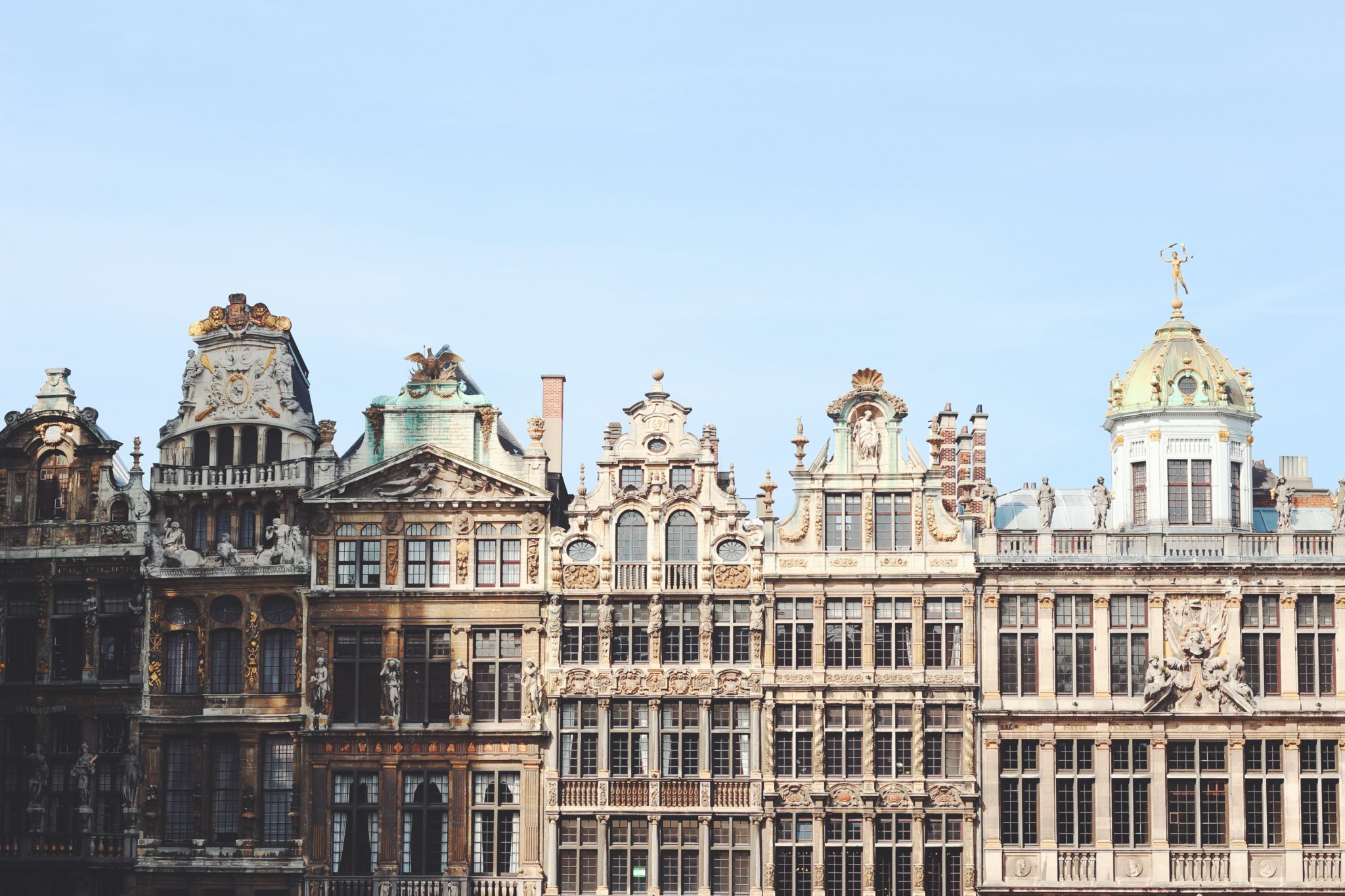
Brussels’ Winter Wonders (Plaisirs d’Hiver) winds through the old centre, from the Bourse to Place Sainte-Catherine and the old fish market. But the reason to come is the Grand-Place, where a huge tree and a sound-and-light show on the gilded guild houses make it one of the most impressive squares in Europe in December.
Add a day in Bruges, an hour away by train. It is smaller and quieter, and arguably even prettier in winter, especially when there is frost on the canals.
Do not miss: the light show on the Grand-Place, Belgian waffles and a day trip to Bruges. Read our guide to Bruges in winter.
Dates 2026: 27 November to 3 January 2027.
Stay: Hotel Amigo, a Rocco Forte hotel just off the Grand-Place.
14. Edinburgh, Scotland
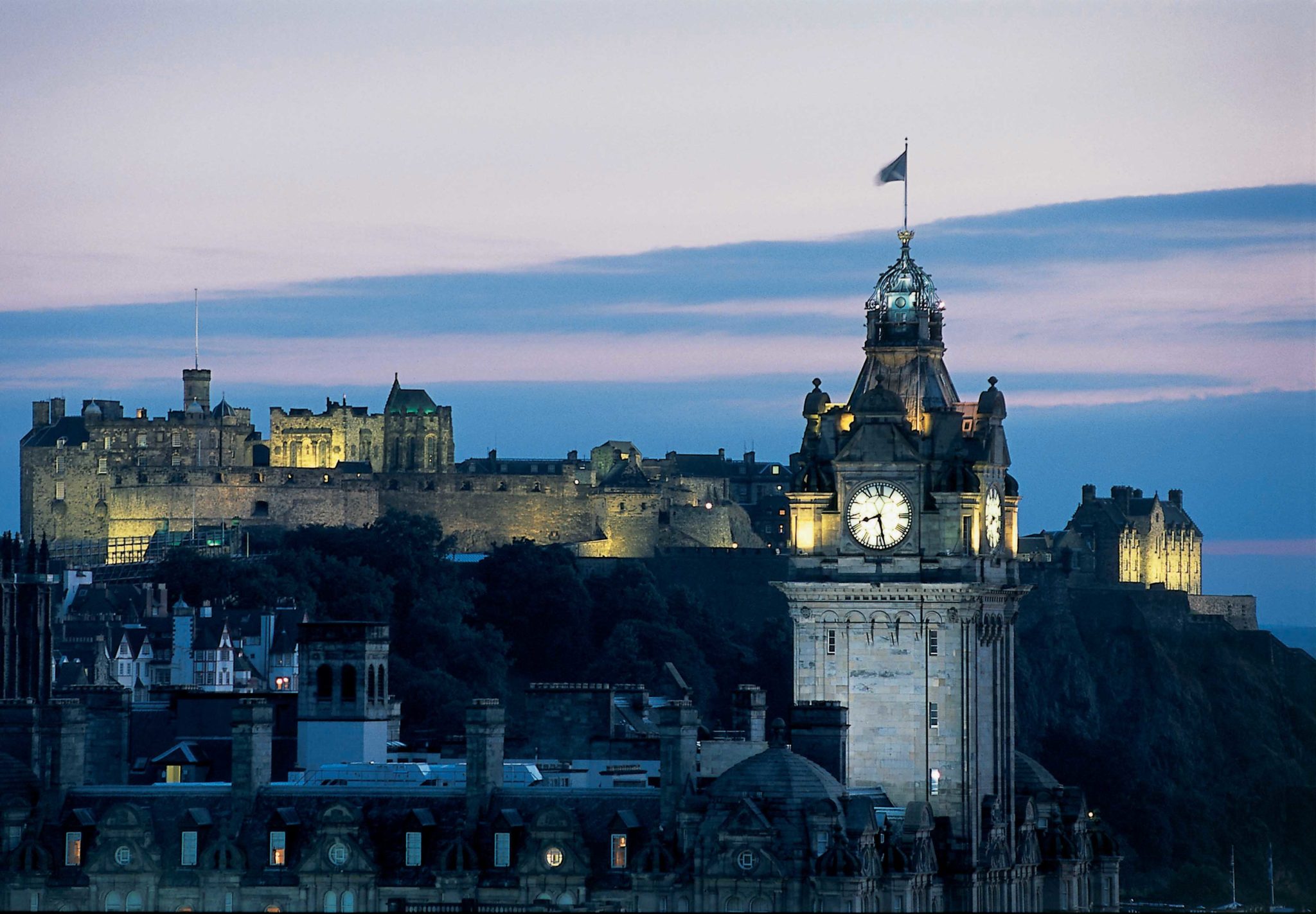
Edinburgh’s Christmas fills East Princes Street Gardens, with the castle lit up on the rock above and the Big Wheel turning over the market. It is a bit more fairground than the Central European markets, but the city itself is the draw. Few places look better on a cold, dark evening.
The other reason to come is Hogmanay. Stay on for Scotland’s New Year’s Eve, one of the biggest street parties in Europe, and you have the best of the whole festive season in one trip.
Do not miss: the Big Wheel at night, a walk up the Royal Mile and a dram in a wood-panelled pub. Fans of Harry Potter will want our Edinburgh for Harry Potter fans guide.
Dates 2026: runs until 3 January 2027.
Stay: The Balmoral, at the end of Princes Street. Its clock tower famously runs a few minutes fast, so nobody misses their train.
15. London, England

To be honest, London’s markets are not the reason to come at Christmas. Hyde Park Winter Wonderland is enormous fun but more theme park than market, and the Southbank’s winter market is pleasant rather than special. Rather, London’s Christmas is about everything around the markets: the lights on Regent Street, the windows at Harrods and Liberty, skating at Somerset House and afternoon tea somewhere wood-panelled.
Do not miss: Winter Wonderland at night, the lights on Regent Street and Carnaby Street and the windows on Bond Street. Our Christmas in London guide and where to shop for Christmas in London have the rest.
Dates 2026: Hyde Park Winter Wonderland, 19 November to 3 January 2027 (closed on Christmas Day).
Stay: see our pick of the best luxury hotels in London for Christmas.
Christmas market dates in Europe for 2026
Here are the 2026 dates for every Christmas market on this list, so you can see at a glance which are open on your dates. Most close on 24 December in Germany, while Prague, Tallinn and Vienna’s Schönbrunn run until Epiphany on 6 January.
| Market | Opens | Closes |
|---|---|---|
| Vienna (Rathausplatz) | 13 November | 26 December |
| Vienna (Schönbrunn) | 6 November | 6 January |
| Strasbourg | 26 or 27 November | 24 December |
| Colmar | 23 November | 29 December |
| Nuremberg | 27 November | 24 December |
| Salzburg | 19 November | 1 January |
| Berlin (Gendarmenmarkt) | Late November | 31 December |
| Munich (Marienplatz) | 20 November | 24 December |
| Prague (Old Town Square) | 28 November | 6 January |
| Budapest (Advent Basilica) | 13 November | 1 January |
| Zagreb | 28 November | Early January |
| Tallinn | 20 November | 6 January |
| Copenhagen (Tivoli) | 13 November | 3 January |
| Brussels | 27 November | 3 January |
| London (Winter Wonderland) | 19 November | 3 January |
How to plan a trip around the best Christmas markets in Europe
When to go
The sweet spot is the first two weeks of December, from Monday to Thursday. Every market is open, the decorations are up and the crowds are thinner than at weekends. On the other hand, the last weekend before Christmas is the busiest of the year almost everywhere, while the days after Christmas are quieter but more limited, because so many German markets close on Christmas Eve.
Combining markets by train
Christmas markets are made for train travel. Strasbourg to Colmar is around 30 minutes, Munich to Salzburg around 90 minutes and Munich to Nuremberg just over an hour. Meanwhile, Vienna to Budapest is around two hours 40 minutes and Vienna to Prague around four hours. So three classic combinations work especially well: Strasbourg and Colmar, Munich, Salzburg and Nuremberg, or Prague, Vienna and Budapest. Our Prague, Vienna and Budapest guide covers the last.
Booking
Book hotels as early as you can. Colmar and Strasbourg in particular sell out months ahead for December weekends, and prices in Vienna and Prague climb steeply in the final fortnight. If you are travelling on a weekend, book restaurants too.
What to eat and drink
Mulled wine is the constant, though it changes name and character as you go: Glühwein in Germany and Austria, vin chaud in Alsace, svařák in Prague, gløgg in Copenhagen. In most German and Austrian markets you pay a deposit on the mug, which you get back when you return it, or keep as a souvenir. Then look for the local speciality: Lebkuchen in Nuremberg, bredele in Alsace, chimney cake in Budapest and fritule in Zagreb.
What to pack
It will be cold, often below zero after dark, so pack proper layers, a warm coat, gloves and waterproof boots for cobblestones. Our winter packing list for Europe has the full list.
Frequently asked questions about the best Christmas markets in Europe
Which is the best Christmas market in Europe?
For the full experience, Vienna. For the most beautiful setting, Colmar or Prague. And for tradition, Nuremberg. If you only have a long weekend, however, Strasbourg and Colmar together are the best combination in Europe.
When do the Christmas markets in Europe open in 2026?
Most open in the second half of November. Vienna and Copenhagen’s Tivoli open on 13 November, Munich and Tallinn on 20 November, Colmar on 23 November, and Nuremberg, Brussels and Strasbourg in the final week of November. Prague opens on 28 November.
Which Christmas markets in Europe are open after Christmas?
Prague, Tallinn and Vienna’s Schönbrunn market run until 6 January 2027. Copenhagen’s Tivoli, Brussels and Hyde Park Winter Wonderland run until 3 January, Salzburg until 1 January and Berlin’s Gendarmenmarkt until 31 December. By contrast, Nuremberg, Munich and Strasbourg close on 24 December.
How many days do you need for the Christmas markets in Europe?
Two nights per city is ideal. That gives you one evening at the main market and a second for the smaller ones. A week is enough to combine three cities comfortably by train.
Which is the most romantic Christmas market in Europe?
Colmar. Little Venice lit up at night, the canals and the half-timbered houses make it the most romantic Christmas market in Europe, with Salzburg and Prague close behind.
Are the Christmas markets in Europe expensive?
The markets themselves are free to enter, with a few exceptions such as Tivoli and Berlin’s Gendarmenmarkt. Food and mulled wine cost more in Switzerland, Scandinavia and the big German and Austrian cities. In contrast, Zagreb, Budapest and Tallinn are noticeably better value. Hotels are the real expense, so book early.
Keep exploring Europe in winter
Once you have chosen from the best Christmas markets in Europe, go deeper with our Christmas in Vienna, Christmas in Prague and Christmas in Paris guides.
For the wider continent, there is our 25 most beautiful small towns in Europe, the Europe bucket list and our fairytale castles in Germany, several of which look their best under snow.

Brooke is a Tasmanian-born writer and professional baker who started World of Wanderlust in 2013 and has since travelled to 86 countries. These days her guides focus on what she knows best: the bakeries, hotels and places worth crossing the world for.
